

How to identify quality wine: essential guide 2026
Many wine enthusiasts confuse high prices or sophisticated labels with real quality. The truth is that wine quality depends on precise technical criteria, official certifications, and proven organoleptic characteristics. This guide debunks common myths and presents practical tools to identify genuine quality wines, focusing on Portuguese denominations and grounded analyses that reveal the authenticity of regional productions.
Index
- Key points for identifying quality wine
- The fundamentals of quality in Portuguese wine
- Understanding certifications and geographical origin
- Professional evaluation and science in wine analysis
- How to apply knowledge to choose quality wines
- Discover more about wines and elevate your appreciation
- How to identify quality wine: frequently asked questions
Key points for identifying quality wine
| Point | Details |
|---|---|
| Official certifications | PDO, PGI and IG guarantee origin, authenticity, and controlled process according to Portuguese law. |
| Professional evaluation | Combination of laboratory analyses (pH, acidity, alcohol) and sensory tastings by specialized panels. |
| Regional bottling | Mandatory for PDO and PGI, protects the quality and reputation of the demarcated region. |
| Quality/price ratio | IG wines often present comparable quality to DOs with excellent value for money. |
| Organoleptic characteristics | Colour, aroma, flavour, and balance are determining criteria for certified reputation and quality. |
The fundamentals of quality in Portuguese wine
The quality of a Portuguese wine is not accidental. Wine quality depends on its specific characteristics and is the basis for its reputation in wine designations of origin. These characteristics include colour, aroma, flavour, body, and the balance between alcohol and acidity.
Protected Designation of Origin (PDO) and Protected Geographical Indication (PGI) certifications guarantee absolute rigour in the origin of the grapes and the winemaking process. These designations are not mere decorative stamps. They represent systematic control from the vineyard to bottling, ensuring that each bottle faithfully reflects the terroir and traditional practices of the region.
Bottling in the demarcated region is mandatory for PDO and PGI wines in areas like the Douro. This requirement protects authenticity and prevents adulteration during transport or storage. When you buy a wine bottled at the origin, you are acquiring a traceable and controlled product from start to finish.
Professional Tip: Always check the label for the mention “Bottled in the Demarcated Region”. This information confirms full compliance with Portuguese wine legislation and ensures there has been no external manipulation of the certified territory.
Quality and reputation are interdependent. A region only maintains prestige if its wines demonstrate consistency in sensory characteristics and fidelity to local identity. Therefore, Portuguese denominations invest in rigorous inspection and producer training.
“A denomination's reputation is built bottle by bottle. Every inferior wine stains the name of the entire region.”
Key technical criteria include:
- Conformity with grape varieties authorized by the denomination
- Respect for yield limits per hectare
- Traditional or approved winemaking methods
- Laboratory analyses confirming chemical parameters within standards
- Approval in organoleptic tastings by certified panels
These fundamentals explain why certified wines deserve trust. Portuguese legislation has created a robust system that protects consumers and values producers committed to excellence.
Understanding certifications and geographical origin
PDO, PGI, and IG certifications are not interchangeable. Each has distinct criteria that directly impact wine quality and authenticity. Understanding these differences changes how you choose a bottle.
Protected Designation of Origin (PDO) is the most demanding certification. The obligation of bottling in the Douro region for PDO/PGI ensures quality and authenticity from harvest to consumer. Only grapes grown in the demarcated region can be used, and the entire winemaking process must occur within the certified territory.
Protected Geographical Indication (PGI) offers slightly more flexibility but maintains rigorous standards. Grapes must come from the region, but some production stages may occur outside, provided they are authorized. Still, regional bottling is mandatory to ensure traceability.
Geographical Indication (GI) is a valued category that protects provenance. The Duriense GI ensures that production and grapes come from the specific region to protect consumers. This certification balances tradition and accessibility, allowing smaller producers to achieve recognition without the high costs of PDOs.
| Certification | Origin of Grapes | Winemaking | Bottling | Rigour |
|---|---|---|---|---|
| PDO | 100% demarcated region | Mandatory in the region | Mandatory in the region | Maximum |
| PGI | 85% minimum from the region | Mostly in the region | Mandatory in the region | High |
| IG | Specific region | Specific region | Flexible | Medium-High |
Recognizing these marks on the label is essential for identifying genuine wines with geographical indication. Look for official logos and written mentions that confirm the category. A PDO wine from Alentejo, for example, will clearly display “Denominação de Origem Protegida Alentejo” and the corresponding seal.
Practical criteria for evaluating certifications include:
- Presence of an official seal visible on the label
- Explicit mention of the category (PDO, PGI, or IG)
- Reference to the specific demarcated region
- Certification number or traceability code
- Indication of bottling at origin when applicable
This information is not optional. Portuguese legislation obliges producers to declare certification clearly and accessibly. If a label omits this data, the wine does not have official quality recognition, regardless of price or marketing.
Certifications in Portuguese wines are powerful tools for discerning consumers. They allow wines to be compared based on objective criteria, reducing the risk of choices based solely on appearance or empty promises.
Professional evaluation and science in wine analysis
Quality evaluation combines science and sensory experience. Laboratory analyses measure chemical parameters such as pH, total acidity, volatile acidity, alcohol content, and residual sugars. This data reveals if the wine is balanced and stable. Uncontrolled pH, for example, compromises preservation and flavour.
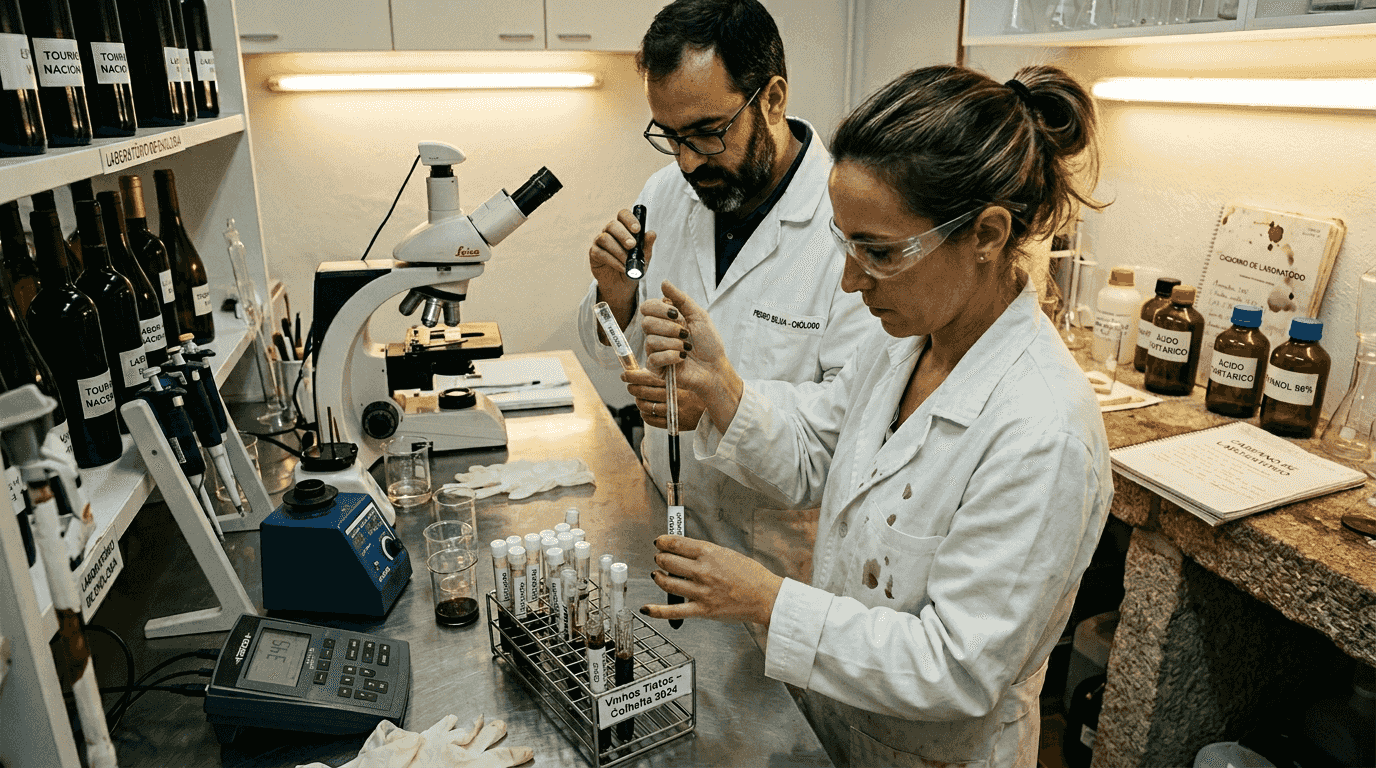
Sensory tastings complement chemical tests. Panels composed of oenologists, sommeliers, and trained tasters evaluate colour, clarity, aromatic intensity, complexity of flavours, and persistence. Each taster assigns scores according to standardized criteria, eliminating individual subjectivity.
Evaluations include laboratory analyses and professional panel tastings to ensure objectivity. DECO PROteste, for example, selected red wines under 3 euros in 2026 with scores above 70%, demonstrating that quality does not exclusively depend on a high price.
This test revealed that IG wines from Península de Setúbal and Alentejo often exceed expectations. The top-ranked wines showed a remarkable balance between acidity and tannins, well-defined fruity aromas, and persistent finishes. These results confirm that the quality/price ratio is real when certifications are respected.
The professional evaluation process follows rigorous steps:
- Visual analysis to assess colour, brightness, and clarity
- Olfactory analysis to identify primary, secondary, and tertiary aromas
- Gustatory analysis to measure body, acidity, tannins, alcohol, and balance
- Laboratory analysis to confirm chemical parameters within standards
- Final classification based on a weighted average of assigned scores
Professional Tip: Wines that win certified professional wine tastings demonstrate consistency. Look for mentions of national or international competitions on the back label, as they indicate independent external validation.
Chemical analyses are fundamental for detecting defects invisible to the untrained palate. Excess sulphites, Brettanomyces contamination, or premature oxidation are only identifiable in the laboratory. Certified wines undergo these tests before reaching the market.
DECO quality tests are a benchmark in Portugal. Regularly published, they offer objective comparisons that help consumers choose based on evidence. Consulting these evaluations before buying is a smart strategy to maximize value.
The combination of science and sensory experience creates a robust quality control system. No single element is sufficient. Chemistry confirms what the palate perceives, and the palate reveals nuances that numbers do not capture.
How to apply knowledge to choose quality wines
Transforming theoretical knowledge into practical choices requires attention to specific details at the time of purchase. Reading labels critically is the first line of defence against mediocre wines disguised as premium.
Always check the official certification. A wine without PDO, PGI, or IG may be pleasant but does not have a formal guarantee of origin or controlled process. The absence of these certifications does not necessarily mean low quality, but it eliminates the traceability that protects the consumer.
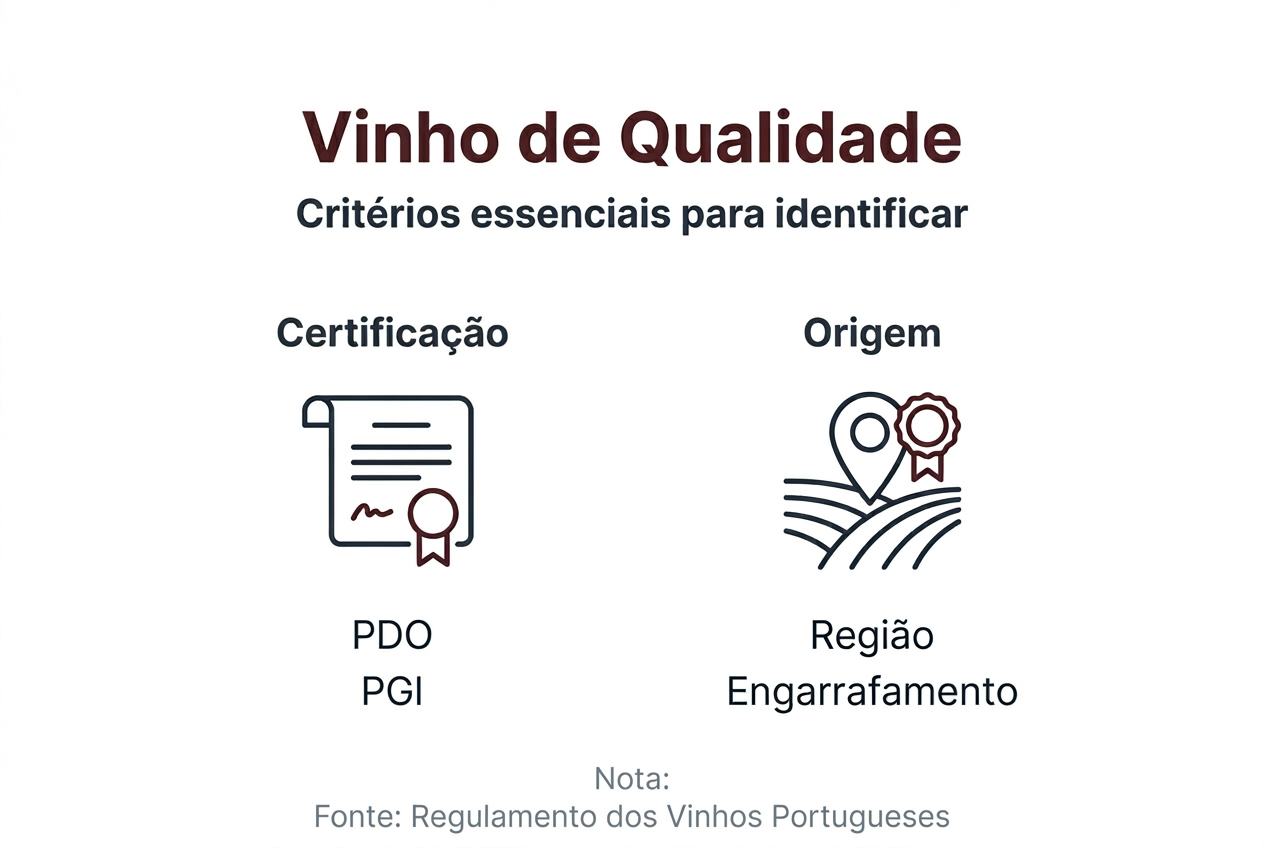
Regional bottling is a strong indicator of authenticity. PDO wines bottled outside the demarcated region violate legislation and compromise the reputation of the denomination. This information must be clearly visible on the front or back label.
Valuing wines with Geographical Indication is an effective strategy to balance quality and price. IG wines often present comparable quality to DOs but cost significantly less due to lower administrative requirements. For daily consumption, they represent an intelligent choice.
Consulting specialized reviews before buying drastically reduces the risk of disappointment. Organizations like DECO PROteste, Revista de Vinhos, and international guides publish detailed analyses based on scientific methodologies. These sources are more reliable than casual opinions on social media.
Professional Tip: Avoid judging wines exclusively by price or label design. Sophisticated packaging increases the product cost without adding quality to the content. Focus on objective data and verifiable certifications.
| Factor | What to Look For | What to Avoid |
|---|---|---|
| Certification | PDO, PGI or IG clearly indicated | Absence of any official seal |
| Bottling | “Bottled in the Demarcated Region” | Generic mention or omission |
| Origin | Specific region named | Vague designations like “Product of Portugal” |
| Grape varieties | Varieties explicitly listed | Total omission of grapes used |
| Awards | Mention of certified competitions | Invented or unverifiable awards |
Use the wine selection guide available online to delve into specific criteria according to your personal preferences. Knowing your own inclinations (full-bodied vs. light reds, aromatic vs. mineral whites) accelerates the identification of suitable wines.
The main practical steps include:
- Read the front and back labels completely before deciding
- Check for the presence of PDO, PGI, or IG certification
- Confirm bottling in the region when applicable
- Seek information on grape varieties and vintage year
- Consult independent reviews when available
- Compare prices within the same certification category
This methodical approach eliminates impulsive purchases based on superficial marketing. Real quality wines reveal transparent information because proud producers have nothing to hide.
Discover more about wines and elevate your appreciation
Expanding your knowledge of Portuguese wines transforms casual appreciation into informed passion. The Xico Sabido website offers specialized articles that explore everything from viral wines and contemporary trends to the fascinating history of emblematic grape varieties like Alicante Bouschet from Alentejo.

If you are looking for authentic experiences, explore the Alentejo wine route with the 10 best places to visit in 2026. Each destination reveals producers committed to quality, terroir, and regional tradition. These visits provide practical context that no book or article can fully replicate.
Continue to learn, taste, and question. The journey of a wine enthusiast is continuous, full of discoveries that enrich not only the palate but also the connection with the regions and people who dedicate their lives to this ancient art.
How to identify quality wine: frequently asked questions
What is the difference between DO, PGI, and IG?
DO (Protected Designation of Origin) requires 100% of the grapes from the demarcated region, local winemaking, and bottling. PGI (Protected Geographical Indication) allows a minimum of 85% regional grapes with mandatory bottling at origin. IG (Geographical Indication) guarantees regional provenance with flexible requirements, ideal for wines with an excellent quality/price ratio.
How does regional bottling ensure quality?
Bottling in the demarcated region eliminates the risks of adulteration during external transport or storage. It ensures complete traceability and compliance with supervised local standards. The obligation of bottling in the region ensures that each bottle faithfully reflects the terroir and practices approved by the denomination.
Can cheap wines be quality wines?
Yes, especially with IG certification. IG wines often present comparable quality to DOs with significantly lower prices. DECO PROteste tests identified red wines under 3 euros with scores above 70%, proving that a low price does not automatically mean inferior quality when there is adequate certification.
What is the importance of laboratory analyses?
Laboratory analyses detect flaws invisible to the untrained palate, such as excess sulfites, microbiological contamination, or chemical imbalances. They measure pH, acidity, alcohol, and residual sugars, confirming stability and conformity. They complement sensory evaluations, creating a robust system that combines objective data with specialized human experience.
How to quickly recognize a good wine?
Check for a PDO, PGI, or GI certification on the label. Confirm bottling in the demarcated region where applicable. Look for clear information on grape varieties, vintage year, and specific region. Consult how to tell if wine is good for detailed visual, olfactory, and gustatory assessment criteria that you can apply in-store or at a restaurant.
Should I only trust the price?
No. Price reflects production, marketing, and distribution costs, not just intrinsic quality. Expensive wines can disappoint, while affordable options with GI certification can be surprisingly good. Focus on official certifications, independent reviews, and producer transparency. The quality-price ratio is real when choices are based on objective criteria, not on assumptions about monetary value.
Recommendation
- How to Choose Wine: The Definitive Guide for Connoisseurs - Xico Sabido
- Improving Wine: Complete Guide to Oenological Products - Xico Sabido
- Wine: How to Tell if it's Good? | Xico Sabido - Xico Sabido
- Wine Terms Every Wine Lover Should Know - Xico Sabido
- Why quality matters in gin: Mediterranean flavor secrets – GIN NIRO
- Gin tasting guide 2026: mastering the art of tasting – Mezzanotte | Distilleria & Spirits