

Regional wine expression: how territory shapes unique flavors
Have you ever noticed how two red wines can look identical in the glass but reveal completely different personalities with the first sip? The answer lies in regional expression, the set of characteristics that each territory imprints on its wines. In Alentejo, for example, the generous sun and schist soils create wines with intense fruity aromas and velvety tannins, while Douro sculpts more robust and concentrated profiles. Understanding regional expression transforms the way you choose, taste, and appreciate wine, allowing you to discover the authenticity that each bottle carries from its land of origin.
Table of Contents
- What does regional wine expression mean?
- How regional characteristics influence the sensory profile of wines
- Comparison of regional expressions: Alentejo, Douro and Dão
- Reference wines from Alentejo: examples and traditions
- How to choose wines with strong regional expression
- Delve deeper into regional expressions with Xico Sabido
- Frequently asked questions
Key Takeaways
| Point | Details |
|---|---|
| Regional expression defines authenticity | Wines reflect the culture, tradition, and territory of each region, making them unique. |
| Regional characteristics shape flavour | Soil, climate, and local practices influence the aroma, texture, and sensory profile of wines. |
| Buying regional wines is an experience | Conscious choice can enhance the connection between the consumer and the Portuguese wine legacy. |
| Alentejo stands out for its grape varieties | Alicante Bouschet and other local grape varieties are symbolic of the region's profile and expression. |
What regional wine expression means
Regional expression is the sensory DNA that each territory imprints on its wines. It goes far beyond the concept of terroir, which focuses only on soil and climate. Regional expression also embraces wine traditions, grape varieties chosen over generations, winemaking techniques passed down from parents to children, and even local gastronomic culture.
Think of Alentejo. Its wines bear the mark of intense heat, poor but generous soils, and early harvests to preserve freshness. But they also reflect Alentejo patience, a preference for wines that invite long conversations at the table, the choice of grape varieties like Alicante Bouschet that have perfectly adapted to the territory.
“Regional expression is the invisible signature that each region leaves in every bottle, telling stories of sun, earth, and hands that work the vineyards.”
When compared to other Portuguese regions, the differences are striking:
- Alentejo: generous, fruity wines, with soft tannins and a medium to full body
- Douro: concentrated profiles, firm structure, pronounced tannins, and great aging potential
- Dão: Atlantic elegance, vibrant acidity, floral aromas, and pronounced minerality
- Vinho Verde: youthful freshness, slight natural effervescence, low alcohol content
This diversity is not accidental. It is the result of centuries of adaptation, experimentation, and respect for what each land has to offer.
How regional characteristics influence the sensory profile of wines
The soil tells stories that the wine translates into flavour. In Alentejo, granitic and schist soils retain little water, forcing the vines to plunge deep roots in search of nutrients. This effort concentrates sugars and aromatic compounds in the grapes, resulting in wines with remarkable aromatic intensity.
The region's Mediterranean climate, with scorching summers and mild winters, accelerates grape maturation. Cool nights preserve natural acidity, creating the perfect balance between sweetness and freshness. This is why Alentejo wines are rarely heavy or cloying, despite their generous body.
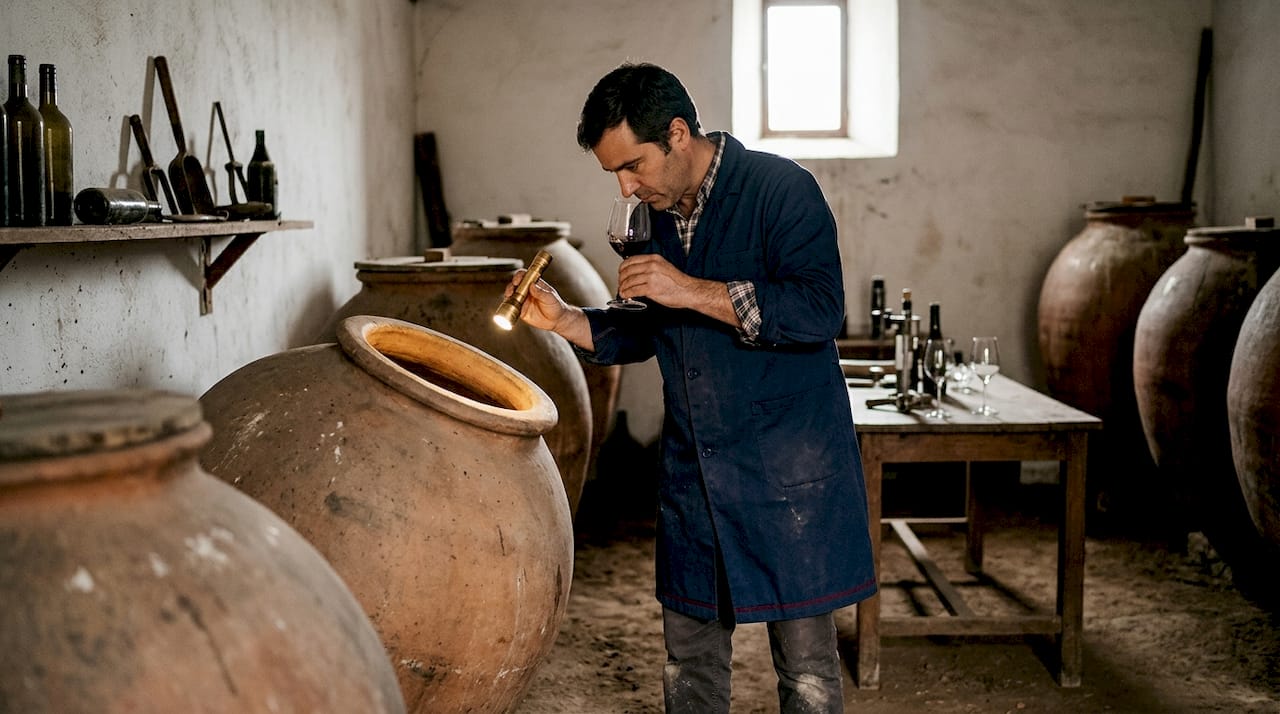
Traditional techniques also shape the sensory profile. Fermentation in clay pots, an ancestral practice revived by some producers, imparts silky textures and unique earthy aromas. Aging in French or American oak barrels adds layers of vanilla, spice, and toast, without masking the vibrant fruit.
Professional Tip: When tasting a wine, first check the label to identify the region. Then, look for the typical characteristics of that territory in the aroma and flavour. With practice, you'll be able to recognise an Alentejo wine just by its sensory profile.
| Regional Element | Impact on Wine | Alentejo Example |
|---|---|---|
| Soil | Minerality and structure | Schist gives elegance |
| Climate | Maturation and balance | Heat intensifies fruit |
| Altitude | Acidity and freshness | High vineyards preserve vivacity |
| Local grape varieties | Aromatic profile | Alicante Bouschet brings intense colour |
The choice of regionally adapted grape varieties is fundamental. Alentejo favours varieties that withstand heat and produce balanced wines even with high maturation. Aragonez offers structure and longevity. Trincadeira adds spice and complexity. Alicante Bouschet, with its rare red pulp, imparts deep colour and velvety tannins.
Studies show that soil and climate characteristics shape not only the aromatic profile but also the texture and ageing potential of wines. A well-structured Alentejo wine can evolve magnificently for a decade, developing notes of leather, tobacco, and dried fruits.
Comparison of regional expressions: Alentejo, Douro and Dão
Portugal is a mosaic of regional expressions, each with a distinct personality. Understanding these differences helps you choose the right wine for every occasion and appreciate the richness of our viticulture.
| Region | Sensory Profile | Main Grape Varieties | Dominant Climate |
|---|---|---|---|
| Alentejo | Intense fruity, soft tannins, medium to full body | Aragonez, Trincadeira, Alicante Bouschet | Hot and dry Mediterranean |
| Douro | Concentrated, firm structure, pronounced tannins | Touriga Nacional, Touriga Franca, Tinta Roriz | Continental with Atlantic influence |
| Dão | Elegant, vibrant acidity, pronounced minerality | Touriga Nacional, Jaen, Alfrocheiro | Atlantic with altitude |
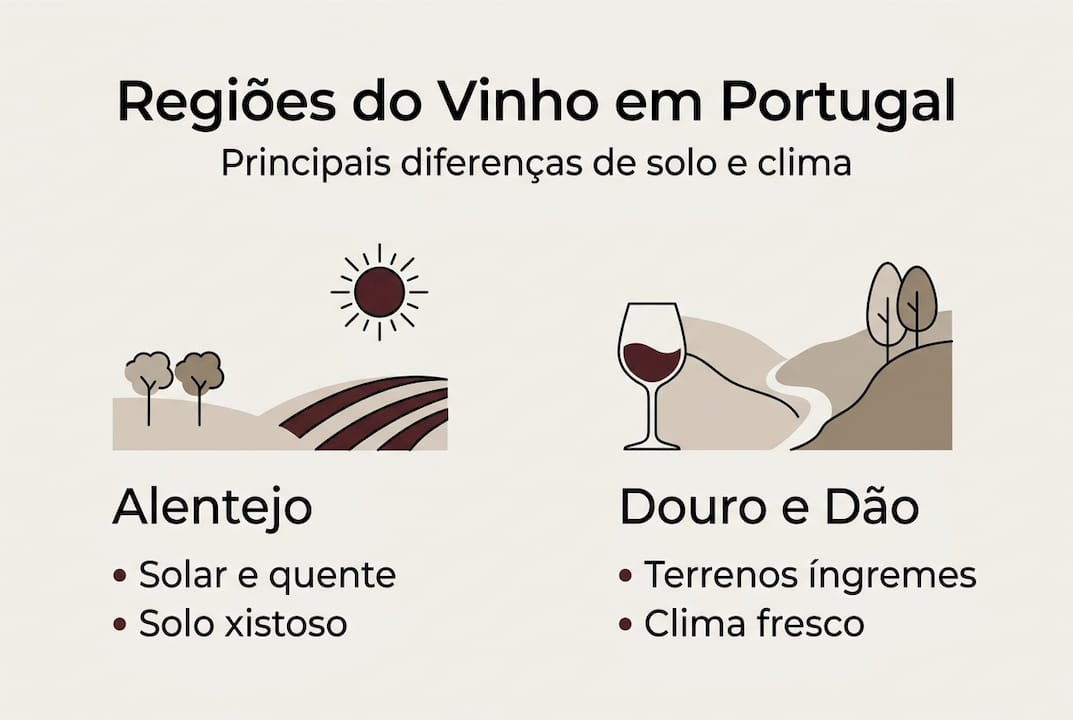
Alentejo seduces with its generous sun. Its wines invite immediate pleasure, relaxed sharing, and abundant tables. They are comforting wines, warming the heart without weighing down the stomach.
Douro commands respect. Its steep, schistous slopes produce wines of strong character, which require time to reveal their full complexity. They are wines for contemplation, rewarding patience with infinite layers of flavour.
Dão surprises with its Atlantic elegance. The altitude and surrounding mountains create a unique microclimate, where acidity remains vibrant even in warm years. They are wines of finesse, dancing on the palate with aristocratic lightness.
“Each Portuguese region is a different chapter in the great narrative of national wine, and knowing these differences is discovering the soul of each territory.”
To identify each region in the glass, follow these steps:
- Observe the colour: Alentejo tends to deep ruby tones, Douro presents intense violets, Dão shows translucent garnets
- Analyse the aroma: Alentejo reveals ripe fruit and sweet spices, Douro offers a concentration of dark fruits, Dão presents floral and mineral notes
- Taste the structure: Alentejo balances body and softness, Douro impresses with its firm tannins, Dão stands out for its refreshing acidity
- Evaluate the finish: Alentejo leaves a velvety sensation, Douro lingers for a long time, Dão ends with mineral elegance
Interestingly, some of the most expensive wines in Portugal come from these three regions, proving that well-crafted regional expression conquers demanding markets.
Reference wines from Alentejo: examples and traditions
Alentejo built its wine reputation on solid pillars: adapted grape varieties, respected traditions, and balanced innovation. Alicante Bouschet is perhaps the region's greatest ambassador, a French grape variety that found its true home in Alentejo.
This unique variety, with red pulp instead of white, gives the wines intense and deep colour, silky tannins, and aromas of ripe red fruits. Extensively planted since the beginning of the 20th century, it has become synonymous with Alentejo quality.
But the region offers much more:
- Aragonez (Tempranillo): elegant structure, firm tannins, great ageing potential
- Trincadeira: vibrant spices, refreshing acidity, aromatic complexity
- Antão Vaz: in whites, generous body, tropical aromas, creamy texture
- Arinto: citrus freshness, marked minerality, surprising longevity
Traditional practices shape regional identity. Manual harvesting still predominates in many estates, preserving the integrity of the grapes. Fermentation in clay pots, revived by visionary producers, connects the present with ancient Roman techniques.
Barrel ageing follows diverse philosophies. Some producers prefer French oak for elegance and subtle spices. Others choose American for more pronounced notes of vanilla and coconut. The best balance wood and fruit, allowing the regional expression to shine.
Professional Tip: Participate in wine festivals to taste wines directly with the producers. It's the best way to understand the choices that shape each bottle and discover small producers who make extraordinary wines.
Alentejo's gastronomic culture also influences its wines. Robust dishes such as lamb stew, seafood açorda, or migas require wines with enough body and structure to accompany intense flavours. This symbiosis between cuisine and wine has shaped preferences over generations.
How to choose wines with strong regional expression
Identifying authentic wines requires attention to details that many consumers overlook. The label is the first indicator: look for clear mentions of the region, sub-region, or even specific plot. The more precise the origin, the greater the likelihood of genuine regional expression.
Follow these steps for informed choices:
- Check the designation of origin: DOC Alentejo, DOC Douro or DOC Dão guarantee controlled origin
- Identify the grape varieties: single-varietal wines or blends with typical regional grape varieties tend to express the territory best
- Look for terroir indications: mentions of specific soils, altitudes or microclimates reveal attention to detail
- Evaluate the producer: small family producers often preserve traditions and authenticity
- Be wary of exaggerated marketing: labels with appealing design but vague information can hide generic wines
At the supermarket or wine shop, don't hesitate to ask for help. Good professionals know the producers and can recommend wines with strong regional expression within your budget.
For authentic pairings, combine regional wines with typical dishes from the same area:
- Alentejo: red wines with lamb stew, Alentejo açorda, cured sheep's cheese
- Douro: robust reds with roasted kid, grilled alheira, bacalhau à Gomes de Sá
- Dão: elegant reds with roasted suckling pig, chanfana, Serra cheese
This approach respects the logic that wines and dishes from the same region have evolved together, creating perfect natural harmonies.
Avoid common pitfalls. Wines with foreign names or international designs may be produced in Portugal but without respecting regional characteristics. Very low prices rarely allow for quality and authenticity. Medals in obscure competitions mean little.
The best strategy is to experiment, compare, and educate your palate. Buy bottles from different regions and taste them side by side. Make notes of your impressions. Over time, you'll develop a sensitivity for recognising genuine regional expressions.
Delve deeper into regional expressions with Xico Sabido
If this journey through regional expressions has piqued your curiosity, there's much more to discover. The Alentejo territory hides family estates, centennial wineries, and passionate producers who transform grapes into liquid stories.

Exploring the Alentejo wine region in person is a transformative experience. Following a route through the best places allows you to taste wines where they were born, talk to those who make them, and understand the choices that shape each bottle. It's feeling the warmth of the earth, touching the vines, breathing the aromas of the cellars.
To deepen your knowledge, a complete guide on Alentejo grape varieties reveals the peculiarities of each variety, how they behave in the territory, and what sensory profiles they offer. This knowledge transforms the way you choose and appreciate wine.
And when you want to bring the Alentejo regional expression home, authentic Alentejo wines are just a click away. Small producers, great stories, bottles that carry the soul of a generous territory.
Frequently asked questions
What is the difference between regional expression and terroir?
Regional expression encompasses the complete set of cultural, natural, and historical characteristics that shape a wine, while terroir focuses specifically on the direct impact of soil, climate, and the vineyard's geographical location.
How can I identify regional expression on a wine label?
Look for clear indications of region or sub-region, mentions of typical local grape varieties, and references to traditional winemaking practices. Alentejo labels frequently highlight the geographical origin and the varieties used.
What grape varieties are typical of Alentejo?
Alicante Bouschet, Aragonez, and Trincadeira are the main regional red grape varieties. In whites, Antão Vaz and Arinto dominate, each offering distinct sensory profiles adapted to the Mediterranean climate.
Do Alentejo wines have a typical sensory profile?
Yes, they are characterized by intense fruity aromas, soft and velvety tannins, balanced acidity, and a medium to full body. The warm climate and local traditions create this recognizable sensory signature.