

The role of the grape in winemaking: what changes in the glass
In short:
- The grape defines the colour, flavour, and structure of wine, influencing its unique character. Its chemical composition, variety, and ripeness at harvest determine the sensory profile and final quality.
The grape is the raw material that defines everything in a wine, from its colour to the last trace of flavour that lingers in memory. The role of the grape in wine production goes far beyond providing sugar for fermentation. The skin holds pigments, aromas, and tannins that shape the character of each bottle. Without understanding what happens inside each berry, it's impossible to grasp why two wines from the same year can be so different. And it is precisely this difference that makes this fruit truly extraordinary.
How the chemical composition of grapes defines wine
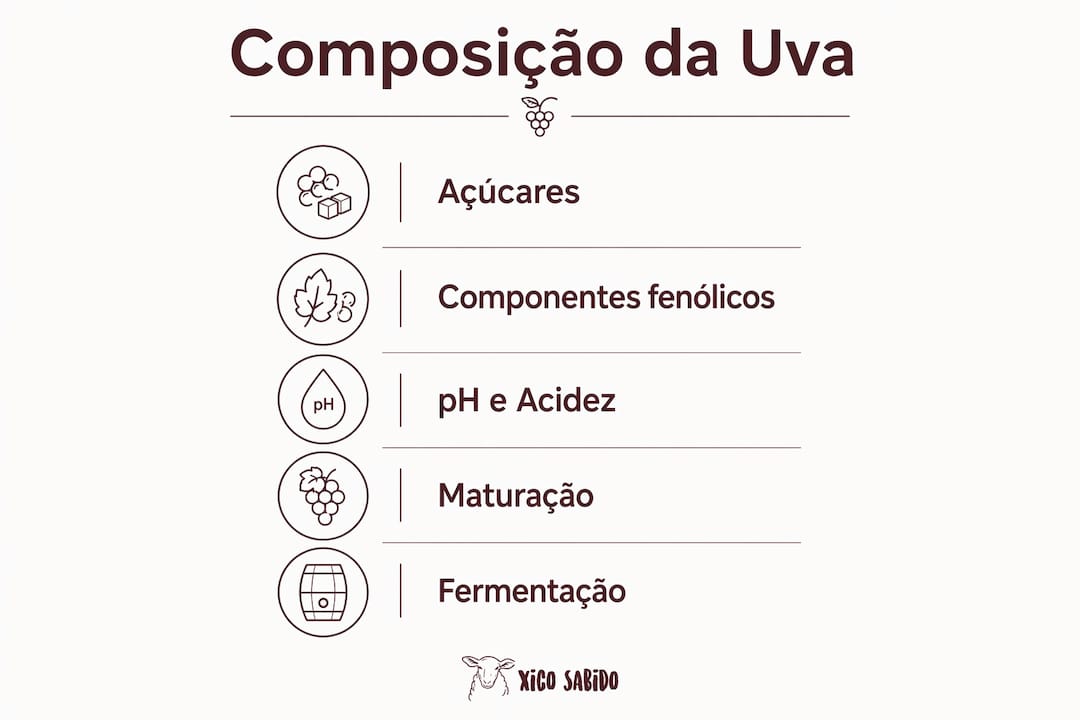
The grape acts as a complete biochemical platform, concentrating sugars in the pulp and phenolic compounds in the skin. These two groups of substances together determine the alcohol, colour, aroma, and structure of the final wine.
The main sugars in grapes are glucose and fructose. The yeasts present on the skin metabolise these sugars into ethanol and carbon dioxide during alcoholic fermentation. The alcoholic strength of the wine depends directly on the sugar content accumulated in the pulp during ripening.
Fermentation does not end here. Malolactic fermentation converts malic acid in grapes into lactic acid, reducing total acidity by approximately 0.6 g/L for each gram of converted acid. The pH increases by 0.2 to 0.5 units. The result is a rounder wine, with less aggression on the palate.
Phenolic compounds deserve special attention. They are found mainly in the skin, seeds, and to a lesser extent, in the pulp. The most relevant are:
- Anthocyanins: pigments responsible for the red and purple colour of red wines
- Tannins: present in the skin and seeds, they provide structure and astringency
- Flavonols: compounds with antioxidant function that contribute to colour stability
- Phenolic acids: influence the aroma and freshness of the wine
The quality of the grape at harvest determines the enological control parameters such as pH, acidity, and fermentation temperature. A winemaker always works with what the grape offers, not the other way around.
Pro tip: In red wine, the maceration time of the juice with the skins is adjusted according to the phenolic ripeness of the grape. Early harvested grapes have greener and harsher tannins; fully ripe grapes yield silkier tannins.
What difference does the grape variety make to the wine's flavour?
The sensory identity of a wine comes from the grape variety and the terroir where the vine grows. This is not a romantic idea. The composition of glucosylated anthocyanins varies between grape varieties and between years, explaining why the same producer can make wines with distinct profiles from vintage to vintage.
The MybA1, UFGT, and OMT genes regulate pigment production in red grapes. Their expression changes depending on the grape variety and the climatic conditions of each year. This means that the colour and stability of a red wine are, literally, written in the vine's DNA.
The table below compares some typical profiles of Portuguese grape varieties:
| Grape Variety | Type | Aromatic Profile | Structure |
|---|---|---|---|
| Aragonez (Tempranillo) | Red | Red fruits, spices | Medium tannins, good acidity |
| Alicante Bouschet | Red | Black fruits, chocolate | Intense colour, firm tannins |
| Antão Vaz | White | Citrus, white flowers | Fresh, good acidity |
| Trincadeira | Red | Plum, pepper | Elegant tannins, medium alcohol |
| Arinto | White | Lemon, green apple | High acidity, mineral |
The Alentejo terroir, with its schist and clay soils and intense summer heat, favours grape varieties that accumulate sugar quickly and develop ripe fruit aromas. Alicante Bouschet, for example, is the only red grape variety with pigmented pulp, which gives it an exceptionally dense colour even without prolonged maceration.
Pro tip: When choosing an Alentejo wine, pay attention to the grape variety on the back label. Varieties like Aragonez and Trincadeira tend to produce more elegant wines; Alicante Bouschet and Touriga Nacional offer structure and intensity.
What is the physical role of the skin, pulp, and seeds?
Each part of the grape contributes differently to the wine. Understanding this division helps to grasp why decisions in the cellar always begin in the vineyard.
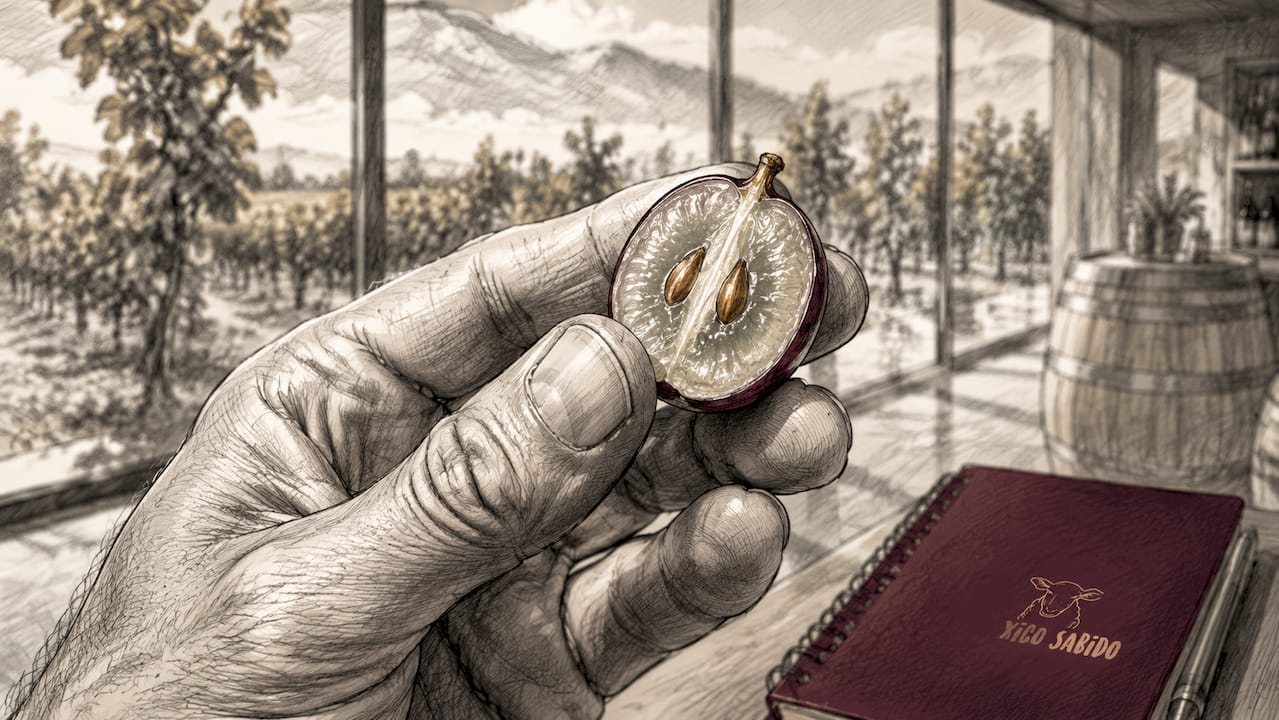
The skin is the main source of colour and aromas. Anthocyanins and tannins are concentrated here. The alcohol produced during fermentation acts as a solvent, extracting these compounds into the juice. The longer the juice remains in contact with the skin, the more colour and structure the wine gains.
The pulp is the reservoir of sugars and acids. It is from here that the must, which the yeasts will ferment, comes. The pulp also contains water, which dilutes the compounds when the grape is very hydrated, something that Alentejo producers know well after a dry summer.
The seeds contain long-chain tannins. These tannins are harsher than those in the skin and can make the wine excessively astringent if extracted in excess. Therefore, winemakers control the temperature and maceration time to limit seed extraction.
A study on Douro grapes showed significant variations in phenolic compounds between tissues, with seeds and skins presenting flavanols and anthocyanins with antimicrobial activity that varies by year and grape variety. This natural variation is what makes each vintage unique.
The chosen winemaking method always depends on the type of grape. Red wines ferment with skins for days or weeks; white wines press the grapes and remove the skins before fermentation. Orange wines undergo prolonged maceration with white grapes, extracting tannins and colour from the skins for weeks. To better understand the white wine process, it is worth exploring how white winemaking works.
How does grape ripeness affect wine quality?
Grape ripening is the moment when everything is decided. The balance between sugars and acidity at harvest determines the wine's style before any decisions are made in the cellar.
As grapes ripen, sugars accumulate, and acidity decreases. Photosynthesis in the vine leaves generates sugars that accumulate in the pulp, using solar energy to transform CO2 and water into glucose. The Alentejo sun, scorching from June to September, accelerates this process intensely.
Phenolic ripeness is different from sugar ripeness. A grape may have enough sugar to make a wine with 14% alcohol, but the tannins may still be green and bitter. The most attentive producers wait for full phenolic ripeness, even if it means taking risks with the weather.
- Check sugar content (Brix): measures sugar concentration and estimates potential alcohol
- Measure total acidity and pH: indicates the balance and freshness of the future wine
- Taste the seeds: brown and crunchy seeds indicate phenolic ripeness; green and bitter seeds indicate it's too early
- Assess ease of pulp separation: pulp that easily detaches from the skin signals full ripeness
- Consider the weather forecast: rain before harvest dilutes compounds and increases the risk of rot
The Alentejo climate favours rapid and intense ripening. Grape varieties adapted to this territory, such as Antão Vaz and Trincadeira, have developed specific biochemical responses to heat and drought. This adaptation is what gives Alentejo wines their unmistakable character: ripe fruit, generous body, and a soul that smells of warm earth.
Maceration, temperature, and time adjustments in the cellar always depend on the physicochemical state of the grape at harvest. An experienced winemaker reads the grape like a musician reads sheet music, and only then decides how to play.
Key takeaways
The grape determines the complete profile of the wine through its chemical composition, variety, and state of ripeness at harvest.
| Point | Details |
|---|---|
| Sugars and alcohol | The sugar content of the pulp directly defines the alcoholic strength of the wine. |
| Skin and colour | Anthocyanins and tannins from the skin are extracted during maceration and define colour and structure. |
| Malolactic fermentation | The malic acid in the grape fuels this process, making the wine rounder and less acidic. |
| Variety and terroir | Each grape variety expresses unique aromatic profiles shaped by the soil and climate of the region. |
| Phenolic ripeness | Harvesting at the right time ensures ripe tannins and sensory balance in the final wine. |
The grape that whispers stories: my perspective
There's something that genuinely fascinates me about this topic and is rarely stated clearly: most people still think the grape is just the sugar that fuels fermentation. That idea is incomplete. The skin is where the soul of the wine resides.
When I taste an Alicante Bouschet from Alentejo and feel that almost black colour in the glass, that density of dark fruit, I'm tasting the result of an extraordinarily pigment-rich skin. It's not magic. It's biology. And understanding that completely changes how one appreciates wine.
What increasingly convinces me is that Portuguese grape varieties are undervalued in the global context. Antão Vaz, Trincadeira, Aragonez, Alicante Bouschet: these varieties carry centuries of adaptation to the Portuguese terroir. They don't need to imitate Cabernet Sauvignon or Chardonnay. They have their own identity, built berry by berry, under the Alentejo sun.
Sustainability also comes into play here. Grape varieties adapted to the local climate are more resistant to drought and increasing heat. Investing in them is not just a matter of tradition. It's an intelligent decision for the future of Portuguese viticulture. Anyone wanting to delve deeper into tannins in wine will understand even better why the skin matters so much.
— Pedro
The Alentejo wines made possible by the grape
Xicosabido was born precisely from this conviction: that the right grape, in the right terroir, tells a story that no urban winery can replicate. Every bottle produced in Alentejo begins in the vines that grow under Portugal's most generous sun.

For those who want to go deeper, Xicosabido's complete guide to oenological products shows how grape quality translates into concrete choices in the cellar. And for those who prefer to start with the experience, the Alentejo grape varieties are all explained with the passion of someone who knows them intimately. The Xicosabido Compinchas community grows with every shared bottle. Join us.
Frequently asked questions
What does the grape do in wine production?
The grape provides the sugars for alcoholic fermentation and the phenolic compounds from the skin that define the wine's colour, aroma, and structure. Without these elements, wine does not exist.
What is the difference between red and white grape varieties?
Red grape varieties have anthocyanins in their skin that give colour to the wine; white ones do not have these pigments and produce colourless wines. Aromatic profiles and acidity also vary significantly between the two groups.
How does grape ripeness affect the flavour of wine?
Ripen grapes have more sugar and less acidity, producing more alcoholic wines with ripe fruit flavours. Phenolic ripeness determines the quality of tannins: ripe and silky or green and bitter.
What are tannins and where do they come from in the grape?
Tannins are phenolic compounds present in the skin and seeds of the grape. They impart astringency and structure to the wine, and their quality depends on the phenolic ripeness of the grape at harvest.
Why does terroir influence the flavour of wine?
Soil, climate, and altitude directly affect the chemical composition of the grape. In Alentejo, the intense heat and clay soils produce grapes with ripe, concentrated fruit, which translates into full-bodied and expressive wines.