

Impact of terroir on wine: Alentejo's identity revealed
The idea that terroir is just marketing or oenological romanticism has been debunked. Today, chemical analyses authenticate wines by the composition of volatile and phenolic compounds, proving that soil, climate, and viticultural practices shape the quality and identity of each bottle. In Alentejo, the interaction between diverse soils, hot climate, and indigenous grape varieties creates unique wines, with an unmistakable regional signature. This article explores the scientific mechanisms of terroir and reveals how this Portuguese region expresses authenticity in every sip.
Index
- Key Conclusions
- What is terroir and how does it influence the grapevine?
- Characteristics of terroir in Alentejo and the regional identity of its wines
- Scientific evidence of terroir's impact on wine composition and quality
- Terroir nuances: topography, microbiome, and viticultural practices in Alentejo
- Explore Alentejo's authentic wines with Xico Sabido
- The impact of terroir on wine: frequently asked questions
Key Conclusions
| Point | Details |
|---|---|
| Terroir as factors | Terroir refers to the set of environmental factors that shape the grapevine and influence grape quality. |
| Scientific authentication | Chemical analyses demonstrate that the composition of volatile and phenolic compounds allows wines to be authenticated by the influence of terroir. |
| Alentejo identity | In Alentejo, the diversity of soils and the hot climate, combined with indigenous grape varieties, creates wines with a distinct regional signature. |
| Water deficit | Controlled water deficit increases skin and pulp and concentrates polyphenols, resulting in more intense and complex wines. |
| Terroir monitoring | Monitoring with soil moisture and temperature sensors allows irrigation to be managed by plot and enhances the expression of terroir. |
What is terroir and how does it influence the grapevine?
Terroir is not an abstract concept. It refers to the set of environmental factors that shape the grapevine: soil, climate, topography, water availability, and nutrients. Recent studies on the influence of terroir demonstrate that soil temperature, water, and nitrogen directly affect vegetative growth, phenology, and compound accumulation in the grape.
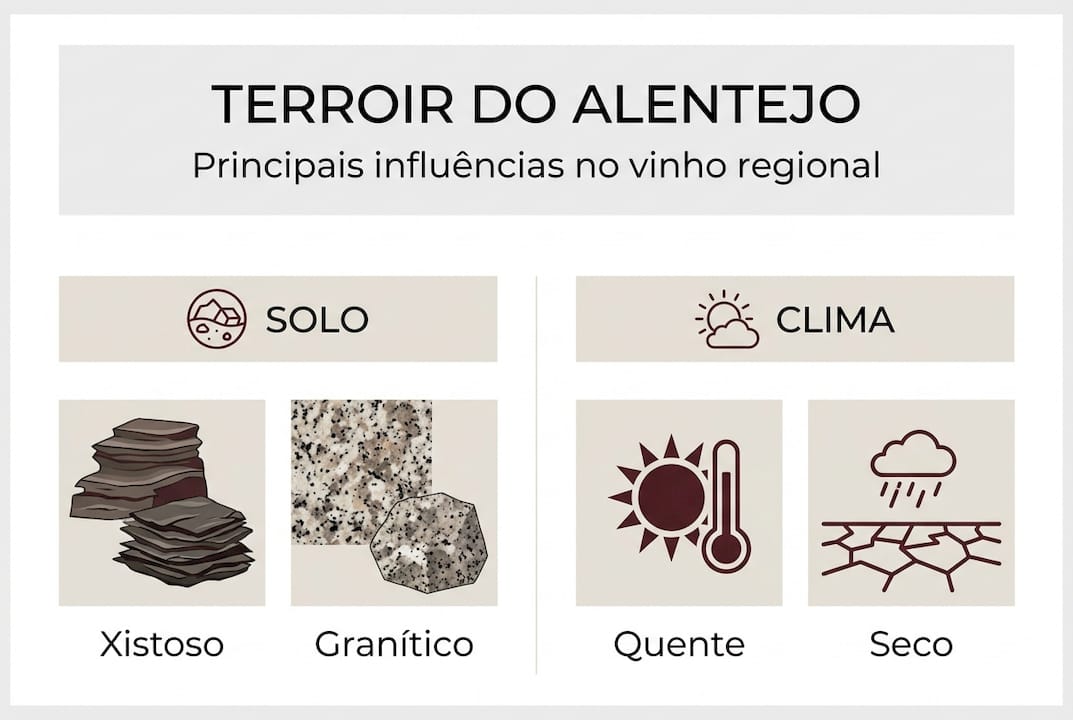
The soil determines drainage and water retention capacity. Schist soils, common in Alentejo, promote rapid drainage, forcing deep roots and creating a moderate water deficit. This controlled stress stimulates the production of polyphenols, tannins, and aromatic compounds, essential for structured and complex wines. Calcareous soils, on the other hand, retain more water and promote freshness and acidity, ideal for white grape varieties.
Soil nitrogen availability influences plant vigor. Excess nitrogen results in excessive vegetative growth, diluting phenolic compounds and reducing quality. Moderate deficit concentrates sugars and polyphenols, improving structure and aging potential. Nitrogen management is crucial for balancing productivity and quality.
Controlled water deficit is a powerful tool. When the grapevine faces water scarcity, it reduces berry size and increases the skin-to-pulp ratio. Since the skin concentrates tannins, anthocyanins, and aromatic precursors, wines from vines with water deficit show greater intensity and complexity. In Alentejo, where dry summers are the norm, this phenomenon is natural.
Professional Tip: Geophysical monitoring with soil moisture and temperature sensors allows mapping the spatial variability of terroir within the same vineyard. This information helps winemakers manage irrigation, harvesting, and winemaking by plot, maximizing the expression of terroir in each batch.
Understanding wine terms for wine lovers facilitates the interpretation of labels and technical descriptions. Words like phenology, polyphenols, and water deficit cease to be jargon and become tools for choosing bottles based on the desired profile.
Characteristics of terroir in Alentejo and the regional identity of its wines
Alentejo stands out for its pedological and climatic diversity. Schist soils predominate in areas like Portalegre, while calcareous soils appear in Vidigueira and Reguengos. Each soil type imparts distinct characteristics: schists favor structured and mineral reds, calcareous soils yield elegant and fresh whites.
The hot and dry climate, with long summers and mild winters, accelerates ripening and concentrates sugars. Cool nights preserve acidity, balancing alcohol and freshness. This daily temperature range is essential for wines with both body and vivacity. Intense sun exposure promotes anthocyanin synthesis, responsible for the intense color of Alentejo reds.
Indigenous grape varieties such as Trincadeira, Aragonez, Alicante Bouschet, Antão Vaz, and Arinto have adapted over centuries to local conditions. Trincadeira, for example, responds well to water stress, producing aromatic and elegant wines. Antão Vaz, an emblematic white variety, maintains acidity even in hot climates, resulting in balanced and gastronomic whites.
Old dry-farmed vineyards are living treasures of Alentejo's terroir. A report on old vineyards reveals that these vines, with deep roots and low yields, express purity and authenticity. Each vine tells decades of adaptation to soil, climate, and traditional practices, creating unique and unrepeatable wines.
The regional identity of Alentejo wines is no accident. It is the result of the combination of terroir, adapted grape varieties, and know-how passed down through generations. Alentejo wines express warmth, generosity, and Mediterranean character, but also elegance and freshness when the terroir is well understood and respected.
Exploring Alentejo terroir, wines, culture, and tradition allows one to discover how history, geography, and enology intertwine. Each bottle tells the story of a place, a soil, a grape variety. Learning about Alentejo grape varieties with Xico Sabido helps to understand how each variety expresses the terroir in a unique way.
Scientific evidence of terroir's impact on wine composition and quality
Advanced analytical methods now allow the identification of distinct chemical profiles between wines from different terroirs. Gas chromatography coupled with mass spectrometry detects volatile compounds such as esters, terpenes, and norisoprenoids, each contributing to specific aromas. Chemical analyses help distinguish wines by their volatile composition, authenticating origin and style.
Comparative studies in Alentejo between irrigated and dry-farmed vineyards reveal striking differences. Water deficit in dry-farmed vineyards increases important phenolic compounds such as condensed tannins, anthocyanins, and flavonols. Irrigated vineyards produce larger, juicier grapes, but with lower concentrations of polyphenols.
The positive relationship between water deficit and phenolic concentration is consistent across multiple grape varieties. Trincadeira and Aragonez, when grown in dry-farmed conditions, exhibit more complex and structured profiles. This scientific evidence validates traditional Alentejo practices, where old dry-farmed vineyards were the norm.
| Compound | Irrigated vineyard | Dry-farmed vineyard | Sensory Impact |
|---|---|---|---|
| Anthocyanins | Moderate | High | Intense color, stability |
| Condensed tannins | Low | High | Structure, astringency |
| Fruity esters | High | Moderate | Primary aromas, freshness |
| Terpenes | Moderate | High | Aromatic complexity |
| Flavonols | Low | High | Balanced bitterness, longevity |
Typical Alentejo grape varieties show distinct responses to terroir. Alicante Bouschet, for example, accumulates anthocyanins in both the skin and pulp, resulting in deep-colored reds with firm tannins. Antão Vaz maintains high acidity even in hot climates, thanks to its adaptation to the local terroir.
Professional Tip: Investment in chemical analyses of grapes and wines reinforces decisions regarding plot selection, harvest timing, and winemaking techniques. Wineries that monitor phenolic and volatile compounds can fine-tune wine profiles with precision, maximizing terroir expression.
Understanding the science behind terroir does not diminish the magic of wine. On the contrary, it reveals the complexity and beauty of the interaction between nature and culture. Authentic wines, such as those that explore sulfite-free wine and natural alternatives, show that respecting terroir and minimizing intervention results in more honest and expressive products.
Terroir nuances: topography, microbiome, and viticultural practices in Alentejo
Topography influences microclimate, drainage, and sun exposure. Vineyards on slopes benefit from natural drainage and greater exposure, while vineyards in valleys may suffer from cold air and humidity accumulation. The impact of topography and amendments on Alentejo terroir shows that topographical position affects the chemistry of Syrah and Trincadeira grapes, altering phenolic and volatile profiles.
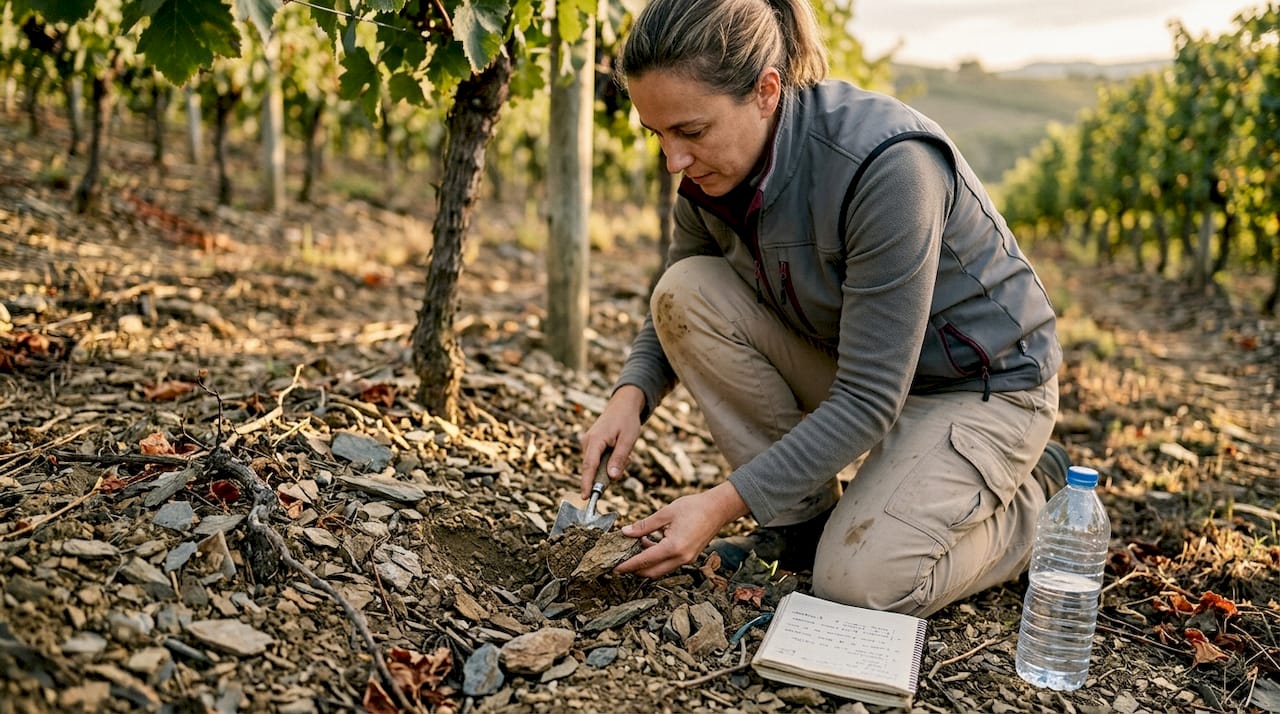
Organic amendments such as compost, manure, and plant residues modify soil structure, microbial activity, and nutrient availability. Amended soils show greater water retention and fertility, but can dilute compound concentration if not managed correctly. Balancing productivity and quality requires fine-tuning practices.
Soil microbiome is a scientific frontier in understanding terroir. A soil microbiome study in Alentejo vineyards identifies specific microbial communities, including yeasts like Lachancea and Rhodotorula. These microorganisms participate in decomposition processes, nutrient cycling, and even spontaneous fermentation, influencing wine flavor and authenticity.
The relationship between microbiome and terroir expression is complex. Specific microorganisms from each region can contribute to unique aromatic profiles, especially in natural winemaking with spontaneous fermentations. Authentic terroir wines carry the microbial signature of their place of origin.
| Practice | Conventional | Organic | Impact on terroir |
|---|---|---|---|
| Fertilization | Synthetic, rapid | Organic, slow | Organic favors diverse microbiome |
| Pest control | Chemical pesticides | Biological, preventive | Organic preserves soil biodiversity |
| Soil management | Frequent mobilization | Cover crops | Cover crops improve structure and microbial life |
| Yield | High | Moderate to low | Lower yield concentrates compounds |
Local factors that shape the terroir signature in Alentejo include:
- Altitude and sun exposure determining microclimate and temperature range
- Soil depth and composition influencing rooting and water stress
- Surrounding plant biodiversity affecting beneficial fauna and ecological balance
- Pruning and canopy management practices controlling bunch exposure and maturation
- Harvest timing adjusted to the desired profile, balancing sugar, acidity, and phenols
Exploring an Alentejo wine route allows one to witness first-hand how topography, soils, and viticultural practices vary between sub-regions. Each winery expresses the terroir uniquely, reflecting technical and philosophical choices.
The connection between terroir and flavor is not limited to wine. Other regional products, such as Iberian ham, also express terroir and flavor through the interaction between environment, diet, and traditional practices. This holistic approach reinforces the idea that authenticity and quality arise from respect for the territory.
Explore Alentejo's authentic wines with Xico Sabido
Now that you understand the mechanisms of terroir and its expression in Alentejo, you are ready to explore wines that honor this authenticity. Xico Sabido selects batches from small producers who respect the terroir, prioritizing indigenous grape varieties, old vines, and sustainable practices.

Each bottle tells the story of a soil, a climate, a grape variety adapted over generations. Discover Alentejo terroir, wines, culture, and tradition through wines that express regional identity without compromise. By buying Portuguese Alentejo wine, you support local producers and contribute to the preservation of traditional viticultural practices.
Emblematic grape varieties like Alicante Bouschet Alentejo gain a new dimension when vinified with respect for the terroir. Structure, deep color, and aromatic complexity reflect the interaction between schist soil, hot climate, and controlled water deficit.
Benefits of choosing Xico Sabido to explore Alentejo terroir:
- Rigorous selection of authentic wines that express regional identity
- Access to limited batches from old vineyards and artisanal producers
- Transparency about the origin, grape varieties, and viticultural practices of each bottle
- Personalized consultation to choose wines aligned with your palate and curiosity
- Community of enthusiasts who value authenticity and share discoveries
The impact of terroir on wine: frequently asked questions
What is terroir in the context of wine?
Terroir refers to the set of environmental factors that influence the grapevine: soil, climate, topography, water, and microbiome. These elements interact to shape the chemical composition, aromatic profile, and quality of the grape, creating wines with a unique and unrepeatable identity.
How does terroir influence the style of a wine?
Schist soils promote drainage and water deficit, resulting in structured and mineral reds. Calcareous soils favor freshness and acidity, ideal for elegant whites. Hot climate concentrates sugars and polyphenols, while cool nights preserve acidity, balancing body and vivacity.
What is the difference between irrigated and dry-farmed vineyards?
Dry-farmed vineyards depend exclusively on rain, forcing deep roots and creating moderate water deficit. This controlled stress increases the concentration of polyphenols, tannins, and aromatic compounds, resulting in more complex wines. Irrigated vineyards produce larger and juicier grapes, but with lower phenolic intensity.
How does soil microbiome affect wine flavor?
Region-specific microorganisms, such as Lachancea and Rhodotorula yeasts, participate in decomposition and nutrient cycling processes. In natural winemaking with spontaneous fermentations, these microorganisms contribute to unique aromatic profiles, carrying the microbial signature of the terroir.
Why is Alentejo special for authentic wines?
Alentejo combines pedological diversity, a Mediterranean climate, and autochthonous grape varieties adapted over centuries. Old dry-farmed vineyards, traditional practices, and varied soils create wines with an unmistakable regional identity. Each bottle expresses Mediterranean warmth, generosity, and character, balanced by elegance and freshness.
How to choose a wine that truly expresses the terroir?
Look for wines from producers who prioritize autochthonous grape varieties, old vines, and sustainable practices. Labels that mention specific plots, soil types, or water regimes indicate attention to terroir. Limited batch wines and minimal vinifications tend to express authenticity with greater fidelity.