

Narrative in Alentejo wines: authentic experiences
Drinking an Alentejo wine is much more than feeling the warmth of the scorching sun in a glass. It’s hearing the vineyards whisper centuries-old stories, feeling the clay of the amphorae, and recognizing the soul of a land that has never forgotten who it is. The narrative connects the wine to ancient history, to the terroir and local culture, transforming each bottle into a genuine emotional experience. In this article, we explore what this narrative is, why it matters so much, and how it distinguishes Alentejo wines in an increasingly demanding world.
Table of Contents
- What is narrative in wine and why is it important
- How narrative creates authenticity and value in Alentejo wine
- The narrative of amphora wine: Tradition, innovation, and cultural tourism
- Storytelling and differentiation: The impact on the luxury wine market
- Xico Sabido's perspective: Why narrative makes a difference in Alentejo wine
- Discover more about authentic Alentejo wines
- Frequently asked questions
Key Takeaways
| Point | Details |
|---|---|
| Narrative links tradition | Alentejo's history and culture are fundamental to the wine's authenticity. |
| Storytelling adds emotional value | Wines with a good narrative become experiences, not just products. |
| Authentic practices highlight Alentejo | Indigenous grape varieties, ancient methods, and sustainability enhance regional reputation. |
| Amphora wine combines past and innovation | Technology and tradition in interpretive centers strengthen cultural and tourist links. |
| Differentiation in the luxury market | Storytelling and authenticity are key to attracting sophisticated consumers. |
What is narrative in wine and why is it important
Talking about narrative in wine might seem like something for poets. But it's not. It's strategy, it's identity, it's the difference between a forgotten bottle and a bottle that stays in memory.
In the wine context, narrative is the set of stories, values, and experiences that surround a wine. It's not just a beautiful label or a technical description of aromas. It's the story of the producer who woke up before sunrise to hand-harvest, it's the indigenous grape variety that resisted pests for generations, it's the Alentejo terroir that imprints unique character on each vintage.
Storytelling in wine goes beyond marketing. It creates an emotional connection between those who produce and those who drink. According to Forbes, storytelling is a strategic pillar in the luxury wine market, creating emotional bonds and adding value beyond technical quality. In other words, it's not enough for the wine to be good. It must have soul.
“A wine without a story is just liquid in a bottle. With a story, it becomes a journey through time and space.”
The elements that form a powerful wine narrative include:
- Producer and estate history: where they come from, what drives them, what they sacrificed
- Terroir and climate: the soil, the wind, the heat of the Alentejo that no other region has
- Cultural and agricultural practices: manual harvesting, amphora fermentation, minimal intervention
- Indigenous grape varieties: unique varieties that only grow here, linked to the region's designations of origin
- Oral and cultural tradition: recipes, rituals, festivities linked to wine
In tourism, this narrative is pure gold. Visitors who come to Alentejo don't just want to taste wine. They want to understand what they are drinking, to feel like they are part of something bigger. Wineries that know how to tell their story have longer visits, higher sales, and returning customers. The narrative differentiates producers in a region that is growing and becoming increasingly competitive.
How narrative creates authenticity and value in Alentejo wine
Authenticity cannot be manufactured. It is felt. And today's consumers have a keen radar for distinguishing the genuine from the manufactured.
Alentejo wines have a huge advantage: their authenticity is real. It's in the grape varieties, in the soil, in the people. As Diário de Notícias highlights, wines with identity that use indigenous grape varieties and minimal intervention are recognized by consumers as genuinely different. This difference has value. It has a price.
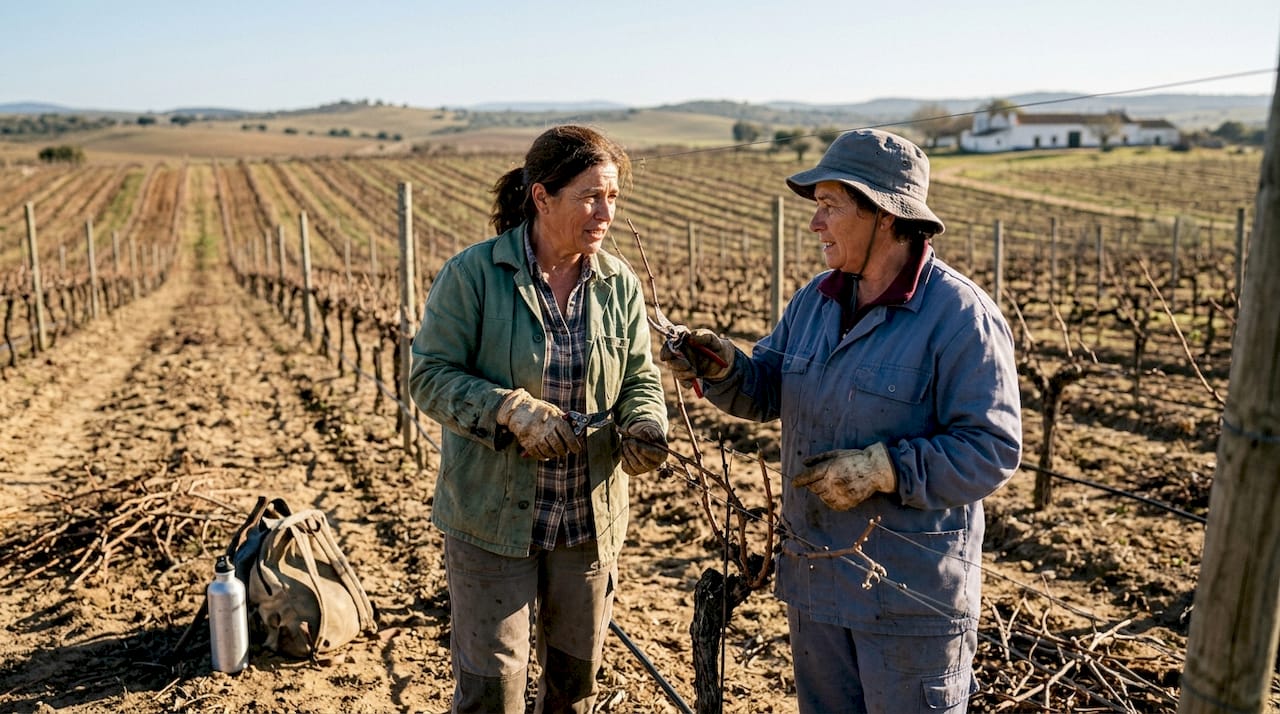
See how narrative translates into perceived value:
| Narrative element | Impact on consumer | Value generated |
|---|---|---|
| Indigenous grape varieties | Curiosity and exclusivity | Willingness to pay more |
| Ancient methods | Trust and respect | Loyalty |
| Sustainable practices | Ethical identification | Recommendation |
| Producer's story | Emotional connection | Repeat purchase |
| Specific terroir | Sense of place | Memorable experience |
The steps to building narrative authenticity in an Alentejo wine follow a clear logic:
- Choosing grape varieties with local history: Aragonez, Trincadeira, Alicante Bouschet have deep roots in the territory
- Documenting agricultural practices: photographing, filming, writing about what is done in the vineyard throughout the year
- Involving [sustainable practices](https://xicosabido.pt/viticultura-sustentavel-o-compromisso-inabalavel-do-xico sabido) in communication, showing care for the land
- Sharing the producer's voice: interviews, personal stories, childhood memories
- Connecting the wine to the territory: maps, landscape photographs, concrete geographical references
Professional Tip: When visiting a winery in Alentejo, always ask the producer which grape variety moves them the most and why. The answer will reveal much more about the wine than any technical sheet.
Minimalism is also narrative. A wine produced with minimal intervention, without unnecessary additives, tells the story of a producer who trusts the land. Knowing the grape varieties of Alentejo is the first step to understanding why each bottle is unique and unrepeatable.
The narrative of amphora wine: Tradition, innovation, and cultural tourism
If there is one symbol that encapsulates the soul of Alentejo wine, it is the amphora. These enormous clay vessels, inherited from the Romans over 2,000 years ago, are much more than a fermentation method. They are a portal to the past.
The tradition of amphora wine is used in tourist and cultural narratives that link wine to Roman heritage and regional identity in a visceral way. When visiting a winery with amphorae, you are not just tasting wine. You are touching history.
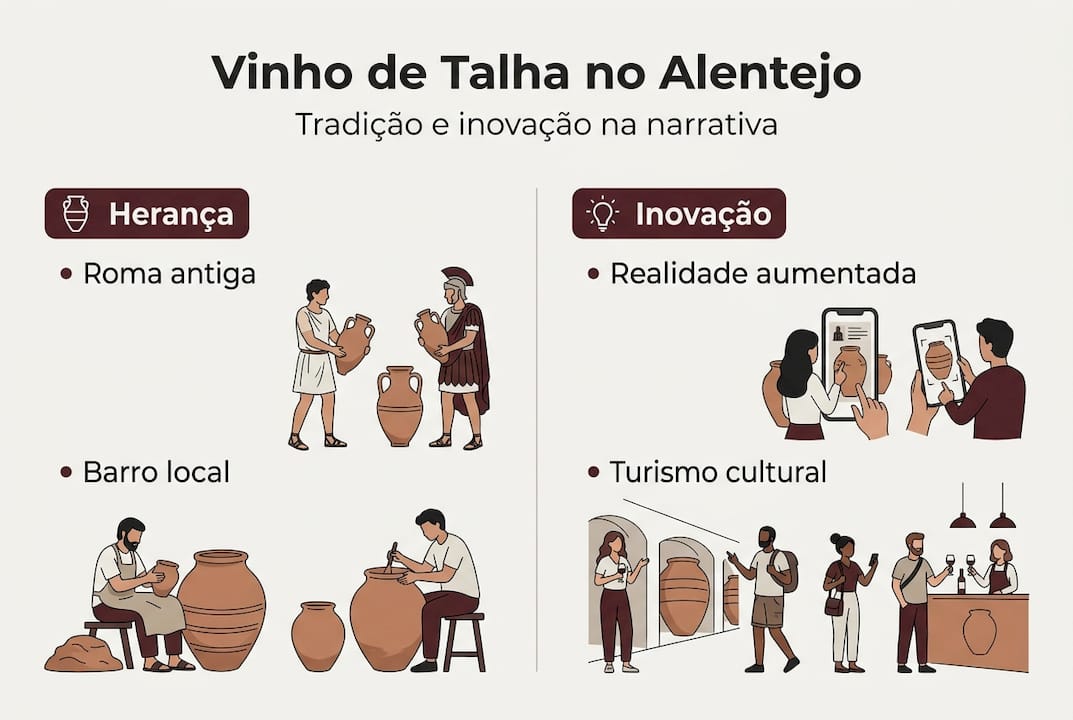
Innovation has entered this tradition intelligently. Interpretive centers use augmented reality to narrate the complete cycle of amphora wine, from Roman times to today, awakening the senses and engaging tourists in ways a conventional visit never could.
| Traditional visit | Visit with immersive narrative |
|---|---|
| Technical explanation of the process | Story told in the first person |
| Wine tasting without context | Tasting linked to historical moments |
| Guide with factual information | Augmented reality and enactment |
| Average duration: 45 minutes | Average duration: 2 hours or more |
| Souvenir: purchased bottle | Souvenir: emotional experience |
The impact on tourism is real. Those who experience this share it on social media, recommend it to friends, and return. The narrative transforms visitors into ambassadors.
Some elements that make the amphora wine narrative irresistible:
- The unique aroma of clay mixed with fermenting must
- The direct link to the Iberian terroir and flavors that the Mediterranean has shaped for millennia
- The gestures of producers working the amphorae, passed down from generation to generation
- The Alicante Bouschet fermented in amphora, with an intensity of color and flavor that is unforgettable
Exploring a wine route through Alentejo is embarking on this journey of taste and tradition with open eyes and heart. Each stop is a new chapter in a story that never ends.
Storytelling and differentiation: The impact on the luxury wine market
The luxury wine market is relentless. There are thousands of excellent producers in the world. What separates those who succeed from those who fall by the wayside is not just quality. It's the story.
As Expresso warns, narrative differentiates in competitive markets, prioritizing authenticity over standardization. But there is a real risk: when production scales, identity can be lost. What was artisanal becomes industrial. What was unique becomes common.
Luxury consumers seek precisely the opposite of massification. They want:
- Scarcity: small productions, limited editions, special harvests
- Verifiable origin: knowing exactly which vineyard the wine they drink comes from
- Human connection: knowing the face and story of who produced it
- Shared values: sustainability, respect for the land, genuine tradition
- Unique experiences: private visits, exclusive tastings, privileged access
Professional Tip: To preserve authenticity as they grow, producers should document every vineyard and winery decision. This record becomes the living archive of the narrative and ensures that the story is not lost when scale increases.
The temptation to grow quickly is understandable. But producers who sacrifice the soul of the wine for volume lose precisely what made them special. Exploring wines without sulfites and minimal intervention methods is a way to maintain narrative integrity even when demand grows.
Following the wine journey from field to bottle is also a way for the consumer to become part of the story. The stories of consumers who live this connection show that wine with a narrative creates bonds that last for years.
Xico Sabido's perspective: Why narrative makes a difference in Alentejo wine
There's a truth rarely spoken aloud: a good story without good wine beneath it fools no one. Narrative doesn't replace quality. It amplifies it.
At Xico Sabido, we learned this in the most direct way possible: by returning to our roots, by listening to our elders, by getting our hands dirty in the soil. Passion must be real. Details must be true. A superficial narrative, built merely to sell, crumbles at the first sip.
We've seen producers lose their identity by scaling too quickly. What was unique became generic. What was moving ceased to move. The lesson is clear: growth is possible, but the soul must be the last thing to negotiate.
Authenticity requires continuous investment in local culture, in people, and in the tradition and terroir that make Alentejo unique. It's not a weekend project. It's a lifelong commitment.
Discover more about authentic Alentejo wines
If you've made it this far, you already know that Alentejo wine is much more than what's in the glass. It's a living story, told by real people, in a land that holds centuries of memories.

At Xico Sabido, we believe that each bottle should be an open door to this story. Explore our wine routes and discover the best places to experience these journeys. Immerse yourself in Alentejo tradition and culture and get to know the Alentejo grape varieties that make each wine unique. Join the Compinchas and be part of this authentic journey.
Frequently asked questions
What makes the narrative of Alentejo wines special?
The narrative of Alentejo wines highlights Roman tradition, ancient practices, and a strong connection to territorial identity. Amphorae offer a rare asset: a narrative of Roman origin dating back 2,000 years, territorial identity, and authenticity that few regions in the world can match.
How does storytelling add value to luxury wines?
Storytelling transforms luxury wines into emotional experiences, valuing tradition, culture, and differentiation. According to Forbes, storytelling creates emotional bonds that add value far beyond the technical quality of the wine.
What sustainable practices reinforce authenticity in Alentejo?
The use of indigenous grape varieties, minimal intervention, and ancient methods reinforce authenticity and identity in the region. Producers like João Tique focus on indigenous grape varieties and minimal intervention, creating wines that consumers recognize as genuinely different.
How is technology helping to tell the story of amphora wine?
Interpretive centers use augmented reality to narrate the cycle of amphora wine from Roman times, awakening the senses and engaging tourists in the tradition in an immersive and memorable way.
Recommendation
- Alentejo Wine Route: The 10 Best Places - Xico Sabido
- Alentejo Terroir: Wines, Culture, and Tradition - Xico Sabido
- Alentejo Grape Varieties with Xico Sabido - Xico Sabido
- Wine Where Dreams Have No End: A Journey of Flavor and Tradition - Xico Sabido
- How to identify unique and authentic artisan liqueurs – Mezzanotte | Distilleria & Spirits