

What is a balanced wine: Alentejo 2026 guide
Many consumers believe that a balanced wine is always smooth and easy to drink. In reality, 43% confuse balance with smoothness, but true balance results from the harmony between acidity, tannins, alcohol, and body. This guide explores how to recognize balanced Alentejo wines and how sensory elements reflect the authenticity of the regional terroir, helping you make informed choices.
Table of Contents
- What is a balanced wine?
- Sensory characteristics of balanced Alentejo wine
- Impact of terroir on Alentejo wine balance
- Myths and misconceptions about balanced wine
- Practical examples of balanced Alentejo wines
- How to apply the concept of balance when choosing wine
- Discover authentic balanced Alentejo wines
- Frequently asked questions about balanced wine
Summary of key points
| Point | Details |
|---|---|
| Sensory harmony | Balance results from the integration of acidity, tannins, alcohol, sweetness, and body, not just smoothness. |
| Regional identity | The Alentejo terroir shapes unique characteristics that define balance in local wines. |
| Myths harm choices | Confusing balance with smoothness leads to incorrect decisions in wine selection. |
| Technical criteria | Assessing acidity, alcohol, and tannin ranges helps identify truly balanced wines. |
| Integrated experience | Balanced wines provide complete pleasure through the cohesion of all elements. |
What is a balanced wine?
A balanced wine shows harmony between its five main sensory components: acidity, tannins, alcohol, sweetness, and body. When these elements integrate, none dominates excessively, creating a cohesive experience.
Balance does not necessarily mean the wine is smooth or subtle. A red wine can have firm tannins, noticeable acidity, and a robust body, but remain balanced if these components support each other without creating perceptible imbalances. Intensity does not compromise balance when elements work together.
For the consumer, a balanced wine provides integrated pleasure. No sensory aspect causes discomfort or dominates perception. The acidity is not excessively sharp, the alcohol does not feel unpleasantly warm, and the tannins do not dry out the mouth too much.
Key indicators of balance include:
- Acidity that refreshes without assaulting the palate
- Tannins present but integrated into the structure
- Alcohol perceptible but not dominant
- Body proportionate to aromatic intensity
- Persistent but harmonious finish
Understanding wine sensory concepts facilitates the identification of these elements during tasting. Balance results from careful winemaking and the authentic expression of the terroir.
Sensory characteristics of balanced Alentejo wine
Alentejo wines display specific technical ranges that define their characteristic balance. The region produces reds with acidity between 5.5 and 7.0 g/L and alcohol between 12% and 14%, values that provide structure without imbalances.
These ranges reflect the adaptation of grape varieties to local climate and soils. Alentejo favors complete maturation, generating round tannins and medium to full body, characteristics that distinguish the region's wines.
| Element | Typical Alentejo Range | Impact on balance |
|---|---|---|
| Acidity | 5.5 to 7.0 g/L | Refreshes and balances alcohol and body |
| Alcohol | 12% to 14% | Supports structure without excessive warmth |
| Tannins | Medium to firm | Provide texture without aggressive astringency |
| Body | Medium to full | Harmonizes with aromatic intensity |
Tannins deserve special attention. In balanced Alentejo wines, they present a velvety or slightly grainy texture, but never harsh. This quality results from adequate phenolic maturation and studies on Alentejo wines that optimize viticultural practices.
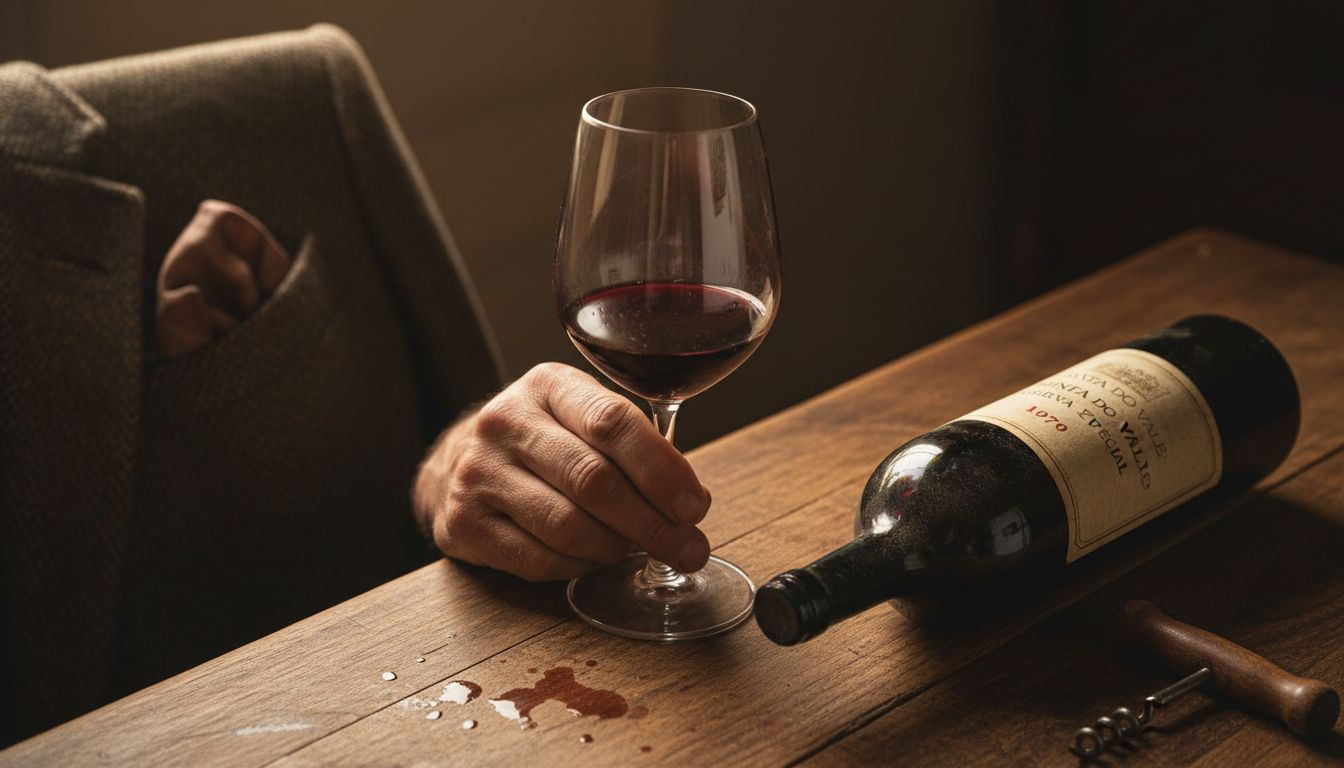
The medium to full body is characteristic but not heavy. The mouthfeel balances with refreshing acidity, creating a pleasant dynamic. The impact of terroir on flavor is manifested in this structural cohesion.
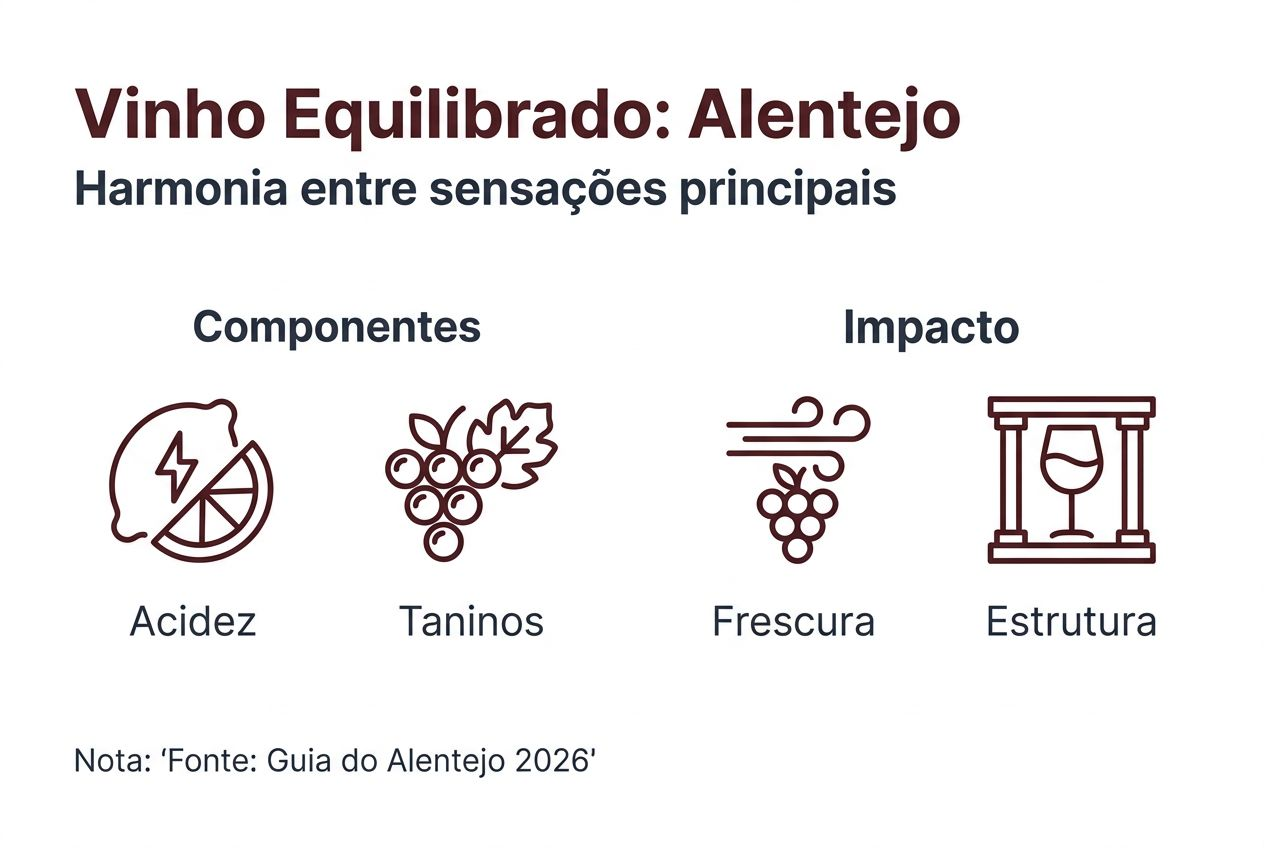
Professional Tip: To identify balance, taste the wine and assess if any element dominates the perception. If acidity, alcohol, or tannins call attention in isolation, the balance may be compromised. In a balanced wine, all components form a harmonious whole.
Impact of terroir on Alentejo wine balance
The Alentejo terroir has a direct influence on the sensory balance of the wines. The Mediterranean climate with temperatures between 16ºC and 20ºC during the growing season favors gradual and complete maturation, essential for developing ripe tannins.
The predominant clay-limestone soils in the region contribute to structure and minerality. Clay retains enough water for the vines during dry summers, while limestone favors elegant tannins. This geological combination promotes soft tannins and natural balance.
Alcohol control is a challenge in hot climates. Producers attentive to balance harvest at optimized times, balancing phenolic maturation with moderate alcohol levels. This critical decision defines whether the wine will maintain harmony or show excessive alcohol.
The influence of terroir manifests in three main dimensions:
- Natural acidity preserved by nocturnal temperature range
- Structured but soft tannins due to soil composition
- Intense aromatic expression reflecting generous sun exposure
Indigenous grape varieties like Alicante Bouschet, Aragonês, and Trincadeira have perfectly adapted to these conditions. They express the terroir authentically, generating wines with a clear regional identity. Territorial expression reinforces balance, as the varieties have evolved to thrive in these specific conditions.
Producers who respect the terroir obtain naturally balanced wines. Minimal interventions in the vineyard and winery allow the regional character to be fully expressed, resulting in cohesive and distinctive sensory profiles.
Myths and misconceptions about balanced wine
Several misconceptions compromise the correct appreciation of balanced wines. Demystifying these ideas improves choices and tasting pleasure.
-
Balance means smooth and subtle wine: Balanced wines can be intense and complex. Harmony between components does not require low intensity. A robust red with firm tannins, noticeable acidity, and a full body maintains balance if these elements support each other.
-
Balanced wines please everyone: Technical balance does not guarantee personal preference. Some connoisseurs prefer wines with controlled imbalances, such as more pronounced acidity or dominant tannins. Individual taste varies regardless of objective balance.
-
Balance is the only quality criterion: Quality involves multiple factors beyond balance. Aromatic complexity, persistence, regional typicality, and aging potential also define superior wines. A balanced but simple wine can be inferior to a slightly unbalanced but fascinating one.
-
Balanced wines are always easy to drink: Although balance facilitates appreciation, complex wines require attention even when balanced. Sensory richness can challenge less experienced palates.
Professional Tip: Do not confuse balance with lack of personality. The best balanced wines show distinctive character and clear regional expression. Balance serves the wine's identity, it does not eliminate it.
Recognizing these myths allows for more sophisticated appreciation. Balance is an evaluation tool, not an absolute dogma. Understanding when and why to value balance refines choices and increases pleasure.
Practical examples of balanced Alentejo wines
Artisanal producers in Alentejo demonstrate how balance manifests in authentic wines. Small-batch production allows precise control of each stage, from vineyard to bottling.
Xico Sabido exemplifies this approach. The brand's wines result from careful selection of local grapes and winemaking that respects varietal character. Balance emerges naturally when working with grape varieties adapted to the terroir and avoiding excessive interventions.
The balanced Alentejo wines present typical profiles:
- Alicante Bouschet reds with round tannins, refreshing acidity, and medium body
- Regional blends that integrate Aragonês and Trincadeira for balanced complexity
- Wines that express soil minerality without compromising fruit
Artisanal production favors balance because it allows decisions tailored to each harvest. Large-scale commercial producers often standardize processes, compromising the individual expression of each batch.
The Xico Sabido wine examples illustrate how regional identity and balance complement each other. Each bottle tells a story connected to the territory, from the choice of grape varieties to the label design.
Consuming wines from local producers committed to authenticity ensures balanced experiences. Transparency about origin and production methods indicates respect for the terroir and the elements that define balance.
How to apply the concept of balance when choosing wine
Applying balance criteria in practical selection improves choices, especially in online purchases where pre-tasting is not possible. Evaluating available information helps predict the sensory profile.
First, examine technical descriptions. Alcohol levels between 12% and 14% suggest adequate balance for Alentejo wines. Values above 14.5% may indicate imbalance, with dominant alcohol. Acidity, when mentioned, should be in the range of 5.5 to 7.0 g/L.
Second, value information about origin and terroir. Wines that declare a specific provenance tend to express authentic regional balance. Vague descriptions of origin may indicate commercial blends without clear identity.
Third, consult the guide to choosing wine that explains additional criteria. Expert evaluations explicitly mentioning balance provide useful indication.
Fourth, when buying Alentejo wine online, prioritize producers transparent about methods and philosophy. Brands that emphasize respect for terroir generally produce more balanced wines.
Professional Tip: When tasting for the first time, assess if any sensory element dominates the experience. If alcohol warms excessively, tannins dry out the mouth too much, or acidity assaults, the balance is compromised. Use this simple evaluation to assess sensory balance in any wine.
Practical selection criteria:
- Prefer wines with a clear declaration of origin and grape varieties
- Check for moderate alcohol levels
- Value descriptions that mention ripe or integrated tannins
- Look for indications of balanced acidity
- Choose producers with a philosophy of respect for terroir
Applying these criteria systematically refines choices and increases the likelihood of finding balanced wines that provide complete pleasure.
Discover authentic balanced Alentejo wines
Now that you understand what defines a truly balanced wine, explore the authentic Alentejo options available directly from the producer.

Xico Sabido offers wines that exemplify regional balance through artisanal production and respect for the terroir. Each bottle expresses the harmony between acidity, tannins, and body characteristic of the best Alentejo wines. The digital platform facilitates discovery and acquisition with guaranteed quality and authenticity.
When you buy Portuguese wine from Alentejo directly from the producer, you get complete transparency about origin and methods. The brand's Alicante Bouschet wines demonstrate how local grape varieties generate natural balance when cultivated respecting the terroir.
To deepen the experience, explore the Alentejo wine route and discover the places that shape the unique character of this wine region. Each visit reinforces the connection between territory, culture, and the balanced wines you so appreciate.
Frequently asked questions about balanced wine
What is the difference between balanced wine and smooth wine?
A balanced wine shows harmony between all sensory components, regardless of intensity. A smooth wine is characterized by low intensity of tannins and acidity. A robust red can be balanced without being smooth, while a smooth wine can be unbalanced if it lacks acidity or structure.
How does the Alentejo terroir influence the balance of wines?
The Mediterranean climate and the clay-limestone soils of Alentejo favor complete phenolic maturation, generating ripe tannins and preserved natural acidity. The nocturnal temperature range maintains freshness while abundant sunshine develops body and concentration. This geological and climatic combination produces natural balance in the grape varieties adapted to the region.
Can I assess the balance of a wine without advanced experience?
Yes. Ask a simple question during tasting: does any element dominate uncomfortably? If alcohol warms excessively, tannins dry out the mouth too much, or acidity assaults, the balance is compromised. In a balanced wine, all components form a harmonious whole without any standing out in isolation.
What are the advantages of choosing balanced wines when buying online?
Balanced wines provide a predictable and satisfying experience even without prior tasting. By checking technical descriptions such as moderate alcohol content, information about terroir, and reviews mentioning balance, you can select wines that are likely to please. Producers transparent about origin facilitate informed choices.
Do balanced wines evolve better over time?
Not always. Balance favors harmonious evolution when the wine has underlying structure and complexity. Balanced but simple wines may not benefit from aging. The ability to evolve depends on multiple factors beyond balance, including concentration, quality tannins, and preserved acidity.