

Discover the role of innovation in Portuguese wine in 2026
Many believe that Portuguese wine, especially from Alentejo, should remain faithful to ancestral traditions, avoiding any change. But the reality is quite different. Innovation does not threaten authenticity; on the contrary, it enhances the quality and sustainability of Alentejo wines. In this article, we explore how emerging technologies, natural practices, and digitalization are transforming Alentejo wine without compromising its unique identity. Prepare to discover that tradition and modernity can perfectly coexist in your glass.
Index
- The historical context of innovation in Portuguese wine
- Emerging technologies transforming Alentejo wine
- Comparison between traditional and innovative methods in Alentejo wine production
- How innovation can add value to Portuguese wine for consumers and producers
- Explore the innovation and authenticity of Portuguese wine with Xico Sabido
- Frequently asked questions
Key takeaways
| Point | Details |
|---|---|
| Innovation promotes quality | Innovation in Portuguese wine enhances quality and sustainability without losing regional authenticity. |
| Alentejo leads modern practices | Alentejo stands out for adopting viticultural technologies and innovative production processes. |
| Sulphite-free wines gain ground | New techniques allow for the production of purer wines, enhancing health and natural flavour. |
| Digital technology transforms the market | Digital platforms and apps are revolutionizing the wine consumption and sales experience. |
| Informed consumers choose better | Understanding innovation helps to appreciate and select Alentejo wines with greater confidence. |
The historical context of innovation in Portuguese wine
Alentejo boasts a winemaking tradition that dates back centuries, with practices passed down from generation to generation. However, the region's producers have never stood still. They have always adapted techniques and explored new approaches to improve quality and meet market demands.
Today, Alentejo accounts for 30% of national production, showing how the region exemplary integrates tradition and innovation. This statistic reveals the region's importance in the Portuguese wine scene and its ability to combine the best of both worlds. Alentejo wine production is not limited to replicating old methods but embraces modernity when it brings real benefits.
The coexistence of traditional techniques with innovation is a competitive differentiator. Alentejo producers understand that respecting the terroir and indigenous grape varieties does not mean rejecting technological advances. On the contrary, technology allows for more rigorous control of winemaking, ensuring food safety and consistency. Field sensors, climate data analysis, and modern winery equipment are tools that complement the empirical knowledge accumulated over generations.
Key historical innovations in Alentejo include:
- Introduction of drip irrigation systems to optimize water resources in a dry climate.
- Adoption of French oak barrels to refine the aromatic profile of wines.
- Implementation of temperature control in cellars to preserve freshness and elegance.
- Use of selected yeasts to ensure more predictable and balanced fermentations.
This continuous evolution demonstrates that innovation has always been part of Alentejo's winemaking identity. The difference is that, in 2026, the available tools are more sophisticated and accessible, allowing small producers to compete globally without losing the soul of their wines.
Emerging technologies transforming Alentejo wine
Precision viticulture is revolutionizing how producers manage their vineyards. Sensors installed in the soil and plants collect real-time data on humidity, temperature, and grape ripeness. This data allows for more informed decisions about the ideal harvest time, maximizing quality and minimizing waste. Digital technology and modern techniques are revolutionizing the future of wine in Portugal, making technology in Portuguese wine an undeniable reality.
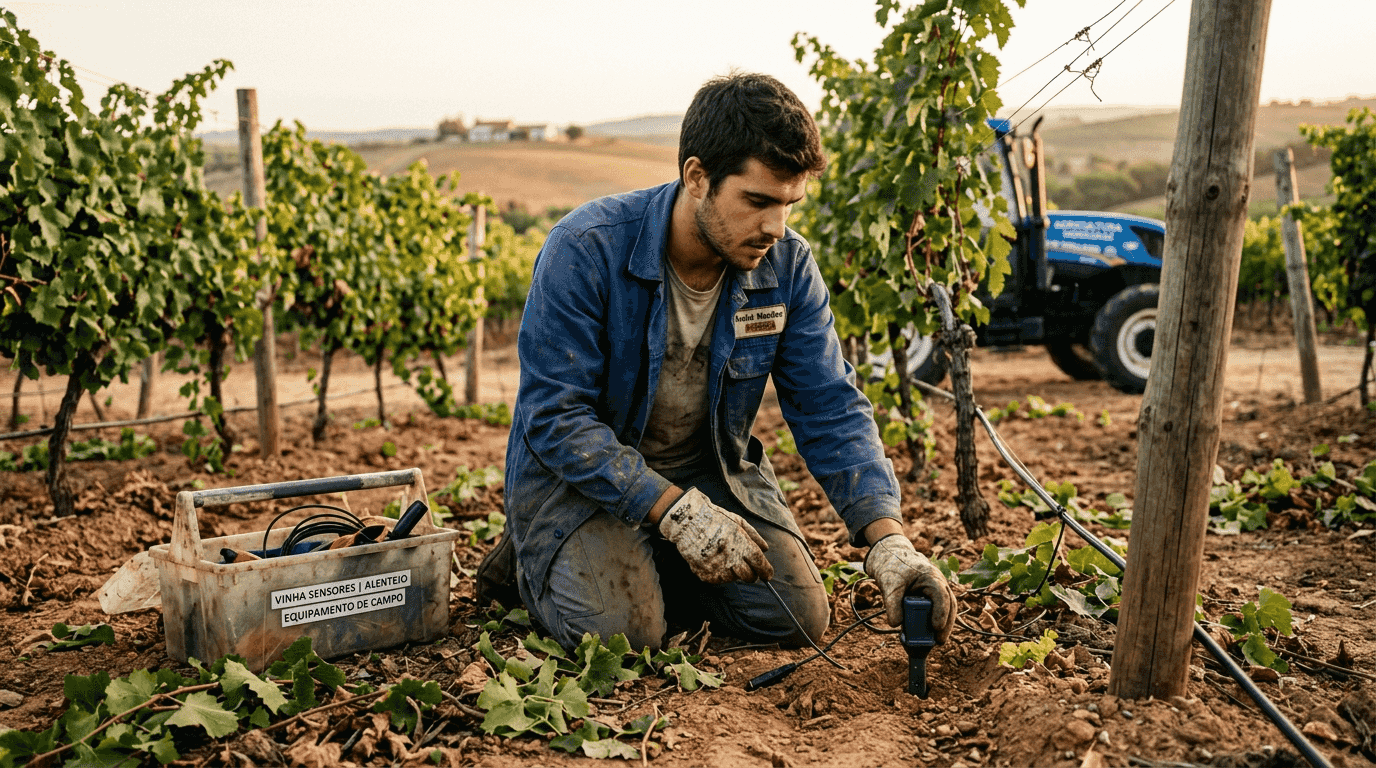
Another significant innovation involves natural alternatives to sulphites. Natural alternatives to the use of sulphites are growing, promoting purer and more sustainable wines. Sulphite-free wines in Alentejo are gaining more and more followers among consumers looking for natural and authentic products. Techniques such as amphora winemaking, the use of natural antioxidants, and rigorous hygiene control allow sulphites to be reduced or eliminated without compromising preservation.
Digital technologies also enrich the consumer experience. Wine recommendation apps, e-commerce platforms, and social media bring producers and wine lovers closer together. Digital technology in wine facilitates consumer education, offering detailed information on grape varieties, terroir, and production methods. This transparency strengthens trust and adds value to the final product.
Innovative cellar processes maintain the balance between tradition and modernity. State-of-the-art equipment allows for softer winemaking, preserving the delicate aromas of Alentejo grape varieties. Advanced filtration systems ensure clarity without removing body or complexity. Fermentation in temperature-controlled stainless steel tanks ensures clean and consistent aromatic profiles.
Sustainability is enhanced with innovative practices:
- Solar panels in wineries to reduce carbon footprint.
- Water reuse systems in washing and cooling processes.
- Eco-friendly packaging and lighter bottles to reduce environmental impact.
- Composting organic vineyard waste to naturally enrich the soil.
Pro Tip: When choosing an Alentejo wine, look for producers who disclose their sustainability and innovation practices. This transparency is a sign of commitment to quality and the environment, ensuring an authentic and responsible experience.
Comparison between traditional and innovative methods in Alentejo wine production
Understanding the differences and complementarities between traditional and innovative methods helps to appreciate the richness of Alentejo wines. Both approaches have their place and contribute to the region's unique identity. The following table presents a clear comparison between the two methods:
| Aspect | Traditional Methods | Innovative Methods |
|---|---|---|
| Harvest | Manual, based on the winemaker's sensory experience | Assisted by sensors and data analysis for precise timing |
| Fermentation | Indigenous yeasts, spontaneous fermentation in lagares (open-top fermentation tanks) | Selected yeasts, thermal control in stainless steel tanks |
| Aging | Used oak barrels, traditional clay amphorae | New French oak barrels, ovoid concrete tanks |
| Preservation | Moderate use of sulphites, artisanal practices | Natural alternatives, nitrogen inerting technologies |
| Sustainability | Organic practices passed down through generations | Environmental certifications, renewable energy, circular economy |
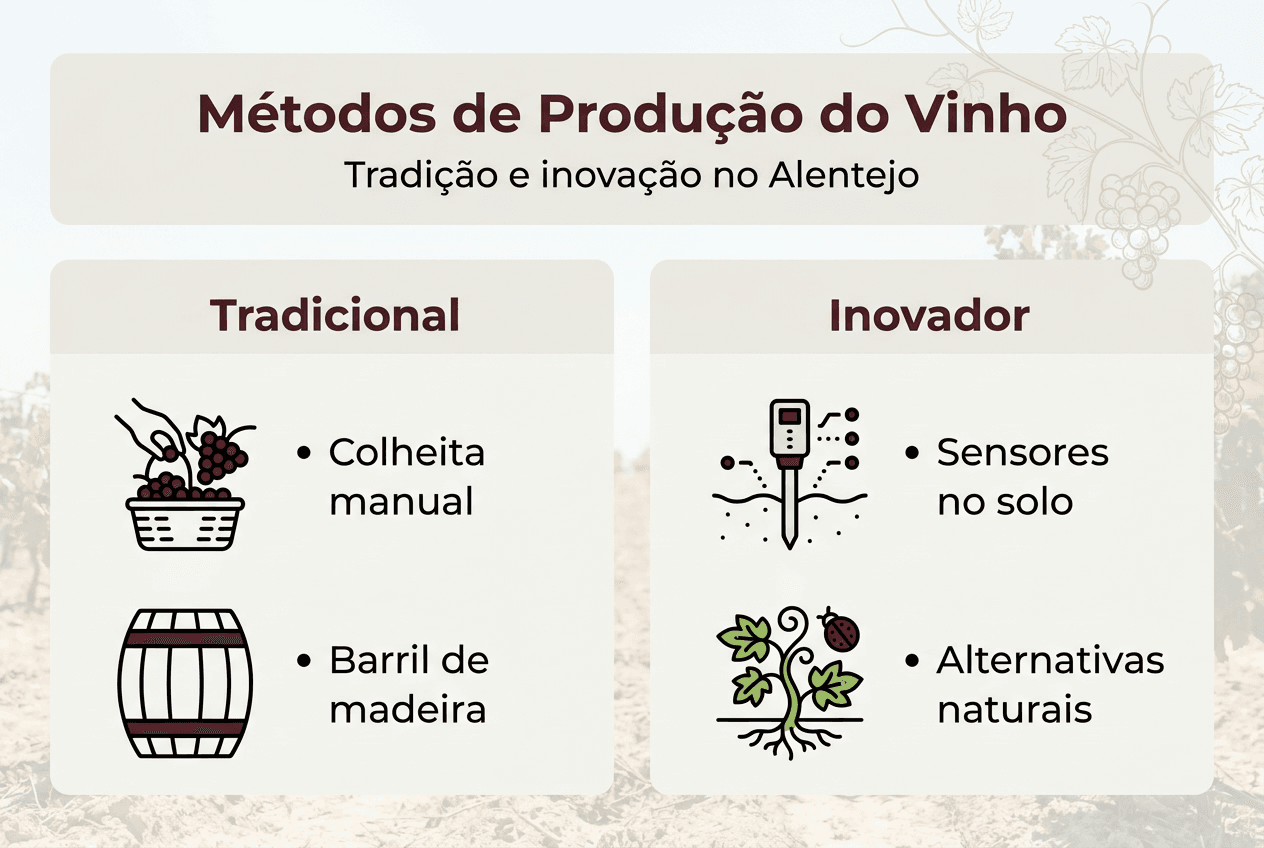
Traditional methods focus on local characteristics and accumulated artisanal experience. Winemakers rely on their senses and empirical knowledge to make decisions. This approach values authenticity and an emotional connection to the terroir. However, it can result in greater variability between vintages and less predictability.
Innovation brings gains in efficiency, consistency, and sustainability. Modern technologies allow for more controlled replication of best practices, reducing risks and waste. The quality of Portuguese wines benefits from the integration of innovative practices without losing their traditional charm. The relationship between wine quality and price becomes more transparent when consumers understand the investment in technology and sustainability.
Both methods are fundamental to the unique profile of Alentejo wines. Balanced integration allows for the creation of wines that respect tradition but respond to contemporary demands. The wine production process combines the best of each approach, resulting in authentic and competitive products in the global market.
Pro Tip: Try wines from the same producer made with different methods. Compare a wine fermented in a traditional lagar with one produced in a modern tank. This sensory experience reveals how innovation can complement tradition without replacing it, offering distinct but equally authentic profiles.
How innovation can add value to Portuguese wine for consumers and producers
Innovation makes wine more attractive and adapted to modern consumer preferences. In 2026, wine lovers seek products that combine quality, authenticity, and environmental responsibility. Emerging technologies and sustainable practices meet these expectations, creating added value.
For consumers, the benefits of innovation include:
- Greater transparency about origin, production methods, and environmental impact.
- Easier access through digital platforms and direct home delivery.
- Purer and more natural wines, with fewer chemical additives.
- Educational experiences through apps and enriched digital content.
- Better value for money due to production efficiencies.
Digital technologies facilitate consumer education and experience in an unprecedented way. Interactive platforms allow exploring the stories behind each bottle, getting to know the producers, and understanding the enological choices. Engaging customers in the selection increases engagement by 40%, showing the value of innovation in customer relations. This consumer engagement in wines transforms purchasing into a participatory and memorable experience.
Sustainable and natural practices enhance the brand and increase trust. Informed consumers recognize the effort invested in responsible production and are willing to pay more for wines that reflect these values. Environmental certifications and quality seals act as guarantees of authenticity.
The global market recognizes quality through innovation combined with tradition. Portuguese wines, especially from Alentejo, win international awards and conquer new markets. The reputation for excellence attracts demanding distributors and consumers, expanding commercial opportunities.
For producers, innovation brings competitive advantages:
- Reduced operational costs through energy efficiency and resource management.
- Access to international markets via e-commerce and digital platforms.
- Differentiation in the market with unique and sustainable products.
- Better profitability due to premium prices justified by quality.
- Resilience to climate challenges through precision viticulture.
The choice of Portuguese wines becomes more informed when consumers understand the value of innovation. Investing in technology and modern practices is not just a matter of competitiveness but of survival in an increasingly demanding and conscious market.
Explore the innovation and authenticity of Portuguese wine with Xico Sabido
Now that you understand how innovation transforms Alentejo wine, it's time to experience this revolution in your glass. Xico Sabido offers a unique selection of Alentejo wines to buy that perfectly reflect this fusion of tradition and modernity.
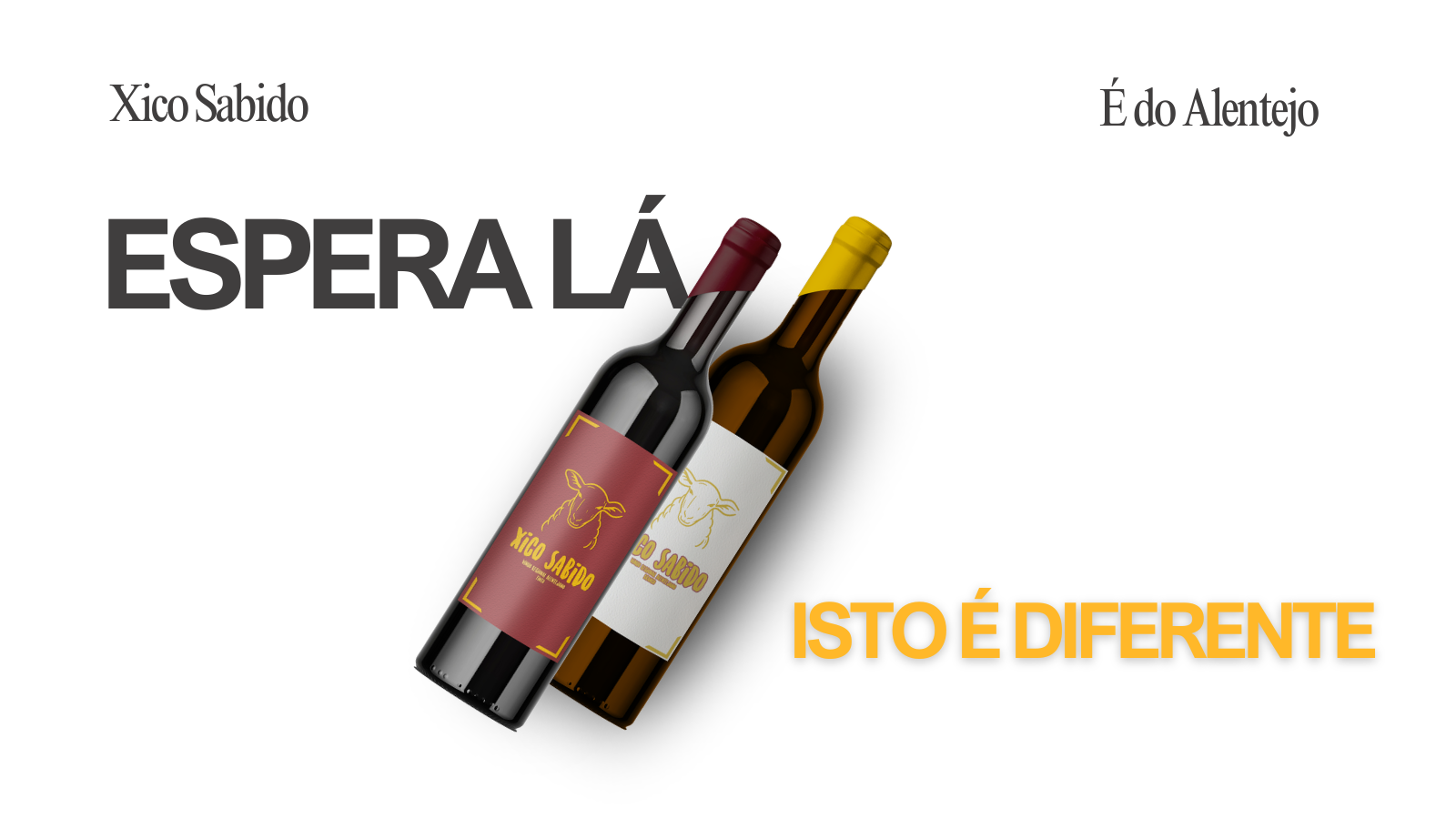
In our online store, you will find wines that incorporate the innovative practices highlighted in this article, from natural winemaking techniques to certified sustainable processes. Each bottle tells a story of Alentejo authenticity, produced with respect for the terroir and future generations. Also, explore how viral wine and commercial success intersect in the digital world, discovering trends that are shaping the market. Join the Xico Sabido community and discover wines with proven authenticity, delivered directly to your door.
Frequently asked questions
What are the main challenges in the innovation of Portuguese wine?
The biggest challenge is balancing tradition with modernity without alienating consumers who value authenticity. Many producers face internal resistance and high costs of investing in technology. Another obstacle is the need for continuous training to master new tools and processes. Despite this, the long-term benefits largely outweigh the initial challenges, especially in terms of quality and sustainability.
How does innovation impact the flavour of Alentejo wines?
Innovation allows for more precise control of fermentation and aging, resulting in cleaner and more balanced aromatic profiles. Modern techniques preserve the freshness and fruity expression of indigenous grape varieties, maintaining the identity of the terroir. Wines produced with advanced technologies tend to be more consistent across vintages, without losing complexity. The reduction of sulphites through natural methods enhances pure and authentic flavours, appealing to contemporary palates.
Can I find innovative Alentejo wines outside Portugal?
Yes, the export of Portuguese wines is growing, with Alentejo leading in international markets. Specialized e-commerce platforms facilitate global access to innovative producers. Many European and American distributors already include Alentejo wines in their premium selections. Brands like Xico Sabido ship directly to various countries, democratizing access to authentic and innovative Alentejo wines.