

Why wine pH is important for your glass
TL;DR:
- Wine pH measures the strength of its acidity and influences the freshness, color, and longevity of the bottle. A 0.1 variation on the pH scale causes substantial sensory differences; controlling this value is essential to ensure quality. pH balance depends on primary factors in the vineyard, such as climate, soil potassium, and fermentations, and is also fundamental for wine preservation and safety.
Wine pH is the measure of the strength of its acidity and directly determines the freshness, flavor, color, and longevity of each bottle you open. Do not confuse it with total acidity, which indicates the quantity of acids present. pH measures the intensity of that acidity, and that difference changes everything you perceive on the palate. Oenological institutes such as the Institute of Vine and Wine recognize pH as one of the most critical parameters in quality assessment. Here at Xicosabido, we believe that understanding the importance of pH in wine is the first step to truly appreciating what you have in your glass.
Why Wine pH is Important for Flavor and Freshness
Wine pH defines that vibrant, electric sensation you feel when a good Alentejo white touches your tongue. It's not magic. It's chemistry with soul.
The exponential pH scale means that a variation of just 0.1 units represents a real and substantial difference in perceived acidity. For the consumer, this translates into wines that seem lively and fresh or, conversely, heavy and dull.
There's a frequent confusion worth clarifying: total acidity and pH are distinct concepts. Total acidity tells you how much acid is in the wine. pH tells you how strong that acid is. A wine can have high total acidity but a relatively high pH, resulting in a soft, flabby sensation. The balance between the two is what winemakers pursue.
The sensory impacts of pH are organized as follows:
- Freshness and vivacity: pH between 3.0 and 3.3 in whites imparts that citrus energy that makes you salivate. Think of a well-made Antão Vaz from Alentejo.
- Balance and texture: pH between 3.3 and 3.6 in reds creates structure without aggressiveness. An Alicante Bouschet in this range has tannins that embrace, not cut.
- Bitterness and flabbiness: above 3.8, the wine loses tension and can seem bitter or "empty" on the palate.
- Energy and longevity: experienced tasters value pH not just for the acidic taste, but for the "energy" that keeps the wine young and expressive over the years.
Professional Tip: When tasting a wine, pay attention to the salivation it provokes. The more it makes your cheeks salivate, the lower the pH tends to be. It's your body reacting to the real acidity.
How pH Affects Color, Stability, and Aging Potential
The color of a red wine isn't just aesthetic. It's a direct sign of its pH and chemical health.
Small pH variations of 0.1 to 0.2 units cause visible changes in the wine's color, pigments, and longevity. At a low pH, anthocyanins (the red pigments in red grapes) remain in a stable and vibrant form, with bright ruby tones. When the pH rises, these pigments degrade, and the wine becomes brownish and opaque. In a glass, this is the difference between a wine with 10 years of aging potential and one that looks old after 3.
Sulfur dioxide (SO2) is the most commonly used preservative in winemaking, and its effectiveness depends almost entirely on pH. SO2 is most effective below pH 3.6 to 3.8, where it is in its active and protective form. Above this value, the winemaker needs to add much larger doses to achieve the same effect, which can affect the wine's aromatic profile.
The table below summarizes the pH ranges and what they mean for wine stability:
| pH | Typical Style | Stability | Aging Potential |
|---|---|---|---|
| 3.0 to 3.2 | Fresh whites and sparkling wines | Very high | Medium to long term |
| 3.2 to 3.4 | Complex whites and rosés | High | Good potential |
| 3.4 to 3.6 | Elegant and structured reds | Good | Long term |
| 3.6 to 3.8 | Full-bodied reds from warm climates | Moderate | Requires attention |
| Above 3.8 | Wines at risk | Low | Immediate consumption |
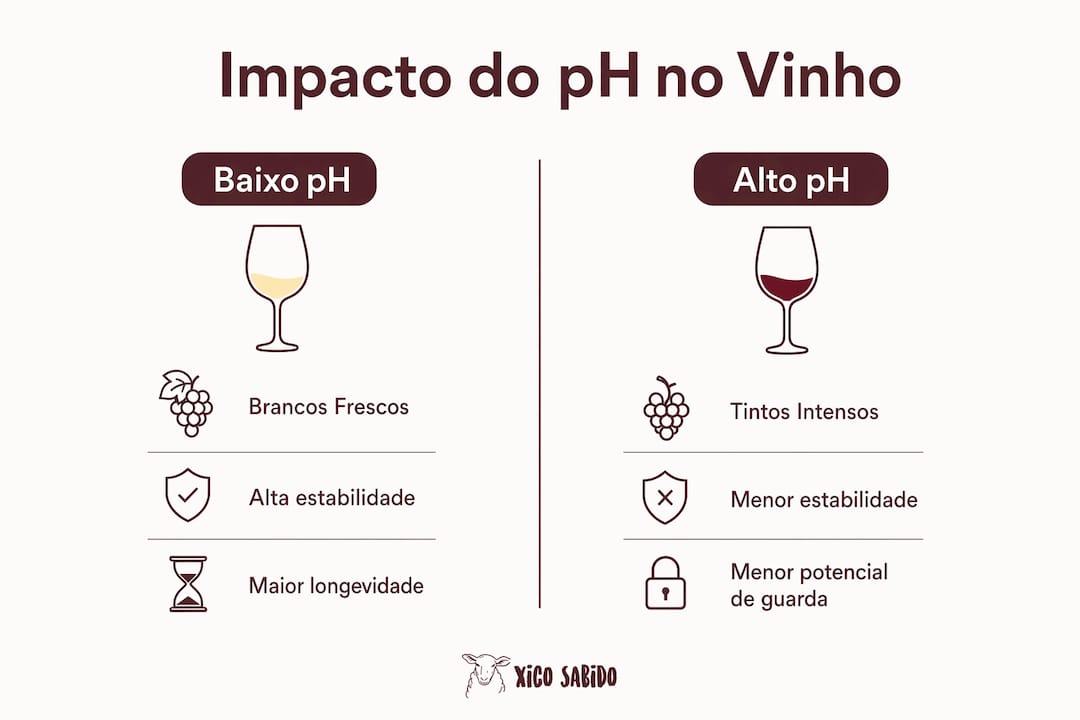
Professional Tip: If you store wines at home, choose bottles with a pH below 3.6. They are naturally more protected against oxidation and bacteria. Learn more about how to store wine correctly to preserve these characteristics.
What Factors Influence Wine pH
pH is not born in the cellar. It is born in the vineyard, under the scorching Alentejo sun or on the fresh slopes of the Douro.
pH management begins in the field, and the factors that determine it are several:
- Climate and temperature: Warm regions like Alentejo produce grapes with greater ripeness, which naturally raises the pH. Early harvesting is one of the tools to preserve acidity and control the final pH.
- Potassium in the soil: Potassium is the great enemy of a low pH. Soils rich in potassium produce grapes with higher pH. Agronomic management of potassium and the choice of rootstocks are decisions the viticulturist makes years before harvest.
- Malolactic fermentation: This secondary fermentation converts malic acid (hard and green) into lactic acid (soft and creamy), slightly raising the pH. It is a technical decision that alters the acidity profile and requires greater oenological attention to ensure microbiological stability afterward.
- Correction with tartaric acid: When the must arrives at the winery with too high a pH, the winemaker can add tartaric acid. Each 0.5 to 1 g/L of tartaric acid reduces the pH by about 0.1 units. It is a common practice in warm climates, but ideally, the pH should be controlled beforehand, in the field.
- Continuous monitoring: pH is measured from harvest to bottling, with calibrated digital pH meters. Any deviation is corrected before it becomes a problem.
- Typicity of the grape variety and terroir: There is no single ideal pH value for all wines. The goal is a balance that respects the identity of the grape variety and the territory. An Alentejo Trincadeira has a different pH than a Minho Vinho Verde, and both can be perfect.
pH is, above all, an indicator of the quality of the ripening cycle and the producer's technical precision. Adjusting it in the cellar is a correction. Getting it right in the vineyard is art.
Why pH Protects Wine Quality and Safety
A wine with poorly controlled pH is an open door to problems that the consumer rarely sees before feeling them.
pH acts as a natural barrier against unwanted bacteria. Below 3.5, the acidic environment inhibits the growth of harmful microorganisms like Brettanomyces and acetic bacteria. Above 4.0, this protection almost completely disappears. A pH above 4.0 harms the effectiveness of sulfites and compromises the microbiological stability of the wine, making it vulnerable to contaminations that evolve silently.
What the consumer can detect and what remains invisible:
- Detectable: smell of vinegar or barnyard, brownish color, flat or bitter taste, lack of freshness.
- Invisible until too late: initial bacterial growth, slow degradation of aromas, progressive loss of color before it's visible in the glass.
- Inadequate storage: high temperatures accelerate chemical reactions associated with high pH, destroying the wine faster.
Choosing a well-made wine begins by trusting the producer. A winemaker who monitors pH from the vineyard to the bottle is protecting not only sensory quality but also your health and your experience. Wine tannins and acidity work together in this balance, and pH is the invisible conductor of this orchestra.
Key Points
Wine pH is the factor that unites freshness, color, microbiological stability, and longevity in a single measure, and understanding it transforms the way you choose and enjoy each bottle.
| Point | Details |
|---|---|
| Ideal pH range | Whites between 3.0 and 3.3; reds between 3.3 and 3.6 for balance and stability. |
| pH and sensory freshness | Low pH creates vivacity and salivation; above 3.8, the wine loses energy and tension. |
| Microbiological protection | pH below 3.6 maximizes SO2 effectiveness and protects against unwanted bacteria. |
| Control starts in the vineyard | Climate, potassium, and rootstocks determine pH before any cellar correction. |
| Malolactic fermentation | Slightly raises pH and requires greater oenological vigilance to maintain stability. |
What I Learned to Taste with Attention to pH
I've been tasting Alentejo wines for years, and I can honestly tell you: the difference between a wine that captivates you and one that leaves you indifferent rarely lies in the grape variety or the price. It's in the balance. And pH is the heart of that balance.
I remember tasting a red from a small estate in Alqueva, made with Alicante Bouschet, which had such a vibrant ruby color it seemed lit from within. The winemaker told me the pH was 3.45. I didn't need to know the number to feel it. My palate confirmed everything: freshness, structure, and that feeling that the wine still had a lot to give.
What concerns me, as an enthusiast, is that many consumers buy wines without any information about how they were produced. A wine from a warm climate without pH control can seem generous and fruity in the first few months, but it ages poorly and disappoints. Learn to describe what you feel in the glass and you will naturally start identifying these signs.
The future of Alentejo viticulture involves respecting what the land gives and correcting as little as possible. The ideal pH is not manufactured. It is cultivated.
— Pedro
Discover Wines with the Right pH for Your Glass

At Xicosabido, every bottle is born from a conscious choice: Alentejo grapes harvested at the right moment, with pH monitored from the vineyard to bottling. The result is wines with real freshness, vibrant color, and a longevity that respects the time you dedicated to choosing them.
If you want to deepen your knowledge of how oenology can enhance your experience, our guide to oenological products explains the techniques and tools that make a difference. And if you still have doubts about what wine can offer beyond taste, discover the benefits of wine with the perspective that only those who live Alentejo can provide.
FAQ
What is wine pH and how is it measured?
Wine pH is a measure of the strength of its acidity, on a scale of 0 to 14, where lower values indicate higher acidity. It is measured with a calibrated digital pH meter, used from harvest to bottling.
What is the ideal pH for white and red wines?
Quality white wines typically range between 3.0 and 3.3, while reds fall between 3.3 and 3.6. Values above 4.0 compromise the wine's stability and safety.
How does pH affect wine storage at home?
A low pH protects wine against bacteria and oxidation, making it more stable during storage. Wines with a pH above 3.8 should be consumed sooner, as they degrade more quickly.
Does malolactic fermentation alter the pH of wine?
Yes. Malolactic fermentation converts malic acid to lactic acid, slightly raising the pH and softening the perceived acidity. Consumers with gastric sensitivity tend to tolerate wines that have undergone this process better.
Can I perceive the pH of a wine without equipment?
Not with precision, but intense salivation in the cheeks and a lively fresh sensation are signs of low pH. A flat wine, without tension and with residual bitterness, may indicate a high pH.