

Why is wine traceability so important
TL;DR:
- Wine traceability ensures origin, authenticity, and quality, protecting consumers from fraud. Technologies like QR codes and NFC make this verification accessible and secure, promoting transparency in the market. Its implementation enhances wine value, preserves terroir, and strengthens trust between producers and buyers.
There's something that completely transforms the experience of opening a bottle of wine: knowing where it came from. Not just the region, but the vineyard, the grapes, the hands that cultivated them. The reason wine traceability exists goes far beyond bureaucracy or dusty certificates. It's a direct response to a market where counterfeits cost millions, where consumers demand real guarantees, and where origin has become, as many already recognise, the new green passport of global trade. In this article, you’ll understand exactly what changes when a wine has serious traceability.
Index
- Key Points
- What Wine Traceability Means
- Technologies that Ensure Wine Traceability
- Traceability, Fraud, and the Real Value of Wine
- Traceability, Sustainability, and the Alentejo Terroir
- How to Use Wine Traceability in Your Choices
- My Vision on Traceability and Passion for Wine
- Taste the Alentejo with Full Confidence
- FAQ
Key Points
| Point | Details |
|---|---|
| Traceability is a real guarantee | It allows consumers to confirm the origin, quality, and authenticity of the wine in their glass. |
| Fraud exists and is costly | Counterfeits affect the global wine market, harming producers and buyers. |
| Technology is within everyone's reach | QR codes and NFC allow anyone to verify authenticity with their smartphone. |
| Sustainability and traceability go hand in hand | Portuguese wineries that trace production better control their environmental impact. |
| Informed consumer makes better choices | Understanding the origin of wine transforms every purchase into a conscious and satisfying decision. |
What Wine Traceability Means
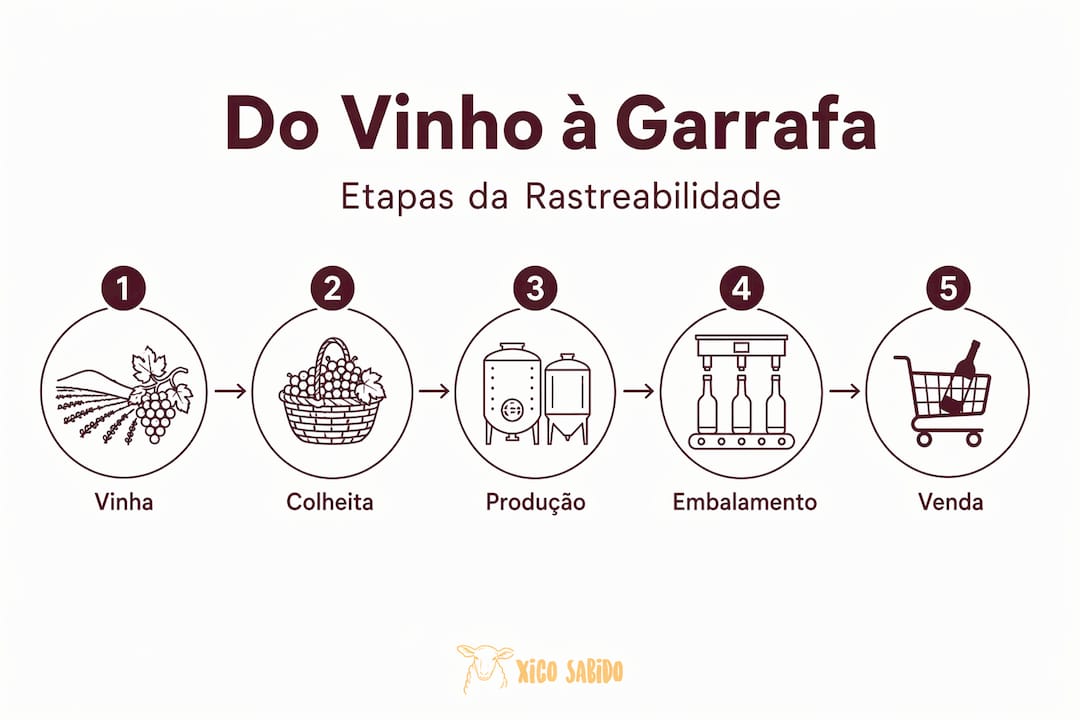
Wine traceability is the ability to track a bottle's journey from the moment the grape is born in the vineyard until the consumer opens it at the table. It seems simple, but the detail hides a rich web of information: which grape variety was used, in which soil it grew, how it was vinified, when it was bottled, and how it reached the hands of the drinker.
For the Portuguese consumer, why traceability matters in wine is an increasingly relevant question. It's not about distrust. It's about legitimate curiosity and a growing demand for transparency.
- Food safety: Traceability ensures that the wine complies with sanitary standards and does not contain undeclared substances.
- Proven authenticity: A verifiable Alentejo wine with a designation of origin is exactly what it claims to be, without doubt.
- Sustained quality: When every step is tracked, it's easier to detect flaws and correct them before they reach the consumer.
- Cultural value: Traceable origin preserves the legacy of grape varieties, terroir, and traditions of each region.
The Designation of Origin and Geographical Indication system is one of the most recognisable pillars of this traceability. The DO is not just a pretty seal on the label. It is a verifiable commitment that the wine comes from where it says it comes from and was made as it should be.
Professional Tip: When buying wine, look for the batch number and the certification body's code on the label. With this information, you can trace the bottle back to its original winery.
Technologies that Ensure Wine Traceability
The reason for tracking the origin of grapes has found surprising technological answers in recent years. The combination of physical and digital methods is now the most effective standard for protecting consumers and producers.
Physical and digital tools
- Exclusive moulds and unique bottles: Some wineries use patented bottle shapes, difficult to replicate without high industrial costs.
- Tamper-proof labels: Seals that break when removed prevent the reuse of original bottles to fill with fake wine.
- QR codes: A simple code printed on the label, readable with any smartphone, can open the complete history of the bottle, from harvest to bottling.
- NFC technology: Tiny chips integrated into the cork or capsule that communicate directly with smartphones. They are considered the safest method for the end consumer, although the cost of NFC for small wineries is still a real obstacle for smaller producers.
The science of authenticity
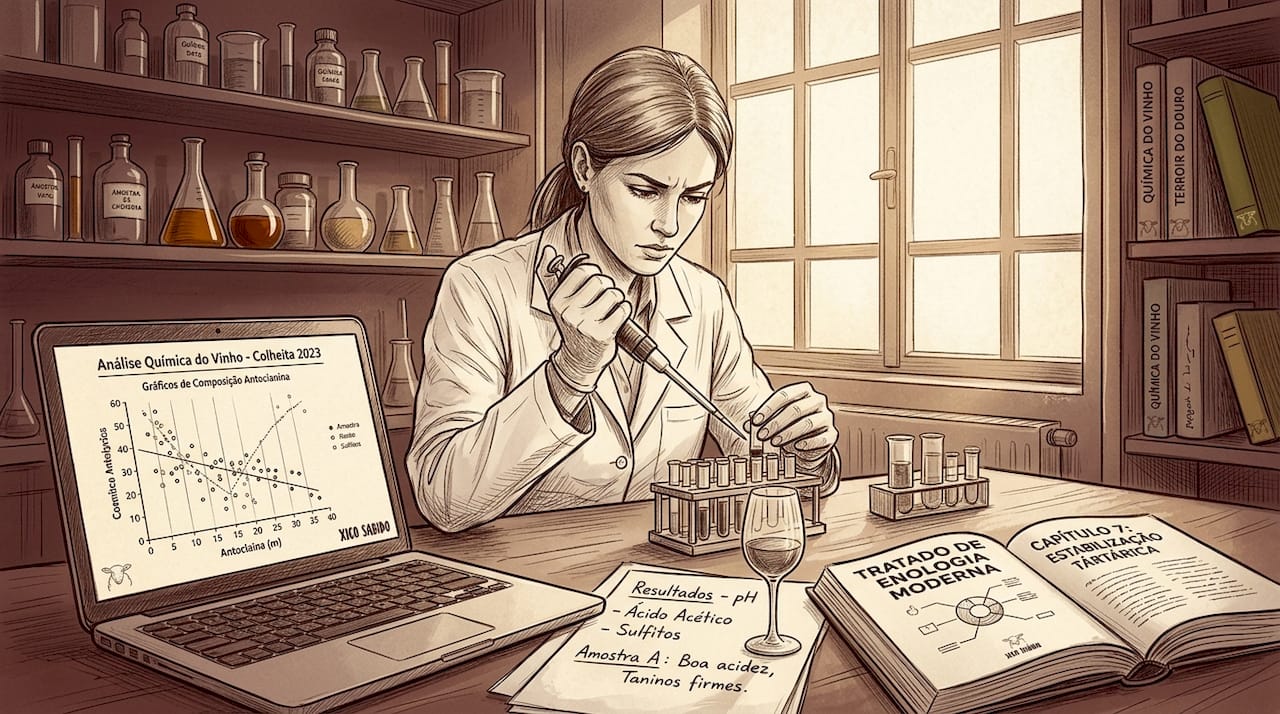
The most advanced frontier of traceability lies in biochemistry. Molecular fingerprinting by NMR can distinguish wines produced in plots separated by only 20 kilometres. Nuclear magnetic resonance reads the chemical composition of wine like a unique and impossible-to-forge fingerprint. It is the preferred tool for authenticating large collection labels and legal proceedings for fraud.
This technology is still expensive and is mainly reserved for high-value wines. But the trend is clear: authentication will become more accessible as costs decrease.
To understand how technology in wine is changing the sector, it is worth exploring how these tools are already reaching everyday consumers.
Traceability, Fraud, and the Real Value of Wine
The importance of wine traceability becomes crystal clear when one understands the scale of counterfeiting. The premium wine market has been the target of millionaire frauds for decades. A single batch of counterfeit wine can destroy the reputation of a centuries-old winery and deceive collectors who invest fortunes.
The most eloquent case is that of the 1945 Romanée-Conti. A bottle of this wine, with auditable provenance, went from 558 thousand dollars to 812 thousand dollars in less than eight years. Documented traceability is an essential part of this value. Without it, the wine would be just a dark liquid in an old bottle.
| With traceability | Without traceability |
|---|---|
| Verifiable origin in seconds | Declared origin without possible confirmation |
| Price supported by real evidence | Price based only on blind trust |
| Proven protection against counterfeiting | Vulnerable to substitution or adulteration |
| Buyer confidence guaranteed | Risk of disappointment or financial loss |
| Access to premium international markets | Limited to markets without formal requirements |
“Traceability is not an extra cost for the producer. It is the wine's identity document, and without it, the consumer is buying a story without proof.”
Wine fraud requires a dual approach: physical packaging security and integrated digital systems. Neither alone is sufficient. Together, they create a barrier that protects both the honest producer and the discerning consumer.
Transparency at the point of sale is, therefore, part of the solution. When a consumer can read the history of a wine before buying it, the decision is more informed, more confident, and often more satisfying. Understanding how to choose wine in Portugal begins precisely by knowing what to look for.
Traceability, Sustainability, and the Alentejo Terroir
The link between traceability and sustainability is not merely philosophical. It is practical and measurable. Portuguese wineries are committing to concrete environmental goals: there is a target of 320 grams per bottle by October 2026, compared to a current average of 420 to 700 grams, and the average water consumption in production is around 2.47 litres per litre of wine. Tracking this data is an integral part of fulfilling and proving these commitments.
In Alentejo, the terroir speaks for itself. The scorching sun on the vineyards, the schist and granite that support the roots of the indigenous grape varieties, the silence of the fields that fill with aroma during harvest season. All this has a name, coordinates, a story. And traceability is the tool that transforms this story into a verifiable guarantee.
- Alentejo's sustainable viticulture relies on rigorous control of resource use at every production stage.
- Tracking allows for identifying where water, energy, or raw materials are wasted and acting quickly.
- Sulphite-free wines and other natural alternatives only gain credibility when accompanied by solid traceability.
- The consumer's emotional connection to the origin grows exponentially when they can verify that what's on the label is real.
Professional Tip: If you prefer wines produced with sustainable practices, look for wineries that publish their environmental data accessibly. Transparency is the first sign of responsibility.
Traceability not only protects the wine. It protects the territory, the people who live in it, and the pride of a region that has much to tell. Alentejo is not just a designation of origin. It is a soul.
How to Use Wine Traceability in Your Choices
Knowing why traceability is important in wine is half the battle. The other half is knowing how to use it in practice, in everyday choices.
- Read the label carefully. The batch number, vintage year, grape variety, and certification body are data that must appear on wines with controlled designation of origin. This data is the starting point for verifying authenticity.
- Use your smartphone. Many wines already include QR codes that open pages with the bottle's complete history. Just point your camera, and in seconds you'll know everything you need.
- Buy from authorised channels. E-commerce platforms directly linked to the winery, specialised shops, and certified importers are the channels with the lowest risk of adulteration. The parallel market is the favourite ground for counterfeits.
- Check the NFC seal if present. A capsule with an NFC chip activates with a simple tap of your smartphone and confirms whether the bottle is original.
- Know the producer. A winery that tells its story, shares production data, and answers questions is a winery with real, not just declared, traceability.
Traceable food origin has shown that consumers pay more and buy more frequently when they trust the product's provenance. In wine, this principle is even stronger because wine is culture, memory, and shared emotion.
My Vision on Traceability and Passion for Wine
Throughout my time following Alentejo wines, I learned that traceability is not a dry subject reserved for technicians and legislators. It is the soul of trust between those who produce and those who drink.
I've seen small wineries, with limited resources, make a tremendous effort to document every step of their production. Not because the law required it, but because they were proud of what they did and wanted consumers to know it. This pride translates into more honest wines and more lasting relationships with those who appreciate them.
My conviction is this: when a consumer understands the importance of wine traceability, they stop buying on impulse and start buying with wisdom. And that wisdom, paradoxically, makes the pleasure much greater. Knowing that the wine in the glass has a verifiable history is like listening to live music after years of listening to a recording. There's something extra that can't be explained but is felt with absolute certainty.
The future of regional winemaking lies in more transparency, more accessible technology, and more consumers willing to ask the right questions. Alentejo has terroir, tradition, and passionate people. It just needs to keep telling its story, proving every word with real data.
— Pedro
Taste the Alentejo with Full Confidence

At Xicosabido, traceability is not a drawer document. It is part of our commitment to every Compincha who opens one of our bottles. Each wine is born from carefully selected grape varieties in the heart of Alentejo, with a story that begins in the vineyard and arrives intact at your table. The Alicante Bouschet from Alentejo, for example, is one of the wines where this authenticity is felt glass by glass. For those who want to go further, the Alentejo wine route is the perfect starting point to discover the region with your feet on the ground and a glass in hand.
FAQ
What is wine traceability?
Wine traceability is the ability to track the entire production chain, from grape to bottle, confirming the origin, grape varieties, agricultural practices, and winemaking process used.
Why does traceability matter to the wine consumer?
Traceability ensures that the wine is authentic, comes from where the label indicates, and was produced according to declared standards, protecting the consumer from counterfeits and poor quality.
How can I verify if a wine has traceability?
Look for the batch number, designation of origin, and QR or NFC codes on the label. These elements allow you to confirm authenticity with your smartphone in seconds.
Are all counterfeit wines luxury wines?
No. Although the most publicised targets are premium wines, like the Romanée-Conti case, fraud exists in various price segments, especially in unauthorised sales channels.
Does traceability make wine more expensive?
Traceability can increase production costs, especially with technologies like NFC, but it protects the long-term value of the wine and increases buyer confidence, which tends to support fairer prices for both parties.