

Why wine connects cultures: history, rituals, and emotion
There's something mysterious about how a glass of wine can bring strangers closer, rekindle memories, and open doors between completely different worlds. Wine isn't just a drink: it's a living archive of stories, rituals, and emotions spanning millennia. From the first records in Mesopotamia and ancient rituals, through medieval trade routes to contemporary tables, wine has been the invisible thread that unites civilizations. In this article, we'll discover together how and why this drink became one of humanity's greatest cultural links, far beyond the taste that dances on the palate.
Contents
- How the history of wine shaped cultures over the centuries
- The social and emotional connection provided by wine
- Portuguese wine: bridges to the world and marks of the diaspora
- Sensory and cultural challenges: appreciating wine between different worlds
- What almost no one says about the cultural impact of wine
- Discover more about wines, tradition, and culture with Xico Sabido
- Frequently asked questions
Key takeaways
| Point | Details |
|---|---|
| Wine as part of rituals | Wine has been present in important cultural celebrations and exchanges since antiquity. |
| Emotional and social connection | Drinking wine creates memories, facilitates dialogue and brings people together worldwide. |
| Portugal as a global bridge | Portuguese wine expanded thanks to the diaspora, tourism, and historical cross-border connections. |
| Barriers and adaptations | There are sensory and cultural challenges, but wine overcomes them when authentically translated. |
How the history of wine shaped cultures over the centuries
Wine is older than most of the nations that produce it today. Its millennial history in rituals and celebrations began over 8,000 years ago, in the fertile lands between the Tigris and Euphrates, and expanded with a force few products have managed to match.
| Era | Civilization | Role of wine |
|---|---|---|
| 6000 BC | Mesopotamia and Caucasus | Religious rituals and offerings |
| 8th century BC | Ancient Greece | Symposia, philosophy and trade |
| 1st century BC | Roman Empire | Expansion of viticulture across Europe |
| 15th century | Portugal | Discoveries and colonial routes |
| 18th century | Europe | Treaty of Methuen and diplomacy |
Every empire that expanded took its vines with it. The Romans planted vineyards from the Iberian Peninsula to Britannia, transforming wine into a product of cultural and economic integration. When the Catholic Church adopted wine as a sacred symbol, the drink gained a spiritual dimension that transcended religious and geographical borders.
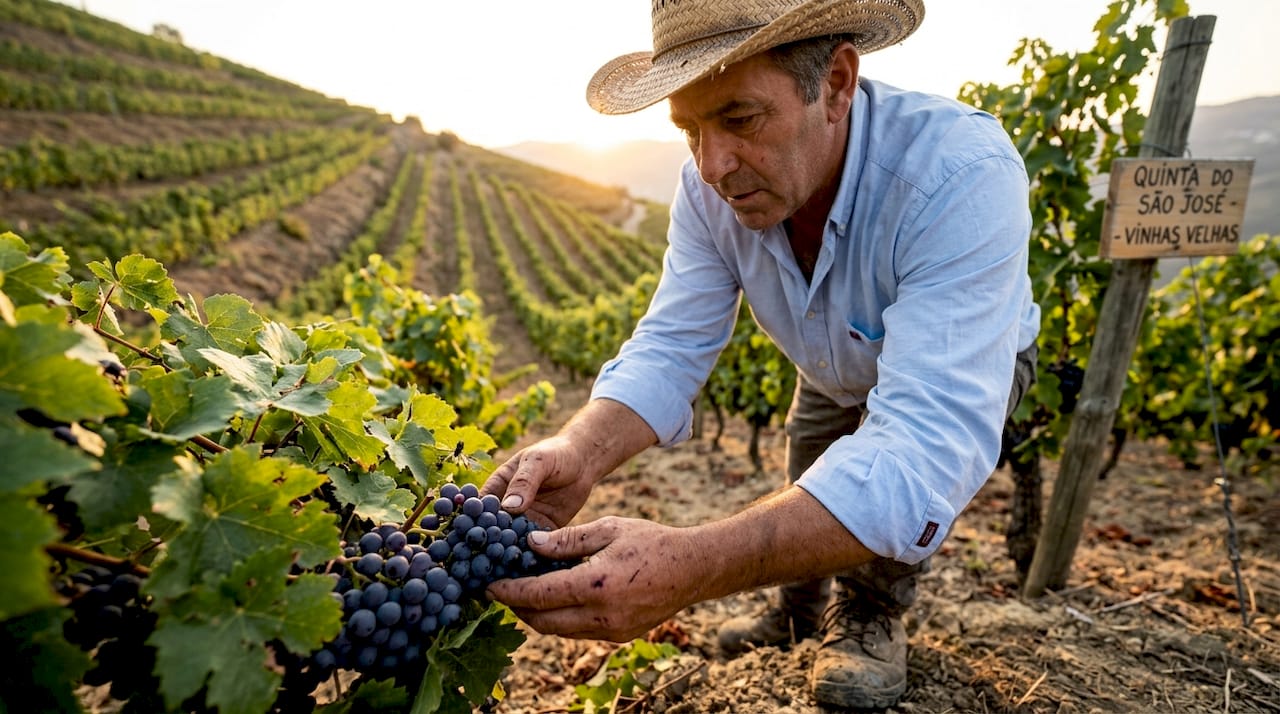
Portugal played a unique role in this history. The spread of Portuguese wine in the colonies and the Treaty of Methuen, signed in 1703 with England, opened markets that shaped European taste for decades. Portuguese ships brought grape varieties and winemaking techniques to Brazil, Africa, and Asia, creating wine traditions that still persist today.
Some milestones that define this journey:
- Ancient Greece: wine was a symbol of civilization and social distinction
- Rome: viticulture as a tool for the Romanization of conquered peoples
- Portuguese Discoveries: export of cultures, grape varieties and rituals
- Industrial Revolution: democratization of access to wine
For those who want to delve into the origin of wine and understand how we got to what we drink today, the history is as rich as the liquid itself. And if curiosity extends to the world of dry wine in Portugal, there's much to discover about how the terroir shaped the styles we recognize today.
The social and emotional connection provided by wine
Having understood its historical importance, we must now understand how wine manifests itself as a living bridge in daily relationships. Because history is made of grand gestures, but wine lives in small moments.
The wine as a bridge in encounters is a reality that everyone has experienced: that family dinner where conversation flows more easily after the first glass, or the toast between friends that turns an ordinary night into an unforgettable memory.
“Wine is not just what is in the glass. It is the pretext to be together, to listen, to share. It is the ritual that reminds us that we are human.”
This emotional dimension manifests itself in very specific moments:
- Religious celebrations: from the Eucharist to harvest festivals, wine marks passages and sacred rituals
- Festive dates: Christmas, weddings and baptisms have wine as a symbol of shared joy
- Family dinners: choosing wine becomes an act of care and attention to others
- Gatherings with friends: the toast is a universal gesture of belonging and affection
Professional Tip: When choosing a wine for a special occasion, think about what you want to communicate. A local wine, with history and soul, says much more than any speech. Explore food pairing suggestions to transform every meal into a memorable experience.
Wine has also been studied for its benefits for well-being, and even for its curious aphrodisiac effect that popular tradition has always recognized. But perhaps the greatest benefit is precisely this: the ability to create space for genuine conversation. For those who want to learn how to pair wines with dishes, the journey always begins with curiosity and openness.
Portuguese wine: bridges to the world and marks of the diaspora
From the perspective of social relations, we move on to the influence of Portuguese wine on global identity and diplomacy. Portugal is small on the map, but immense in the glass.
Portuguese wine exports reached record highs in 2024, with the diaspora playing a central role in promoting national grape varieties and traditions across all continents. Every Portuguese emigrant is, in a way, an involuntary ambassador for Alentejo, Douro, or Madeira.
| Wine region | Main market | Highlight |
|---|---|---|
| Port Wine | United Kingdom, USA | Secular diplomatic tradition |
| Madeira Wine | USA, France | Unique resistance and longevity |
| Alentejo | Brazil, Angola | Accelerated growth post-2010 |
| Vinho Verde | USA, Canada | Appeal to lightness and freshness |
The main vectors of this expansion are:
- Portuguese diaspora: communities in France, Switzerland, Brazil, and the USA create organic and authentic demand
- Wine tourism: foreign visitors who taste wine at its source become ambassadors in their home countries
- International restaurants: chefs and sommeliers discover unique grape varieties such as Touriga Nacional and Aragonez
- Digital platforms: brands like Xico Sabido sell directly to consumers worldwide
Wine tourism deserves special mention. Anyone who visits the Alentejo and tastes a wine in the shade of a holm oak will never forget it. This sensory and emotional experience is the best calling card Portugal can offer. For those who dream of this journey through Portuguese wines, the adventure begins long before reaching the destination.
Sensory and cultural challenges: appreciating wine between different worlds
After mapping Portugal's presence in the world, we now address the differences and challenges of communicating flavor and culture through wine. Because not everything is about toasts and celebrations: there are real barriers that wine needs to overcome.
Cultural barriers affect wine exports, with genetic and historical differences influencing taste and receptivity to wine profiles very different from local ones. A Japanese, an American, and a Portuguese consumer approach the same glass with completely different expectations.
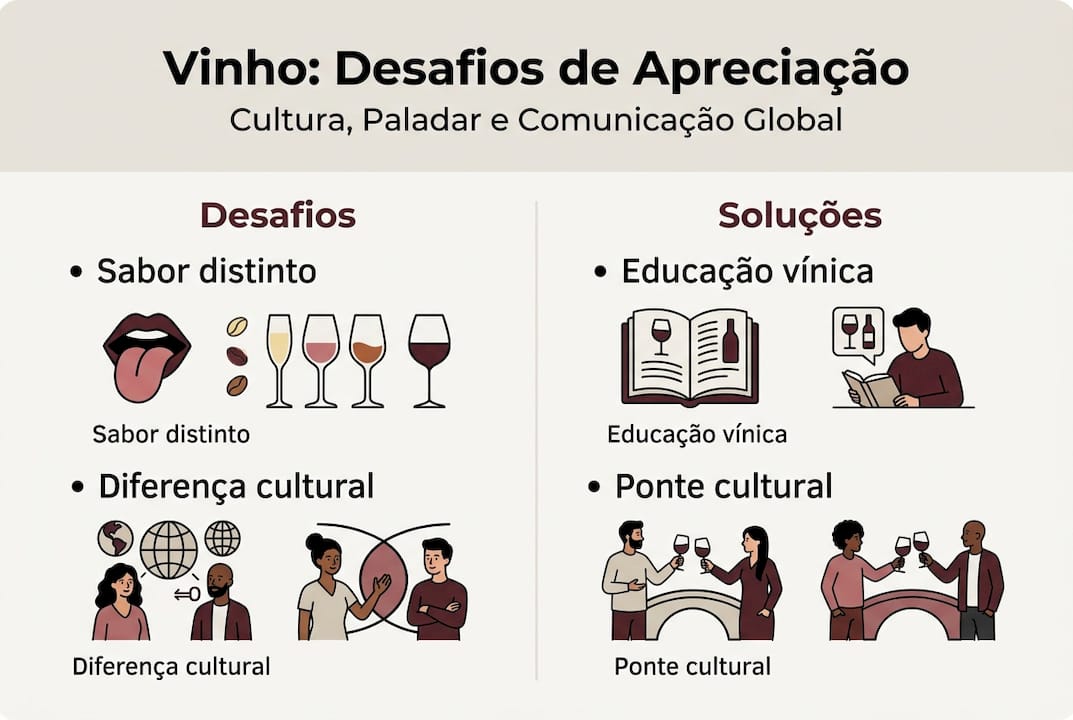
One surprising fact: 76% of Chinese consumers reported difficulty understanding Western terms used to describe wine, such as “tannins,” “acidity,” or “aftertaste.” The language of wine itself is a cultural barrier.
| Market | Main challenge | Adaptation strategy |
|---|---|---|
| China and Asia | Terminology and tannic profiles | Fruitier wines and visual labels |
| North America | Preference for new wines | Communication of freshness and accessibility |
| Northern Europe | Skepticism towards southern wines | International certifications and awards |
| Brazil | Loyalty to local brands | Diaspora and cultural storytelling |
Some common barriers producers face:
- Differences in palate between cultures with very distinct diets
- Technical vocabulary inaccessible to new consumers
- Preconceptions about lesser-known regions
- Varying import regulations and labeling
Professional Tip: If you're discovering the world of wine, start by exploring a good wine glossary to feel more confident in your choices. And if you have sensitivity to certain compounds, it's worth knowing about sulfite-free wine options that are gaining market share.
Premium wines have an advantage in this context: their complexity and prestige act as a universal language, more easily overcoming cultural friction. Those who want to understand how a wine can go viral today will find answers in the wine basics that explain what truly captivates palates from different cultures.
What almost no one says about the cultural impact of wine
There's a romantic idea that wine automatically unites those who drink it. But the truth is more demanding than that. Connection doesn't just happen because there's a glass in hand: it requires genuine curiosity, respect for the other's history, and a willingness to translate experiences that don't always have words.
Wine is like a language. You can learn the basic vocabulary and communicate, but true fluency only comes when you immerse yourself in the culture that gave it birth. An Alentejano sharing a glass of red wine with a Japanese visitor is not just offering a drink: they are opening a window to the land, the sun, and the rituals that shaped that liquid.
Wine only unites when there is openness to the exchange of stories and traditions. Without this willingness, it is just alcohol with notes of red fruits. With it, it becomes memory, identity, and belonging.
We believe that the most powerful wine is not the most expensive or the most awarded. It is the one that carries a true story and finds someone willing to listen to it.
Discover more about wines, tradition, and culture with Xico Sabido
If this article has sparked in you the desire to go further, to experience wine not only in the glass but also in the landscape and the people who make it, then a path awaits you.

At Xico Sabido, we believe that Alentejo wine has stories to tell that cross borders. Explore our Alentejo wine route and discover the places where tradition still pulses with strength. Immerse yourself in the world of Alentejo terroir and understand how the land, climate, and people shape each bottle. And if you want to understand the phenomenon of wine going viral in the digital age, we have a lot to share with you. The Compinchas community is always growing, and there's always a place at the table.
Frequently asked questions
Why is wine considered a symbol of cultural unity?
Since antiquity, wine has served as a link in celebrations, rituals, and agreements between peoples of different origins, its history in social rituals being one of the longest and richest in humanity. It is one of the few beverages that crosses religions, social classes, and continents with the same symbolism of sharing.
How does Portuguese wine influence other countries?
Through trade, the Portuguese diaspora, and historical partnerships such as the Treaty of Methuen, Portugal brought grape varieties and traditions to new stages. Portuguese wine disseminated by the diaspora and record exports in 2024 show that this influence is more alive than ever.
Is it difficult for other peoples to appreciate foreign wine?
Yes, cultural distance affects wine exports due to differences in taste and biology, and 76% of Chinese consumers report difficulty with Western wine terminology. Adapting communication and flavor profiles is essential to overcome these barriers.
Does wine influence personal and emotional relationships?
Yes, wine strengthens bonds, creates memories, and is central to social and family celebrations. Its role as a promoter of social unity is documented and recognized in virtually all cultures that consume it.