

Why choose natural wine: a beginner's guide
TL;DR:
- Natural wine is produced using low-intervention practices, involving organic grapes and fermentation with indigenous yeasts. It features vibrant flavors, lower sulfite content, and genuinely reflects the terroir, promoting authenticity and a connection to its origin. To choose, one should inquire about sulfite use and prefer trustworthy producers, appreciating its unpredictability and potential for evolution in the bottle.
Some might think that natural wine is just an urban fad, something for restaurants with raw wooden tables and stemless glasses. But the reality is far richer than that. Why choose natural wine is a question that more and more Portuguese consumers are asking with genuine curiosity, not just because it's trendy. This guide will answer that question honestly: what this type of wine actually is, what distinguishes it from its organic and biodynamic cousins, what its real advantages are, and how to start exploring it without getting lost along the way.
Index
- Key Points
- What distinguishes natural wine from other styles
- Advantages of choosing natural wine
- How to choose natural wine in Portugal
- Myths and challenges of natural wine
- My perspective on the future of natural wine
- Discover Alentejo in every bottle with Xicosabido
- FAQ
Key Points
| Point | Details |
|---|---|
| No single legal definition | The term "natural wine" has no official regulation in the EU; what defines each bottle are the producer's practices. |
| Fewer sulfites, more purity | Natural wines have much fewer added sulfites than conventional ones, which appeals to those with sensitivities. |
| Vibrant and unpredictable flavor | The absence of filtration and stabilization results in a unique, mutable sensory profile deeply connected to the terroir. |
| Start with known producers | To avoid surprises, the first steps should be with established producers from trusted regions like Alentejo. |
| Turbidity is not a defect | Sediments and a cloudy appearance are signs of low intervention, not poor quality. |
What distinguishes natural wine from other styles
Let's start from the beginning, because there's a lot of confusion here. Natural wine, also known as low-intervention wine in an international context, does not have a single legal definition in Portugal or the European Union. The term is used by communities and associations of producers who share a common philosophy, but the criteria vary from producer to producer.
What unites almost all of them is the idea of interfering as little as possible, both in the vineyard and in the cellar.
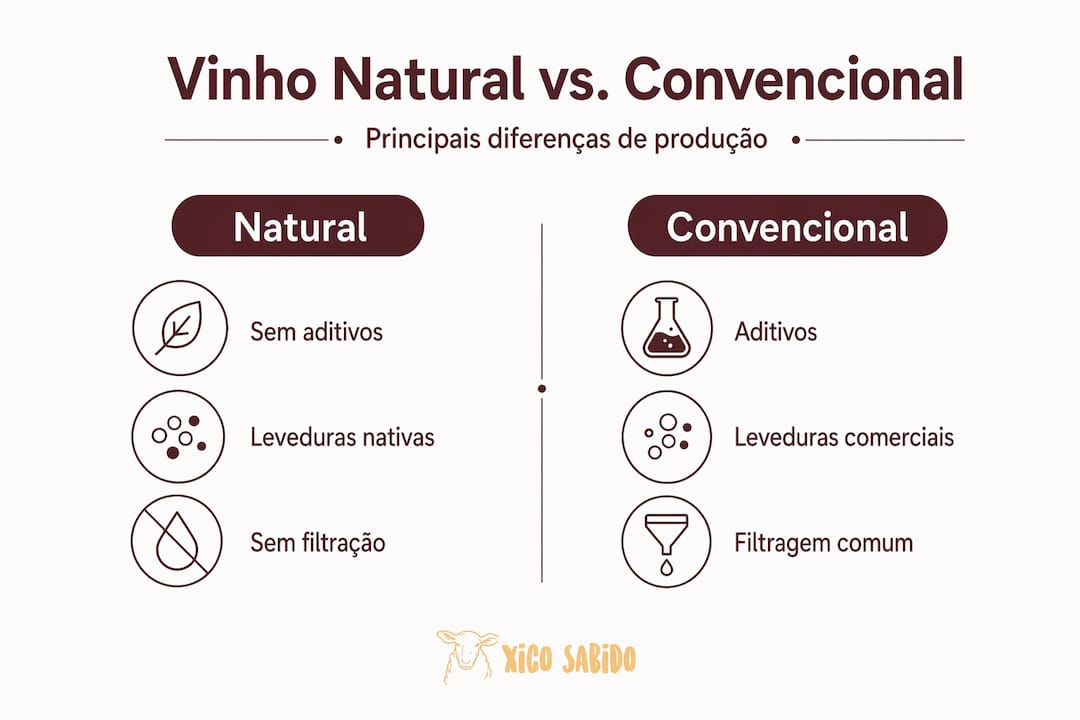
Vineyard, cellar, and yeasts
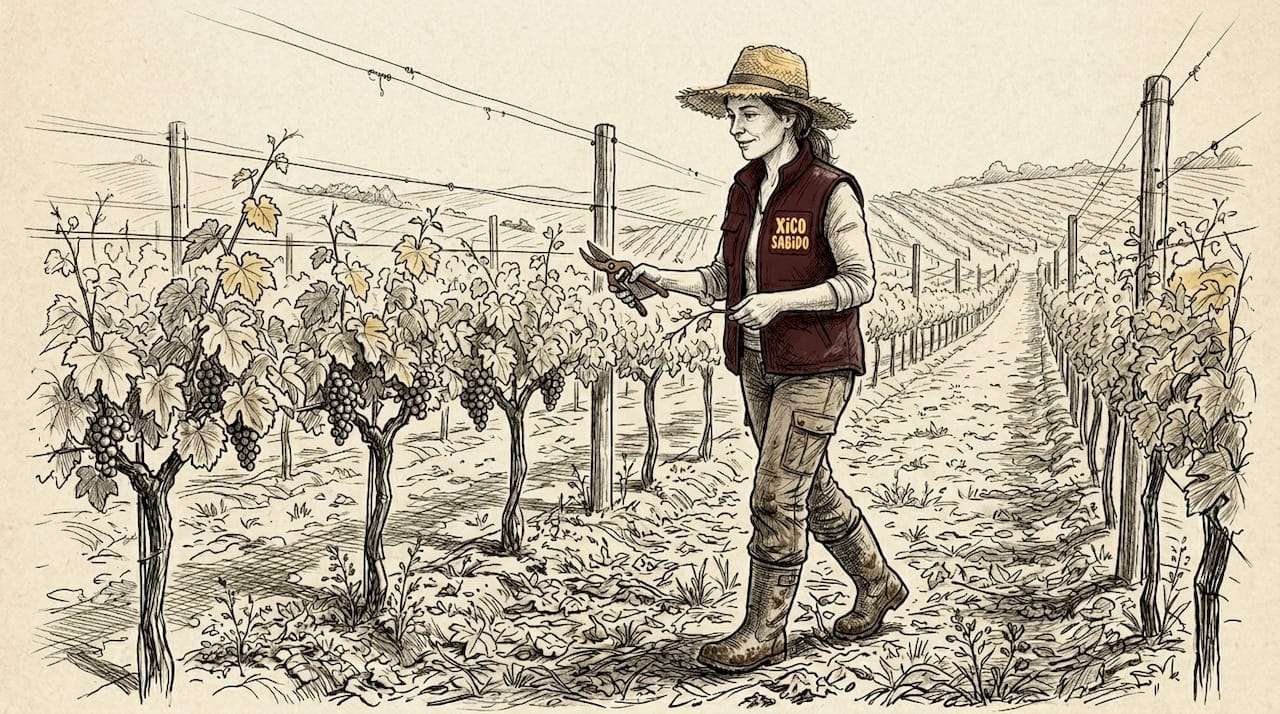
In the vineyard, most natural wine producers work with organic or biodynamic practices. They do not use synthetic pesticides, herbicides, or chemical fertilizers. In the cellar, fermentation occurs with indigenous yeasts, those naturally present on the grape skins and in the air of the cellar, without resorting to selected commercial yeast cultures for predictable results.
The most controversial point is the use of sulfites. Some producers argue that no SO2 should be added; others accept minimal amounts to ensure stability. In practice, the common limit is between 30 and 40 mg/L, much lower than conventional wines, which can reach 150 to 250 mg/L.
How it compares with organic and biodynamic
This table helps to understand the differences without a headache:
| Style | Certification | Sulfites | Yeasts | Filtering |
|---|---|---|---|---|
| Conventional | Not required | Up to 250 mg/L | Commercial | Common |
| Organic | Yes (EU) | Reduced (up to 100 mg/L) | Commercial permitted | Common |
| Biodynamic | Yes (Demeter, etc.) | Very reduced | Indigenous preferred | Limited |
| Natural | None mandatory | Minimal or zero | Indigenous | Rare or none |
Organic wine, for example, regulates what happens in the vineyard but allows additives in the cellar. Biodynamic goes further in the holistic philosophy of agriculture, following lunar calendars and biodynamic treatments. Natural goes even further in the cellar, rejecting almost everything that does not come from the grape itself. Each style has its merit; they are not competitors, they are different ways of looking at the land.
Natural wines evolve more quickly in the bottle and show greater sensory instability, which is both their biggest challenge and their greatest charm.
Advantages of choosing natural wine
So, after all, what are the concrete advantages of choosing natural wine instead of a well-made conventional one?
The first and most difficult to quantify is authenticity. When you open a bottle of natural wine, you are tasting a specific place, in a specific year, made by specific hands. There is no formula replicated in a laboratory. The transparency of the process creates a relationship of trust with the producer that no pretty label can replace. It's the difference between buying bread from a village bakery and buying it from the supermarket chain.
What you feel in the glass
The sensory profile of a natural wine tends to be livelier, more vibrant. There is a more pronounced acidity, less tamed aromas, sometimes a slight effervescence that no one planned. A touch of cider, kombucha, wild herbs can appear. These are flavors that tell stories whispered by the vines throughout the seasons.
For those who value the adventure of each sip, this unpredictability is an invitation, not a problem.
- Smaller environmental footprint: Without synthetic chemicals, the vineyard lives in greater balance with the local ecosystem.
- Fewer additives: No stabilizers, colorants, or industrial enzymes that are often found in conventional wines.
- Connection to terroir: The flavor genuinely reflects the soil, climate, and grape variety, without laboratory corrections.
- Growing awareness: Each bottle is a vote for a different way of farming.
Professional Tip: If you want to better understand the impact of sulfites on your experience, read about the sulfite-free alternatives that are gaining ground in Portugal.
How to choose natural wine in Portugal
Now for the practical part. Knowing how to choose natural wine starts before you enter the store or open the website.
-
Ask about SO2. A committed producer knows exactly how much sulfite is added, or not added. If the answer is vague, be suspicious. Experienced consumers always ask this question to assess the producer's real commitment to low intervention.
-
Look for honest labels. Many natural wine producers describe their practices directly on the label or website. Words like "no added sulfites," "spontaneous fermentation," or "indigenous yeasts" are good signs. Strong terms like "natural" without further context are worth little.
-
Start with known producers and regions. Renowned producers recommend that beginners start with established names in regions like Alentejo, where tradition and innovation coexist. You can find useful guidance in a good guide on which wine to buy in Portugal.
-
Learn to serve. Decant the wine if you notice sediment, especially in reds that have been in the bottle for some time. The serving temperature is slightly cooler than for conventional wines, between 14 and 16 degrees Celsius for reds. Don't be alarmed by turbidity: sediments and turbidity are signs of minimal intervention, not indicators of poor quality.
-
Pair intelligently. For natural wines with higher acidity, fatty dishes work better because they balance the wine's liveliness. Think of aged cheeses, Alentejo sausages, pork dishes, or cod with generous olive oil. For more concrete inspiration, wine and food pairings are a good starting point.
-
Share the experience. Natural wine takes on another flavor when discovered in good company. Open a bottle with curious friends, talk about what you're experiencing, and accept that not everyone will love it on the first taste. That's part of it too.
Myths and challenges of natural wine
There are some persistent misconceptions that should be cleared up before opening the first bottle.
"Natural wine is always superior to conventional wine." It's not. There are poorly made natural wines, with serious flaws that are not part of the product's character. Excessive volatile acidity, vinegar, or mold aromas are not "authenticity." They are flaws. Low intervention requires enormous technical competence. When it's well executed, the results are captivating. When it's not, the bottle goes in the trash.
"Natural wine has no sulfites." Wrong. Most have natural sulfites, produced by the fermentation itself. And many have added sulfites in very low doses. The idea of "zero sulfites" is rare and doesn't always guarantee a better result.
"Drinking natural wine doesn't cause headaches." This is the most popular myth. The consumption pattern is more decisive for health impact than the type of wine. Some people are sensitive to synthetic sulfites and may notice a difference, but there is no consistent clinical evidence to confirm that natural wine eliminates the problem.
- The absence of legal limits creates enormous variation among producers; voluntary certifications like the French "Vin Méthode Nature" try to create standards, but there's still a long way to go.
- Variation between bottles of the same batch is real and expected. Accept it as part of the experience.
- Imperfections such as a slight fizz or a slightly cloudy color are not warning signs. They are signs of life.
My perspective on the future of natural wine
I've been tasting natural wines for several years, and my relationship with them has changed a lot. At first, I sought technical perfection. I wanted every bottle to be predictable, for every sip to confirm what I expected. Natural wine destroyed that, and for good reason.
What I've learned is that the greatest virtue of natural wine isn't in the glass. It's in the conversation behind it. When I know that the Alentejo producer didn't sleep through September nights watching spontaneous fermentation, that they didn't use commercial yeast to "secure" the result, that they surrendered the wine to time and land, the bottle feels different in my hands.
I don't believe natural wines will replace conventional ones. I believe they will remind the entire industry that authenticity has value. Portugal has a wealth of ancient grape varieties, unique soils, and producers with long memories, and natural wine is one of the best vehicles to preserve all of that.
My recommendation is simple: open a bottle with an open mind, without rigid expectations. You might not love it at first. You might love it immediately. But you will feel the difference, and that's the beginning of something genuine.
— Pedro
Discover Alentejo in every bottle with Xicosabido
Xicosabido was born from a return to its roots, from the land of Alentejo that doesn't forget those who cultivated it with passion. If you've made it this far and want to continue exploring the world of wines with authenticity, Xicosabido is your companion in this discovery.

With a careful selection of wines that respect the territory and local traditions, Xicosabido shares stories that go from the vineyard to the glass. You can start with the Alentejo wine route to discover the best places in the region, or directly explore options to buy Alentejo wine with full transparency about its origin. The right wine is just a click away, and the experience begins long before you open the bottle.
FAQ
What exactly is natural wine?
A natural wine is produced with grapes grown without synthetic pesticides, fermented with indigenous yeasts, and with minimal or no added sulfites in the cellar. There is no single legal definition in the European Union; the term is defined by the practices and philosophy of each producer.
Is natural wine healthier than conventional wine?
There is no conclusive clinical evidence that it is significantly healthier. It has fewer additives and added sulfites, which can make a difference for people with specific sensitivities, but the consumption pattern remains the most relevant factor for health.
Why is my natural wine cloudy?
Turbidity is normal and expected in different types of natural wine. It results from the absence of filtration and stabilization, processes common in conventional wines. It is a sign of minimal intervention, not poor quality.
How do I know if a wine is truly natural?
Ask the producer or seller about their cellar practices, added SO2 levels, and fermentation process. Producers committed to natural wine will be able to answer accurately. Transparency is the most reliable mark of authenticity.
Do natural wines pair well with Portuguese gastronomy?
Very well. The vibrant acidity of many natural wines harmonizes with fatty dishes like black pork, aged cheeses, and cod with olive oil, classics of Portuguese cuisine. The key is to balance the intensity of the wine with the richness of the dish.