

Process for profiling wines: a practical guide
In summary:
- Oenological characterization combines physicochemical laboratory analyses and sensory tasting to identify a wine's characteristics. Key physicochemical parameters evaluated include pH, total acidity, residual sugar, and phenolic compounds. Structured tasting, divided into visual, olfactory, and gustatory phases, helps understand the wine's sensory profile.
The process of determining wine profiles involves combining physicochemical laboratory analyses and structured sensory tasting techniques to accurately identify a wine's characteristics. In the industry, this process is known as oenological characterization and blends laboratory science with the human palate. Those who master this process can choose wines with much more intention, whether in an Alentejo winery or a supermarket aisle. Here you'll find the technical fundamentals and practical tools to confidently determine profiles, from pH analysis to the moment the wine touches your tongue.
What laboratory analyses define a wine's profile?
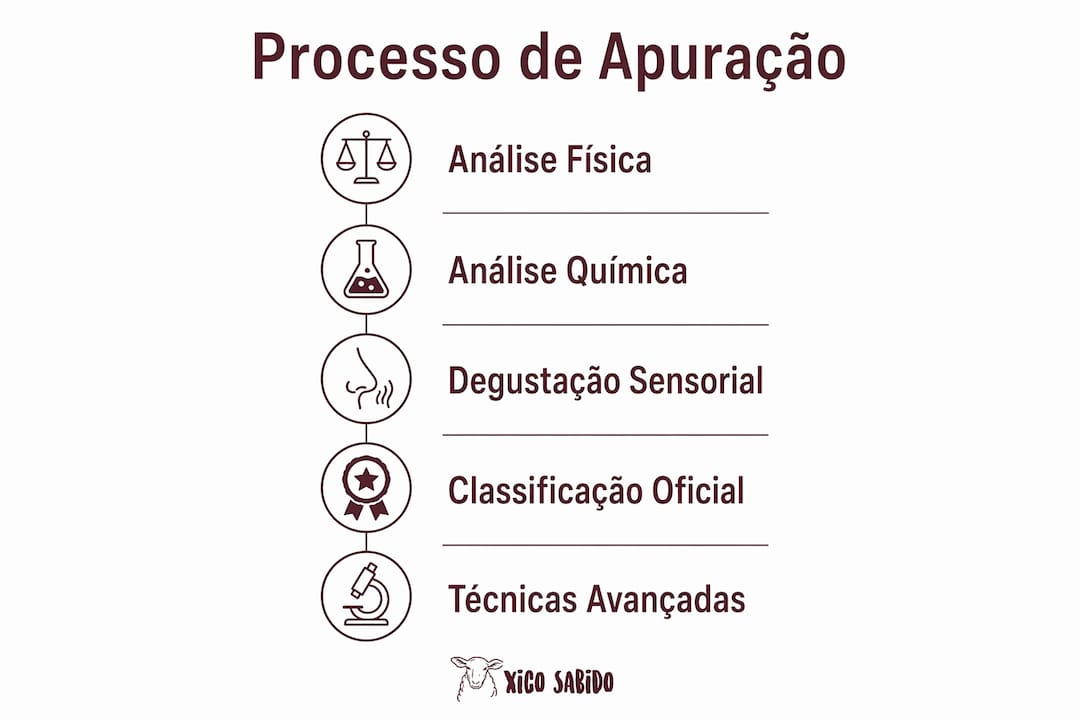
Physicochemical analysis is the starting point for any serious oenological characterization. Specialized laboratories measure parameters such as pH, total acidity, residual sugar content, organic acids, phenolic compounds, methanol, and higher alcohols. Each of these values tells part of the wine's story before you open it.
The main physicochemical parameters evaluated are:
- pH and total acidity: determine the freshness and microbiological stability of the wine.
- Residual sugar: distinguishes dry from off-dry and sweet wines, with a direct impact on the perception of sweetness.
- Phenolic compounds: in red wines, tannins extracted from skins and seeds define the structure and aging potential.
- Methanol and higher alcohols: food safety parameters that also influence aroma.
- Organic acids (tartaric, malic, lactic): shape perceived acidity and mouthfeel.
Liquid and gas chromatography delve deeper. Gas chromatography identifies volatile compounds responsible for aromas, while liquid chromatography maps anthocyanins, tannins, and other polyphenols. Reference laboratories perform up to 400 analyses monthly, giving an idea of the scale of work involved in a vintage.
The standardization of laboratory criteria ensures that results are comparable between samples and vintages. Without standardization, two laboratories might reach different conclusions about the same wine. This is especially relevant when the producer wants to align the wine's profile with market expectations.
Pro tip: When requesting a laboratory analysis for your wine, always ask for triplicate results. Measuring in triplicate and controlling temperature and time are recommended practices to ensure reproducibility and avoid reading errors.
| Parameter | What it reveals |
|---|---|
| pH | Wine stability and freshness |
| Total acidity | Balance and vibrancy on the palate |
| Residual sugar | Perceived sweetness level |
| Phenolic compounds | Structure, tannins, and color |
| Volatile compounds | Aromatic profile and identity |
How to taste a wine to confirm its sensory profile?
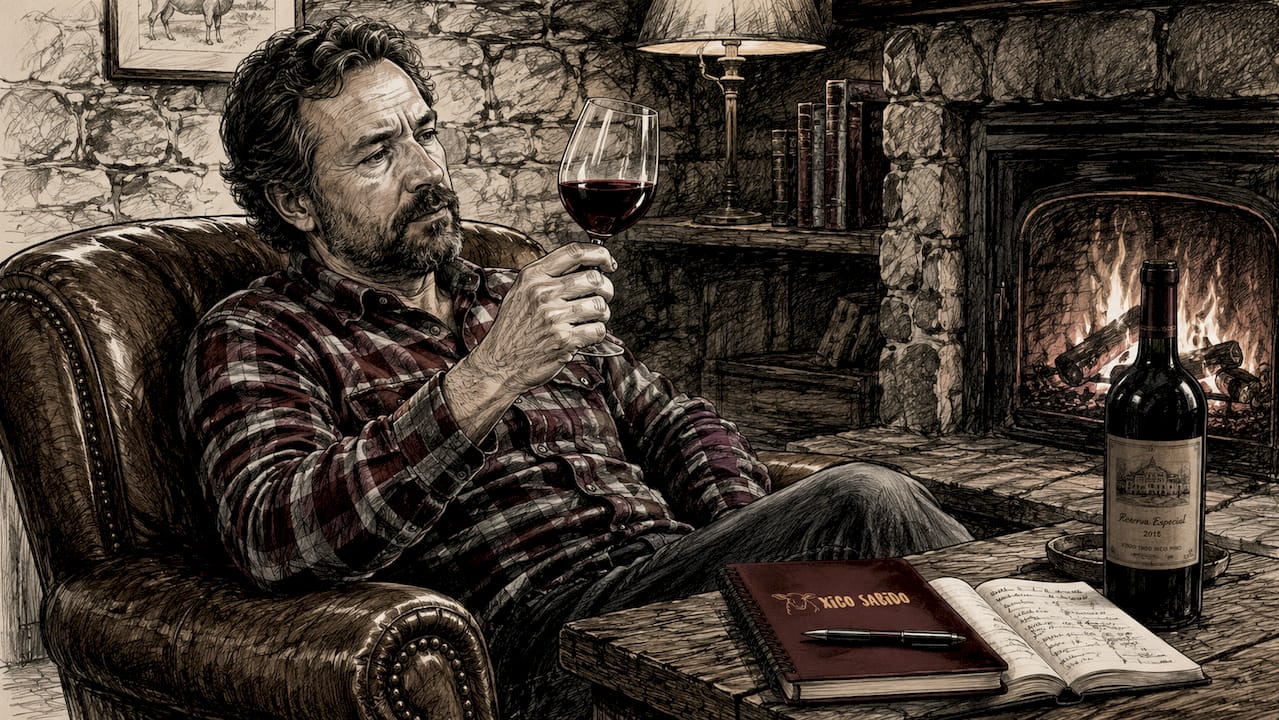
Structured tasting is where science meets pleasure. The process is divided into three phases: visual, olfactory, and gustatory analysis. Each phase reveals layers of the profile that laboratory numbers alone cannot capture.
Preparation and environment
The tasting environment directly influences the results. Choose a space with natural light, no strong odors, and stable temperature. The glass should be transparent crystal, tulip-shaped, and filled only up to one-third of its capacity. This proportion allows the aromas to concentrate in the empty space above the wine.
The three phases of sensory analysis
-
Visual analysis: Tilt the glass over a white background and observe the color, clarity, and viscosity. In a young Alentejo red, like those made with Alicante Bouschet, the color is intense purple. With aging, it shifts to ruby and then to brick. The tears that slide down the glass indicate the alcohol content and glycerin.
-
Olfactory analysis: Smell first without swirling, then swirl the glass and smell again. The first nose reveals primary aromas of the grape, such as fresh fruit or flowers. The second nose, after swirling, releases secondary aromas from fermentation and tertiary aromas from aging. Try to identify aroma groups such as red fruits, spices, wood, or earth.
-
Gustatory analysis: Take a small sip and let the wine cover your entire mouth for about 10–15 seconds before swallowing. Evaluate sweetness, acidity, tannins, body, and alcohol. The awareness of body, acidity, and tannins as a sensory interaction is what distinguishes an connoisseur from a casual consumer.
Pro tip: Record your impressions immediately after each phase. The brain forgets sensory details within minutes. A tasting notebook, however simple, builds your sensory memory over time.
Tasting requires evaluation in a neutral place, with appropriate temperature to avoid distortions. A red served too warm loses freshness and seems more alcoholic than it is. A white served too cold closes off aromas and impoverishes the experience.
What is the role of official classifications in predicting the profile?
Understanding wine classification systems is a predictive tool. Before opening a bottle, the appellation of origin already tells you a lot about what you will find in your glass.
The main systems are:
- AOC (Appellation d’Origine Contrôlée): French system that regulates grape varieties, yields, and winemaking methods by region. A Bordeaux AOC follows rules that guarantee a tannic and structured profile.
- DOC (Denominação de Origem Controlada): Portuguese and Italian equivalent. Alentejo DOC, for example, defines authorized grape varieties such as Aragonez, Trincadeira, and Alicante Bouschet.
- DOCG (Denominazione di Origine Controllata e Garantita): a more demanding Italian level, with mandatory tastings before commercialization.
Alcohol content is also a regulatory parameter with a direct sensory impact. Table wines range between 8.6% and 14% alcohol, while fortified wines go from 14% to 18%. This difference is not just legal: a 13.5% wine has more body and warmth on the palate than one with 11%.
AOC and DOCG systems specify terroir, grape varieties, and aging, which facilitates early identification of the profile. Those familiar with appellations of origin can make informed choices without needing to taste every bottle. It's like having a map before entering a forest.
| System | Region | What it regulates |
|---|---|---|
| AOC | France | Grape varieties, yields, methods |
| DOC | Portugal, Italy | Authorized grape varieties, geographical area |
| DOCG | Italy | All of DOC plus mandatory tasting |
| DO | Spain | Geographical origin and production practices |
What advanced techniques help refine profiles with greater precision?
For those who want to go beyond informal tasting, there are methods that bring the amateur closer to the rigor of a professional oenologist.
Aroma mapping by gas chromatography identifies the volatile markers that explain the sensory differences between grape varieties and terroirs. In Alentejo, schistous soil and intense heat produce distinct volatile compounds from those found in the granitic soils of the Douro. This chemical difference is what the nose perceives as "regional identity."
Micro-vinification is an underutilized technique among amateurs. Reference laboratories have used micro-vinification for decades to evaluate variables such as acidity and sugar in small batches before full production. For an amateur oenologist, producing 5–10 liters of experimental wine from a single grape variety allows for controlled comparison of results.
Some practices that improve assessment accuracy:
- Always taste the same wine on two different days. The second day reveals aromas that the first hid.
- Use known reference wines to calibrate your palate before evaluating a new wine.
- Control serving temperature: reds between 16–18 °C, whites between 8–12 °C.
- Avoid perfumes, coffee, or heavy meals before a tasting session.
Pro tip: Technical reproducibility in wine chemical analysis is what separates a reliable conclusion from a fleeting impression. Apply the same principle to your tasting: repeat the conditions, repeat the tasting, and only then draw conclusions about the profile.
The integration between technical and sensory analysis is what defines production quality in the long term. The laboratory tells you what's in the wine. The tasting tells you how that wine makes you feel. You need both.
Key takeaways
Rigorous oenological characterization requires physicochemical laboratory analysis, structured tasting across the three sensory phases, and knowledge of classification systems such as AOC, DOC, and DOCG.
| Point | Details |
|---|---|
| Laboratory analysis | Measures pH, acidity, sugar, and volatile compounds to define the wine's basic profile. |
| Structured tasting | Divided into visual, olfactory, and gustatory phases, each with specific parameters. |
| Official classifications | AOC, DOC, and DOCG allow predicting the sensory profile before opening the bottle. |
| Reproducibility | Repeating identical conditions eliminates subjectivity and ensures reliable conclusions. |
| Micro-vinification | Producing small experimental batches is the most practical way to learn with rigor. |
What I've learned to respect in this process
I grew up hearing that wine is appreciated with the heart. I don't disagree. But I learned, over time and with many open bottles, that the heart needs a map to not get lost.
For years, I tasted Alentejo wines with enthusiasm but no method. I knew I liked a full-bodied Aragonez, but I couldn't explain why. When I started applying the three phases of sensory analysis and cross-referencing them with physicochemical parameters, everything became clearer. I realized that what captivated me was the balanced acidity and mature tannins, not just "the taste."
The most common mistake I see in amateur oenologists is skipping the visual phase. It seems superfluous, but the color of a wine tells the story of its aging and extraction. A brick-colored red in a young wine is a warning sign before you even smell it.
I deeply respect those who combine tradition with technical rigor. In Alentejo, the vines whisper stories of sun and schist that gas chromatography later confirms in numbers. You don't need a laboratory to start. You need attention, a notebook, and the willingness to repeat the tasting until sensory memory takes hold.
Patience is the most underestimated tool in this process. The palate is trained slowly, like a wine that needs time in a barrel to reveal its best.
— Pedro
Deepen your knowledge with Xicosabido
The oenological characterization process is a journey that never ends. There's always a new grape variety to discover, a terroir to explore, or a technique to perfect. Xicosabido was born precisely from this passion for Alentejo and the desire to share what the vines have to tell.

On the Xicosabido blog, you'll find practical resources for enthusiasts and amateur oenologists who want to go further. From guides on oenological products that improve wine to content on the impact of the Alentejo terroir on the sensory profile, there's much to explore. If you want to understand how to taste wine like a professional, start here and let Alentejo guide you glass by glass.
Frequently asked questions
What is a wine's sensory profile?
The sensory profile is the set of visual, olfactory, and gustatory characteristics that identify a wine. It includes color, aromas, acidity, tannins, body, and persistence on the palate.
What is the difference between technical analysis and tasting?
Technical analysis measures physicochemical parameters such as pH, acidity, and volatile compounds in a laboratory. Tasting evaluates the human perception of these same compounds through the senses.
How do AOC and DOC classifications help in choosing a wine?
AOC and DOC systems regulate grape varieties, terroir, and production methods, allowing you to anticipate the wine's sensory profile before tasting it.
What is micro-vinification and what is it used for?
Micro-vinification is the production of small batches of wine to evaluate variables such as acidity and sugar in a controlled manner. It is used by reference laboratories and can be adapted by amateur oenologists for experimentation.
How often should I practice tasting to develop sensory memory?
Regular practice, at least once a week with different wines, is the most effective method for building sensory memory. Recording impressions in writing accelerates the learning process.