

Red wine pairing types to enjoy in 2026
Choosing the ideal pairing for red wine can seem challenging, but understanding the right criteria simplifies the decision and transforms every meal into a memorable experience. Alentejo red wines, with their diversity of indigenous grape varieties and unique profiles, offer authentic combinations that celebrate tradition and the territory. This article teaches the essential criteria, explores classic and innovative options, presents practical comparisons, and recommends choices for successful pairings in 2026.
Index
- Key points about red wine pairing
- How to evaluate criteria for red wine pairing
- Classic types of red wine pairing
- Innovative and alternative red wine pairings
- Practical comparison between traditional and alternative pairings
- Discover Alentejo red wines with exclusivity
- Frequently asked questions about red wine pairing
Key points about red wine pairing
| Point | Details |
|---|---|
| Fundamental criteria | Intensity, tannins, and acidity define the success of red wine pairing |
| Types of pairing | Traditional and alternative combinations fit different occasions and dishes |
| Practical comparison | Tables help visualize the advantages and challenges of each approach |
| Professional tips | Personalized recommendations make selection easier according to taste and context |
| Alentejo wines | Knowing Alentejo grape varieties enhances the cultural and gustatory experience |
How to evaluate criteria for red wine pairing
Before choosing the perfect combination, it is necessary to master the criteria that make a pairing successful. The first step is to evaluate the intensity of the wine and the dish, ensuring that no element dominates the other. A full-bodied wine with pronounced tannins calls for equally intense dishes, while lighter wines pair better with delicate preparations.
The tannins present in red wines interact directly with the proteins and fats in food, creating sensations that can soften or intensify flavours. Acidity acts as a counterpoint, cutting through fats and refreshing the palate between bites. Analysing wine intensity, profile, and tannins is essential for pairing, especially when working with indigenous Portuguese grape varieties.
Traditional Portuguese dishes, particularly from Alentejo, bring robust flavours that demand wines with structure and character. Game meats, stews, cured sausages, and sheep cheeses are examples of foods that gain a new dimension when combined with local reds. Alentejo's winemaking tradition developed precisely in tune with this regional gastronomy.
To deepen your knowledge of perfect wine and food combinations, consider studying the specific characteristics of each grape variety. The guide to choosing red wines offers practical guidance on aromatic and structural profiles. International resources such as the wine and food pairing guide complement this knowledge base.
Professional Tip: Try starting with younger wines for less intense dishes, allowing the palate to gradually adapt to more complex and structured combinations.
The main criteria for evaluating pairings include:
- Balance between wine and dish intensity
- Interaction of tannins with proteins and fats
- Role of acidity in cutting greasy flavours
- Compatibility with regional and traditional ingredients
- Appropriate serving temperature for each combination
Classic types of red wine pairing
Traditional pairings represent centuries of culinary and winemaking experimentation, consolidating combinations that stand the test of time. Grilled or roasted red meats find their ideal partner in full-bodied red wine, with tannins that complement the meat's texture and enhance umami flavours. This is the most recognized and celebrated pairing in Portugal and worldwide.
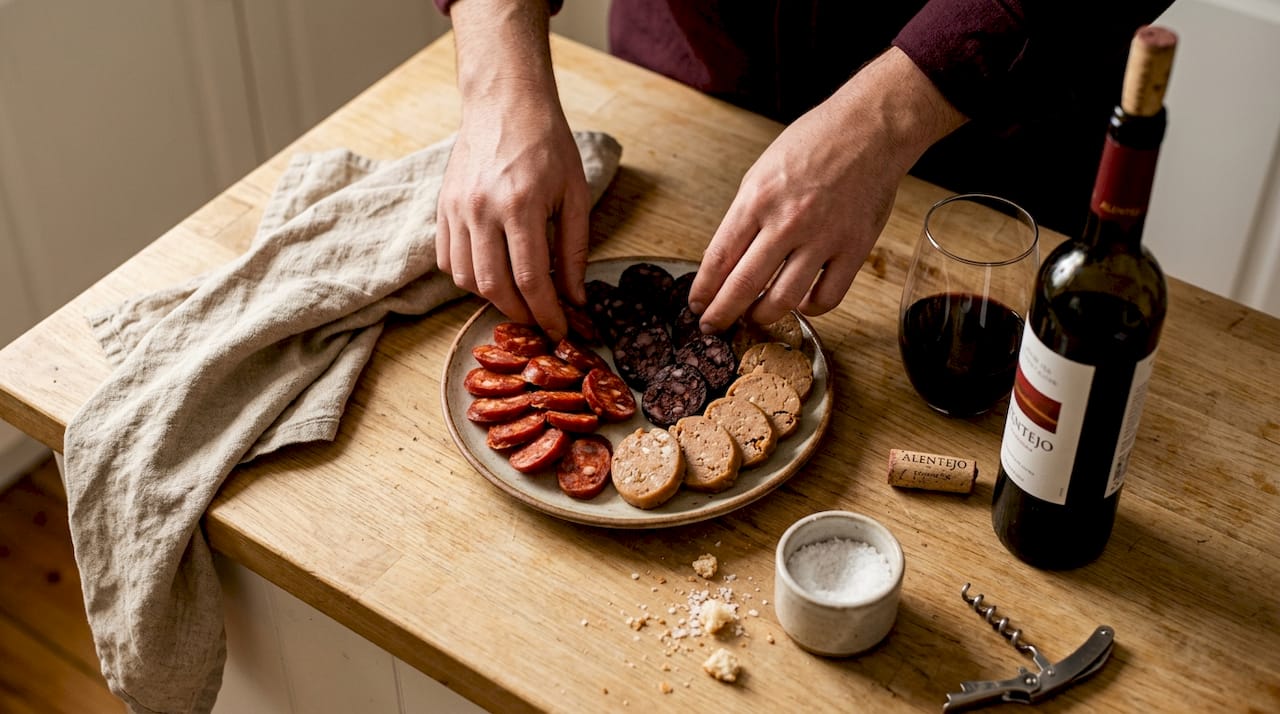
Portuguese cured sausages, especially those from Alentejo such as chouriço, morcela, and farinheira, call for wines with generous fruit and soft tannins that do not overpower the seasonings. Alentejo Alicante Bouschet wines are ideal for Portuguese meats and cured sausages, offering structure without aggressiveness and fruity notes that harmonize with spices.
Cured sheep and goat cheeses, so typical of Alentejo, gain depth when accompanied by reds with good acidity and a persistent finish. The fat in the cheese softens the tannins, while the wine's acidity cleanses the palate. This combination represents one of the most authentic expressions of Alentejo gastronomy.
These classics work because they respect fundamental principles of balance and complementarity. Alentejo Alicante Bouschet perfectly exemplifies this philosophy, with wines that express the terroir without losing elegance. To explore other possibilities, consult wine and pizza pairing options or discover producers through the Alentejo wine route.
Specialized collections like the red wine selection demonstrate the diversity of profiles available for different classic pairings.
Professional Tip: Take advantage of tradition to try local Alentejo cheeses, creating natural pairings that reflect the identity of the territory and value regional producers.
Essential classic pairings:
- Grilled red meats with full-bodied and tannic reds
- Cured sausages with fruity wines with soft tannins
- Sheep cheeses with reds of good acidity and persistence
- Traditional stews with medium to high structure wines
- Game with mature and complex reds
Innovative and alternative red wine pairings
In addition to the classics, there are contemporary combinations that surprise and expand the repertoire of wine lovers. Vegetarian dishes based on mushrooms, roasted eggplant, or lentils gain complexity when accompanied by light reds with good acidity, which enhance earthy flavours without overpowering delicate ingredients.
Desserts with dark chocolate or red fruits combine surprisingly well with sweeter or fortified reds, creating pairings by complementarity. Alternative pairings expand the market and the pleasure of red wine consumers, attracting new audiences and renewing traditions.
Some fatty fish such as salmon or tuna, especially when grilled or served with rich sauces, accept light and fruity reds. Shellfish prepared with tomato or peppers can also work with rosés or young reds served chilled. These combinations challenge conventions but respect principles of balance.
To explore more options, consult different perfect wine and food combinations or discover sweet wines for pairing. Options like the organic crianza wine demonstrate the diversity available for experimentation.
| Type | Advantages | Challenges |
|---|---|---|
| Traditional | Security, cultural recognition, tested combinations | Less innovation, can limit experiences |
| Alternative | Innovation, expands markets, surprises palates | Requires experimentation, doesn't always work |
| Vegetarian | Accessible, healthy, growing demand | Requires specific wines of lower intensity |
| With desserts | Unique experience, values sweet wines | Requires special wines, doesn't work with all desserts |
Steps for trying alternative pairings:
- Start with light and young red wines to test unconventional combinations
- Serve the wine slightly cooler than usual to enhance freshness
- Experiment with small portions before serving to guests
- Document successful combinations to repeat in the future
- Share discoveries with other wine lovers to expand collective knowledge
Practical comparison between traditional and alternative pairings
Understanding the practical differences between traditional and innovative approaches helps choose the most suitable pairing for each situation. Understanding the practical differences helps in choosing the most suitable pairing for each situation, allowing informed decisions according to context, guests, and meal objectives.
Traditional pairings offer security and cultural recognition, working well in formal settings or when entertaining less experienced guests. They represent centuries of gastronomic wisdom and rarely disappoint. On the other hand, alternatives bring innovation and the potential to surprise, being ideal for informal dinners with friends or when wanting to explore new territories.
| Criterion | Traditional | Alternative |
|---|---|---|
| Security | High, tested combinations | Medium, requires experimentation |
| Innovation | Low, predictable | High, surprising |
| Accessibility | Broad, common ingredients | Variable, may require specific ingredients |
| Ideal context | Formal, traditional | Informal, exploratory |
| Learning | Consolidation of knowledge | Expansion of repertoire |
The choice between traditional and alternative depends on several practical factors. For special occasions with guests who value tradition, opt for classic, tested combinations. For casual dinners with adventurous friends, try alternatives that spark conversation and discovery. The guide to enjoying wine better offers complementary guidance.
Tips for choosing according to occasion and profile:
- Formal dinners call for recognised traditional pairings
- Casual gatherings allow experimentation with alternatives
- Conservative guests appreciate tested classics
- Adventurous wine lovers value innovation
- Regional themed meals benefit from local traditional combinations
- Tasting events are opportunities to explore alternatives
Discover Alentejo red wines with exclusivity
After exploring criteria, options, and comparisons, it is time to deepen your knowledge through authentic Alentejo wines. The region offers unique grape varieties like Alicante Bouschet, Aragonês, and Trincadeira, which express the character of the territory in every bottle.

Alentejo Alicante Bouschet wine represents the red jewel of the region, with an ideal structure for classic pairings and versatility for experimentation. Explore the Alentejo wine route to meet producers who keep traditions alive. When you are ready to acquire wines that reflect authenticity and terroir, visit the selection to buy Portuguese Alentejo wine with guaranteed confidence and tradition.
Frequently asked questions about red wine pairing
How to choose red wine for different types of dishes?
First, assess the intensity of the dish and choose a wine of similar or slightly higher intensity. Delicate dishes call for light and fruity reds, while robust preparations pair with full-bodied and tannic wines. The wine's acidity and tannins should complement, not overpower, the food's flavours.
Do red wines always pair with meat?
Not necessarily, although it is the most common combination. Delicate white meats can be overpowered by very full-bodied reds, working better with light wines or rosés. Fatty fish and some vegetarian preparations also accept specific reds, challenging the traditional rule.
Which red wines are suitable for desserts?
Sweet or fortified red wines, such as Port or late harvest wines, pair well with dark chocolate or red fruit desserts. The key is to ensure the wine is sweeter than the dessert to prevent it from tasting bitter. Dry reds rarely work with sweets.
What is the influence of acidity on pairing?
Acidity cuts through fats, refreshes the palate, and balances rich or creamy dishes. Wines with good acidity work best with fatty foods or dense sauces, while already acidic dishes can conflict with very acidic wines. Balance is essential for successful pairing.
How to introduce alternative pairings?
Start with small experiments in informal settings, using light and young red wines. Serve at slightly cooler temperatures and test combinations before serving to guests. Document successes and failures to build your own repertoire. Consult wine terms for wine lovers to deepen technical knowledge that supports informed experimentation.