

Talha wine: a guide for curious connoisseurs
TL;DR:
- Vinho da talha is a winemaking tradition over two thousand years old, produced in large clay pots through natural fermentation.
- This method preserves the characteristics of the terroir and the wine, being opened on St. Martin's Day, according to DOC tradition.
Over two thousand years ago, someone had the idea of putting crushed grapes into a huge clay pot, waiting, and seeing what happened. The result was vinho da talha (amphora wine), one of the oldest winemaking traditions in the world and, fortunately, one that has survived to this day with surprising vitality. It's not a fad or empty nostalgia. It's a winemaking method that tells the story of Rome, of Alentejo, and of people who always knew that the land provides what it needs. If you're curious about what this wine is and why more and more connoisseurs are seeking it out, you're in the right place.
Index
- Key Points
- 1. What is vinho da talha and where does this tradition come from?
- 2. How vinho da talha is made: the step-by-step process
- 3. The regions that preserve this tradition with the most fervour
- 4. Clay amphora versus wooden barrel versus stainless steel: the differences that matter
- 5. How to pair vinho da talha with food
- 6. How to choose, buy, and store vinho da talha
- My vision on the rebirth of vinho da talha
- Discover Alentejo wines with Xicosabido
- FAQ
Key Points
| Point | Details |
|---|---|
| Tradition over 2,000 years old | Vinho da talha is a continuous Roman heritage, produced in large clay amphorae with natural fermentation. |
| Ritual opening on St. Martin's Day | By tradition and DOC requirement, the wines remain in contact with the pomace until November 11th. |
| Unique character without wood | The clay amphora allows gentle oxygenation without adding wood flavours, preserving the terroir. |
| Certification guarantees authenticity | Not all wine labelled "talha" is genuine. DOC certification is your best buying guide. |
| Pairing with traditional cuisine | Cheeses, cured meats, game, and roast suckling pig are the natural partners for this wine with a village soul. |
1. What is vinho da talha and where does this tradition come from?
The name says it all, and at the same time says nothing to anyone who has never seen an amphora live. An amphora is a large baked clay vessel, partially buried in the ground of Alentejo wineries, with a capacity that can reach a thousand litres. The grapes go in there, still with skins, seeds and, often, stems. Fermentation happens completely naturally, without added yeasts, without laboratory corrections.
This continuous Roman tradition is over two thousand years old and is probably the oldest winemaking method still in regular use in Europe. The Romans called their clay vessels dolia. In Alentejo, they are called talhas (amphorae). The name changed. The spirit remained.
What makes all this even more extraordinary is that this practice was not rescued from history books. It was passed down from generation to generation, especially in the Vidigueira and Vila de Frades areas, like a family recipe that never needed to be written down.
2. How vinho da talha is made: the step-by-step process
Understanding how to make vinho da talha is understanding its soul. The process seems simple. In practice, it requires experience, intuition, and respect for time.
- Preparation of the amphorae: Before the harvest, the amphorae are washed and internally coated with pitch, a resin derived from pine. This coating waterproofs the clay and protects the wine. Some older amphorae skip this step, as the clay has already absorbed decades of work.
- Filling with crushed grapes: The grapes are crushed and placed in the amphora with the skins, seeds, and in many cases, the stems. Nothing is discarded.
- Natural fermentation: The yeasts naturally present in the grapes and the cellar environment begin fermentation without any intervention. The must bubbles, heats up, and transforms.
- Extended contact with the pomace: The skins rise and form a "cap" on top. The producer pushes it down regularly, ensuring contact between the liquid and the solids. This process gives colour, tannins, and texture to the wine.
- Opening on St. Martin's Day: By tradition and according to DOC rules, since 2010 the wine remains in contact with the pomace until at least November 11th. It is on this day that the amphorae are opened and the wine is tasted for the first time.
- Racking and bottling: After opening, the wine is racked into another container or bottled, already clear of the thicker lees.
Professional Tip: If you have the opportunity to visit a winery on St. Martin's Day, don't miss it. It's one of the most genuine wine experiences Portugal has to offer. Bring time, curiosity, and an appetite.
3. The regions that preserve this tradition with the most fervour
Alentejo is the homeland of vinho da talha. The Vidigueira and Vila de Frades areas, in particular, are the heart of this tradition. Here, daily culture is inseparable from the ritual of the amphorae. People talk about vineyards that have existed for centuries, of families who never abandoned this method even when the global market turned its back on traditions.
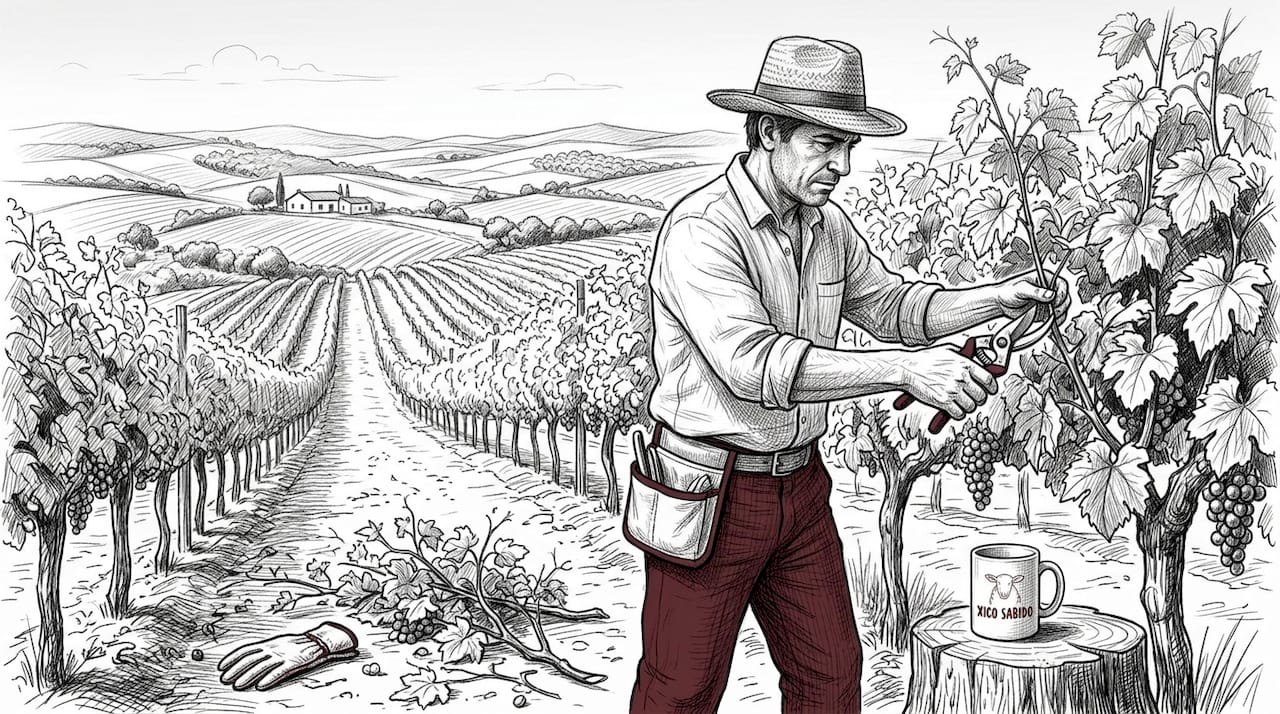
The Alentejo terroir imparts an unmistakable character to these wines: hot, dry summers concentrate the aromas, the clay soil retains freshness in the roots, and local grape varieties like Moreto, Trincadeira, and Antão Vaz do the rest.
But there's a surprise for those who think this tradition is exclusive to the south. Bairrada, in the centre of the country, is rescuing its own amphora wines. Adega Malápio is a notable example: it revives medieval and Roman techniques with local grape varieties and old vines in a mixed field, recreating a sensory profile faithful to the wine of past centuries. In 2024, it produced only 1,200 numbered bottles. That says it all about what it means to work on this scale.
The differences between the two regions are clear in the glass:
- Alentejo: medium to full-bodied wines, aromas of ripe red fruits, spices, and earthy notes. Present tannins, but polished by contact with the clay.
- Bairrada: fresher and more structured profile, with lively acidity, less ripe red fruit, and a minerality reminiscent of the limestone soil.
4. Clay amphora versus wooden barrel versus stainless steel: the differences that matter
This comparison is more useful than it seems. When you understand what each vessel does to the wine, you begin to understand why vinho da talha has such a distinctive character.
| Vessel | Oxygenation | Influence on flavour | Resulting profile |
|---|---|---|---|
| Clay amphora | Gentle and constant due to porosity | Neutral, no added flavours | Fresh, textured, true to the terroir |
| Wooden barrel | Moderate through the staves | Adds vanilla, spice, toast | More complex, with woody notes |
| Stainless steel tank | Almost none | Completely neutral | Pure fruit, no oxidative evolution |
The amphora process combines the best of the other two worlds: the neutrality of stainless steel and the controlled micro-oxygenation of wood, without its flavours. The prolonged contact with the pomace adds texture and complexity that a stainless steel tank can never replicate. The result is a wine that seems alive, with layers that reveal themselves over time in the glass.
Minimal intervention is another decisive factor. In artisanal amphora methods, the producer does not correct, does not add, does not rush. They let the wine be what the grape and the place want it to be.
Professional Tip: When tasting a vinho da talha, let it breathe in the glass for at least ten minutes before evaluating it. Contact with air opens up layers that initially seem closed. It's a wine that demands patience and rewards it.
5. How to pair vinho da talha with food
Vinho da talha was born at the table. It wasn't created for shelves or competitions. It was made to accompany long meals, even longer conversations, and the natural generosity of Alentejo and Portuguese cuisine.
For Alentejo red amphora wines, pairings with traditional dishes speak for themselves:
- Game meats: wild boar, partridge, and hare call for an amphora red with present tannins and balanced acidity.
- Regional cured meats: paio, chouriço, and morcela share the same smoky and spicy soul with the wine.
- Aged cheeses: a Serra cheese or a long-aged Serpa cheese create a memorable conversation with a textured white amphora wine.
- Roasted chestnuts: especially in autumn, the toasted sweetness of chestnuts complements the freshness and earthy notes of the wine.
For Bairrada amphora wines, roast suckling pig is the classic and almost obligatory pairing. The lively acidity of the wine cuts through the fat of the meat and cleanses the palate for the next bite. It's one of the most honest pairings Portuguese gastronomy has to offer.
To create an authentic tasting experience at home, serve the wine in clay pitchers or jugs instead of bottles. Yes, it makes a difference. It will feel like a village feast, and that's exactly the point. You can also explore wine and food combinations in other contexts to broaden your repertoire.
6. How to choose, buy, and store vinho da talha
Here's the practical part that many guides skip. The vinho da talha market has grown, and with it, labels have appeared that use the name without guaranteeing the method. Certification is your shield. Always look for the DOC Alentejo Vinho de Talha designation on the label.
- Check certification: The DOC denomination is mandatory for wines that followed the legitimate method, with contact with the pomace until St. Martin's Day.
- Identify recognized producers: Names like José de Sousa, Herdade do Rocim, and Adega de Vila de Frades have a solid history in Alentejo. In Bairrada, Adega Malápio is a reference.
- Pay attention to the vintage: Vinho da talha is not necessarily made to age for decades. Most drink best young, within two to three years after harvest, when the fruit and texture are at their peak.
- Storage: Store bottles horizontally, between 14 and 16 degrees Celsius, away from direct light. The clay breathed for the wine during production. The bottle now needs calm.
- Buy online with confidence: You can buy Alentejo wines directly from producers and specialized platforms, without needing to go to the winery. The digital market has made these wines accessible throughout the country.
Professional Tip: When you buy a bottle of vinho da talha for the first time, resist the temptation to save it for a special occasion. This wine was made to be shared in good company, preferably with Alentejo bread on the table.
My vision on the rebirth of vinho da talha
When I first tasted vinho da talha, I confess I wasn't sure what to expect. I had heard about the method, knew about the Roman history, but nothing prepared me for that texture and that character so genuinely different from anything I knew.
What I've learned since then is that vinho da talha is not just a product. It's a stance. A refusal to speed up what doesn't need to be sped up. In a world where industrial winemaking can produce millions of bottles with millimeter precision, there are producers who continue to bury clay amphorae in the ground and wait for St. Martin's Day. This requires courage, patience, and an almost irrational trust in tradition.
What worries me, honestly, is the dilution of the concept. As interest grows, the risk of opportunistic labels also grows. I've seen wines called "de talha" that had little of the original method. DOC certification exists precisely for this, but the consumer must be attentive and curious.
The future of this wine lies with connoisseurs like you. Every bottle bought consciously is a vote of confidence in a two-thousand-year-old tradition. And that, for me, is the most beautiful part of this whole story.
— Pedro
Discover Alentejo wines with Xicosabido
If this article has sparked in you the desire to explore Portugal's traditional wines in greater depth, Xicosabido was made exactly for that. Born in Alentejo out of love for the land and its people, Xicosabido brings together wines with history, character, and regional soul, delivered directly to your door.

In Xicosabido's online store you'll find wines from small Alentejo producers, tasting notes, producer stories, and a community of "Compinchas" (mates) who share the same passion. If you still don't know which wine to buy in Portugal, start here. And if vinho da talha has captivated you, don't miss the opportunity to explore the universe of Alentejo wines with those who know them intimately.
FAQ
What is vinho de talha?
Vinho de talha is produced in large baked clay vessels, with natural fermentation and prolonged contact between the must and the grape skins. It is one of Europe's oldest winemaking techniques, with over two thousand years of continuous history in Alentejo.
When is vinho da talha opened?
By tradition and DOC standard, vinho da talha is opened on St. Martin's Day, November 11th. Until that date, the wine remains in contact with the pomace inside the amphora, completing fermentation and maceration.
What is the difference between a clay amphora and a wooden barrel?
The clay amphora allows gentle oxygenation without adding woody flavours to the wine. The wooden barrel introduces notes of vanilla, toast, and spice. The result in the amphora is a wine truer to the terroir and grape variety, with natural texture and preserved freshness.
How to tell if a vinho da talha is authentic?
Look for the DOC Alentejo Vinho de Talha certification on the label. According to experts like sommelier Artur Malta Simões, authenticity is a priority, and a label without certification does not guarantee that the original method was followed.
What dishes pair best with Talha wine?
Alentejo's red Talha wines naturally pair well with game meats, regional cured sausages, and aged cheeses. In Bairrada, the classic pairing is roasted suckling pig. White Talha wines have a good affinity with cheeses and fish dishes with richer sauces.