

Carcavelos Wine: History, Taste, and Where to Buy
TL;DR:
- Carcavelos wine is a rare, fortified liquid produced in less than 25 hectares in the Lisbon region, with aromas of honey, almond, and spices. Its vibrant acidity, combined with balanced sweetness and Atlantic influence, gives it a unique profile and versatile pairings. Currently, Villa Oeiras is the main producer, keeping alive a historical tradition of cultural preservation.
Carcavelos wine is a fortified dessert wine, produced in one of the world's smallest demarcated wine regions, with less than 25 hectares of vineyards. It originates a few kilometres from Lisbon, between Estoril and Cascais, where the Atlantic breeze carries salt and freshness over vines that whisper centuries-old stories. It is a rare, complex, and deeply Portuguese wine, combining intense sweetness with lively acidity and aromas evoking honey, almond, and spices. Those who taste it for the first time are rarely indifferent.
1. The grape varieties that give Carcavelos wine its soul
The profile of Carcavelos wine begins with the grapes. Arinto is the dominant variety, responsible for the vibrant acidity that distinguishes this wine from other Portuguese liqueur wines. This acidity is not a flaw. It is the backbone that keeps the wine alive and balanced, even with the weight of sweetness and brandy.
The blend also includes white varieties such as Galego Dourado and Ratinho, and red varieties such as Trincadeira and Castelão. Each contributes distinct aromatic layers, from floral notes to hints of dried red fruits. Ageing in wood, which can last between 7 and 15 years, fuses all these elements into a velvety and complex texture.
Carcavelos also has a technical peculiarity that few wines in the world share. It is recognised as a double DOC wine: both the wine and the wine brandy used in its fortification have protected designations of origin, the latter coming from DOC Lourinhã. This detail is not just bureaucratic. It means that each bottle carries two terroir stories within it.
- Arinto: high acidity, Atlantic freshness, backbone of the blend
- Galego Dourado and Ratinho: floral and fruity notes, aromatic smoothness
- Trincadeira and Castelão: depth, colour, and residual tannic complexity
- Wood aging: 7 to 15 years, velvety texture and aroma integration
Professional Tip: If you find a bottle with an aging indication of over 10 years, save it for a special occasion. Wood works with sweetness masterfully over time.
2. The history of Carcavelos wine: survival against all odds
The history of Carcavelos wine is, above all, a story of stubbornness. Production dates back to the 18th century, when the Marquis of Pombal, a central figure in the reconstruction of Lisbon after the 1755 earthquake, ordered vines to be planted on his estate in Carcavelos. The wine quickly gained international renown, even being served in European courts as a symbol of Portuguese prestige.
Then came the setbacks. Phylloxera devastated the vineyards in the late 19th century, as it did across Europe. But the most persistent enemy was concrete. The urban growth of Greater Lisbon throughout the 20th century swallowed up the vineyards one by one, replacing fertile land with apartments and roads. Real estate pressure almost erased this wine from the map.
The turning point came in 1983, when the Oeiras City Council launched Villa Oeiras to rescue traditional production and prevent the definitive extinction of the wine. It was an act of cultural preservation as much as oenological. Without this project, Carcavelos would today be just a footnote in the history books of Portuguese wine.
- 18th century: The Marquis of Pombal establishes production in Carcavelos, and the wine gains international prominence.
- Late 19th century: Phylloxera destroys a large part of the region's vineyards.
- 20th century: Urban expansion of Greater Lisbon drastically reduces the available vineyard area.
- 1983: The Oeiras City Council creates the Villa Oeiras project to save production.
- Present day: DOC Carcavelos survives with less than 25 hectares, making it one of Portugal's rarest wines.
Carcavelos represents, like few wines in the world, a history of cultural preservation in the face of the threat of urban growth. Each bottle is literally a fragment of saved territory.
3. Who produces and where to buy: the practical guide for 2026
Today, the Carcavelos wine market is dominated by a single active producer. Villa Oeiras is the main producer and practically the only one to regularly release bottles to the market. This concentration is not a weakness. It is a reflection of the minuscule size of the DOC and the Herculean effort required to keep production alive.
For those who want to buy, the options are divided into three paths:
- Specialised wine shops in Lisbon: stores like Garrafeira Nacional or Garrafeira do Carmo often have Villa Oeiras bottles in stock, as well as historical rarities for collectors.
- Selected supermarkets: some large distribution chains, especially in the Lisbon region, include Carcavelos in their offer of dessert wines.
- Direct online purchase: Villa Oeiras makes bottles available through its website, which facilitates access for those outside the Lisbon metropolitan area.
Despite small production, Carcavelos is exported to over 15 countries, including Brazil, China, England, Spain, and the United States. This international reach proves that rarity is no obstacle when quality speaks for itself.
Professional Tip: For collectors, it's worth checking wine auctions in Portugal and the UK. Old bottles of Carcavelos from past decades occasionally appear and represent a unique opportunity to taste history in a glass.
If you want to explore other Portuguese wines to buy, Xicosabido has a complete guide to help with your choice.
4. Sensory profile and pairings: what to expect in the glass
The Atlantic terroir of Carcavelos is a secret no recipe can replicate. The Atlantic influence on the flavour brings freshness and minerality rare in fortified wines, which tend to be heavier and warmer. Here, the cold, salty winds of the ocean impart a tension to the wine that keeps it lively and elegant, even with 18 to 20% alcohol.
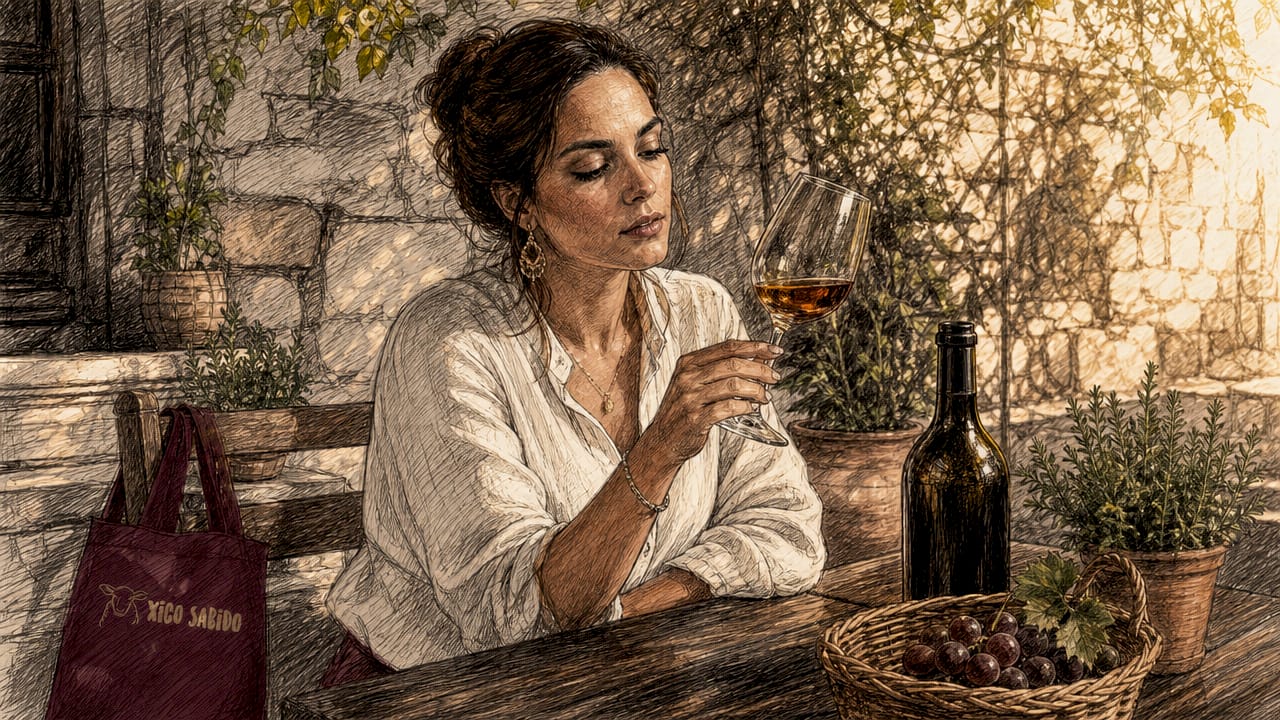
In the glass, Carcavelos presents a deep amber, almost golden colour, which already tells part of the story before the first sip. Typical aromas include honey, walnut, toasted almond, dried fruits, spices like cinnamon and nutmeg, and a subtle salinity that is the signature of the Atlantic. The balance between sweetness and acidity is what distinguishes Carcavelos from heavier liqueur wines: it never cloys, never tires.
| Characteristic | Carcavelos | Port Wine (Tawny) |
|---|---|---|
| Acidity | High, vibrant | Moderate |
| Sweetness | Intense but balanced | Intense |
| Salinity | Present, Atlantic | Absent |
| Main aromas | Honey, almond, spices | Dried fruits, caramel |
| Serving temperature | 10 to 12ºC | 14 to 16ºC |
| Type of glass | Small dessert wine glass | Port glass |
For pairings, sommeliers recommend Carcavelos with traditional Portuguese convent sweets such as pastéis de Tentúgal, toucinho do céu, or queijadas de Sintra. The wine's acidity cuts through the richness of eggs and almonds with surgical precision. For those who prefer international adventures, Italian tiramisu is a surprising combination: the acidity of Carcavelos balances the mascarpone and coffee masterfully.
Beyond desserts, the wine works well with aged cheeses, foie gras, and even lightly spicy Asian dishes. The Atlantic salinity creates unexpected bridges with umami flavours. For more ideas, perfect wine pairings are a good starting point.
5. How to taste Carcavelos wine: temperature, glass, and ritual
Tasting such a rare wine deserves attention. The ideal serving temperature is between 10 and 12ºC, slightly cooler than most dessert wines. This detail preserves the acidity and Atlantic freshness that make Carcavelos unique. Served too warm, it loses the tension that defines it.
The ideal glass is small and narrow at the top, similar to a Port wine glass, but a medium-sized white wine glass can be used if you want to give the aromas more space. The recommended serving amount is 60 to 80 ml. It's not a wine to fill the glass halfway. It's a wine to savour slowly, as if each sip were a sentence in a story you don't want to end.
Before drinking, observe the colour. Then, bring it to your nose without swirling the glass and let the aromas reach you. Honey and almond appear first. Salinity emerges later, subtle, like a passing breeze. Only then drink. And let the acidity do its work, cleanse the palate, and invite the next sip.
Key points about Carcavelos wine
Carcavelos wine is Portugal's rarest dessert wine, produced in less than 25 hectares, with a unique profile of Atlantic acidity, balanced sweetness, and aromas of honey, almond, and spices.
| Point | Details |
|---|---|
| Extreme rarity | DOC Carcavelos has less than 25 hectares, making it one of the world's scarcest wines. |
| Double DOC | Both the wine and the fortification brandy have distinct protected designations of origin. |
| Main producer | Villa Oeiras is the only regular active producer; old bottles appear in specialized wine shops. |
| Sensory profile | Honey, almond, Atlantic salinity, and vibrant acidity distinguish it from other liqueur wines. |
| Ideal pairings | Traditional Portuguese convent sweets, tiramisu, and aged cheeses are the most accurate combinations. |
What I think about this forgotten treasure of Lisbon
There are wines that exist to impress. And there are wines that exist to move you. Carcavelos clearly belongs to the second group.
When I tasted my first glass, I expected something heavy and cloying, like so many liqueur wines I had encountered. What I found was the opposite: an acidity that surprised me, a salinity that transported me to the coast, and a sweetness that never became excessive. It was one of the most honest tastings I've ever had.
What bothers me is the oblivion in which this wine lives. We talk so much about Port wine, Moscatel de Setúbal, even the most expensive wine in Portugal, and Carcavelos always remains in the shadows. Not for lack of quality. For lack of visibility. And that is an injustice that any wine lover should want to correct.
My recommendation is simple: look for a bottle of Villa Oeiras, serve it chilled, and drink it with a pastel de Tentúgal or a good aged cheese. You don't need a special occasion. The wine's rarity is occasion enough.
— Pedro
Discover more Portuguese wines with Xicosabido
Xicosabido was born from a love for the land and tradition, and that love extends beyond Alentejo. We believe that Portugal has wine treasures to be discovered, from Douro to Tejo, from Carcavelos to Algarve.

If this article has piqued your curiosity about the world of authentic Portuguese wines, Xicosabido has a selection designed for those who want to drink with soul and without complications. Explore our wines, learn the stories behind each bottle, and understand when a wine goes viral and why. Our friends already know: drinking well doesn't have to be difficult or expensive. It just has to be true.
FAQ
What is Carcavelos wine?
Carcavelos wine is a fortified dessert wine, produced in DOC Carcavelos, near Lisbon, with less than 25 hectares of vineyards. It combines intense sweetness, high acidity, and aromas of honey, almond, and spices, with 18 to 20% alcohol.
What is the main producer of Carcavelos wine?
Villa Oeiras, a project created by the Oeiras City Council in 1983, is the main and practically only active producer in DOC Carcavelos today.
What foods pair with Carcavelos wine?
It pairs very well with traditional Portuguese convent sweets such as pastéis de Tentúgal and toucinho do céu, tiramisu, aged cheeses, and foie gras. The wine's Atlantic acidity balances the richness and sweetness of these dishes.
What is the difference between Carcavelos wine and Port wine?
Carcavelos has higher acidity and an Atlantic salinity that Port wine does not. It is generally fresher and less heavy, served at a lower temperature, between 10 and 12ºC.
Where can I buy Carcavelos wine?
You can find it in specialized wine shops in Lisbon, in some selected supermarkets, and directly online through the Villa Oeiras website. Despite limited production, the wine is exported to over 15 countries.