

Orange wine: characteristics, origins and food pairing
TL;DR:
- Orange wine has a vibrant color and is produced by prolonged maceration of white grapes, without a citrus flavor.
- This ancient style, originating from the Caucasus, stands out for its tannins, complex aromas, and versatility in food pairing.
There's a very common misconception when someone first hears about orange wine: the idea that it tastes like citrus, as if the winemaker had mixed oranges in the press. Nothing could be further from the truth. The name refers to the vibrant, golden color the wine acquires during production, a result of an ancient method that is increasingly captivating enthusiasts in Portugal and worldwide. In this article, you will discover what orange wine really is, how it's produced, what distinguishes it from other styles, and how to pair it with the dishes we love most on the Portuguese table.
Index
- How orange wine emerged and what distinguishes it
- Production process: the secret is in the skins
- Differences between orange, white, rosé, and red wine
- How to pair orange wine with Portuguese dishes
- What most people forget about orange wine
- Discover more about wines and pairings
- Frequently asked questions about orange wine
Key Conclusions
| Point | Details |
|---|---|
| Origin is not citrus | Orange wine gets its name from its color, not from an orange flavor or aroma. |
| Unique production | It's produced from white grapes with prolonged skin contact, resulting in intense color and striking structure. |
| Versatility at the table | Pairs with a variety of Portuguese dishes, from cod to cheeses. |
| Debunking myths | It's still subject to many confusions, making it essential to try it and form your own opinion. |
How orange wine emerged and what distinguishes it
To understand orange wine, you have to go back a long way. The origins of wine as a fermented beverage date back thousands of years, and it was precisely in this ancient tradition that this style found its first practitioners. The Caucasus region, especially Georgia, is considered the birthplace of orange wine, where families stored grapes in large clay amphorae called qvevri, buried in the ground, allowing for slow and prolonged fermentation with the grape skins.
The secret lies in a fundamental difference in method. While traditional white wines are made from white grapes whose skins are removed quickly after harvesting, orange wine maintains contact between the juice and the skins for days, weeks, or even months. It is this prolonged maceration that gives it its characteristic golden to orange color, and which, as stated by the resulting color from skin contact, has no connection to orange flavor.
“Orange wine is, above all, a conversation between time and the grape. There is no rush. There are no shortcuts. It is patience transformed into color and flavor.”
For those who want to learn about the fascinating origin of wine and understand how ancient peoples discovered the magic of fermentation, orange wine is a particularly poetic chapter in this story.
What truly distinguishes orange wine from other styles is a set of sensory and technical characteristics:
- Color: intense golden, amber, or orange, depending on the maceration time
- Tannins: present, somewhat unusual in white wines, imparting structure and slight astringency
- Aromas: complex notes of dried fruits, honey, dried flowers, nuts, and spices
- Acidity: balanced with a fuller body than a conventional white
- Method: production respects the skins of white grapes during fermentation
- Versatility: suitable for pairing with dishes that neither white nor red wines can match with the same elegance
This style represents a philosophy. It is a wine that tells stories, challenges expectations, and invites reflection. It is not for those who seek predictable flavors. It is for those who want to be surprised.
Production process: the secret is in the skins
Now that you understand what makes this wine so unique, it's essential to grasp how its distinct profile is created. The production of orange wine follows steps that diverge from the usual path of traditional whites, and it's in this deviation that all its magic lies.
The process naturally begins in the vineyard. White grapes are carefully harvested, usually aromatic or highly expressive varieties such as Malvasia, Alvarinho, Antão Vaz, or Gewürztraminer. The quality of the grape is crucial, because the maceration method amplifies everything: both qualities and defects.
The journey to the glass follows these essential steps:
- Careful harvesting of white grapes, preferably by hand, to preserve the integrity of the skins
- Gentle crushing of the grapes, without immediate separation of skins and seeds
- Prolonged maceration: the skins remain in contact with the must for days, weeks, or even months, depending on the desired style
- Fermentation occurs naturally, often without added yeasts, in clay, wooden, or stainless steel vessels
- Pressing the must after the desired maceration period
- Aging and refinement in different vessels, where the wine develops complexity and integrates its tannins
The key element is the maceration time. As the skin contact reveals, this determines the color, tannins, and phenolic compounds present in the wine. A three-day maceration produces a lighter, more delicate wine. Six months of contact results in a wine with intense color, marked tannins, and a personality that demands attention.
The phenolic compounds extracted from the skins, especially polyphenols, not only color the wine. They act as natural antioxidants that protect the wine and give it greater aging potential, something uncommon in conventional whites.
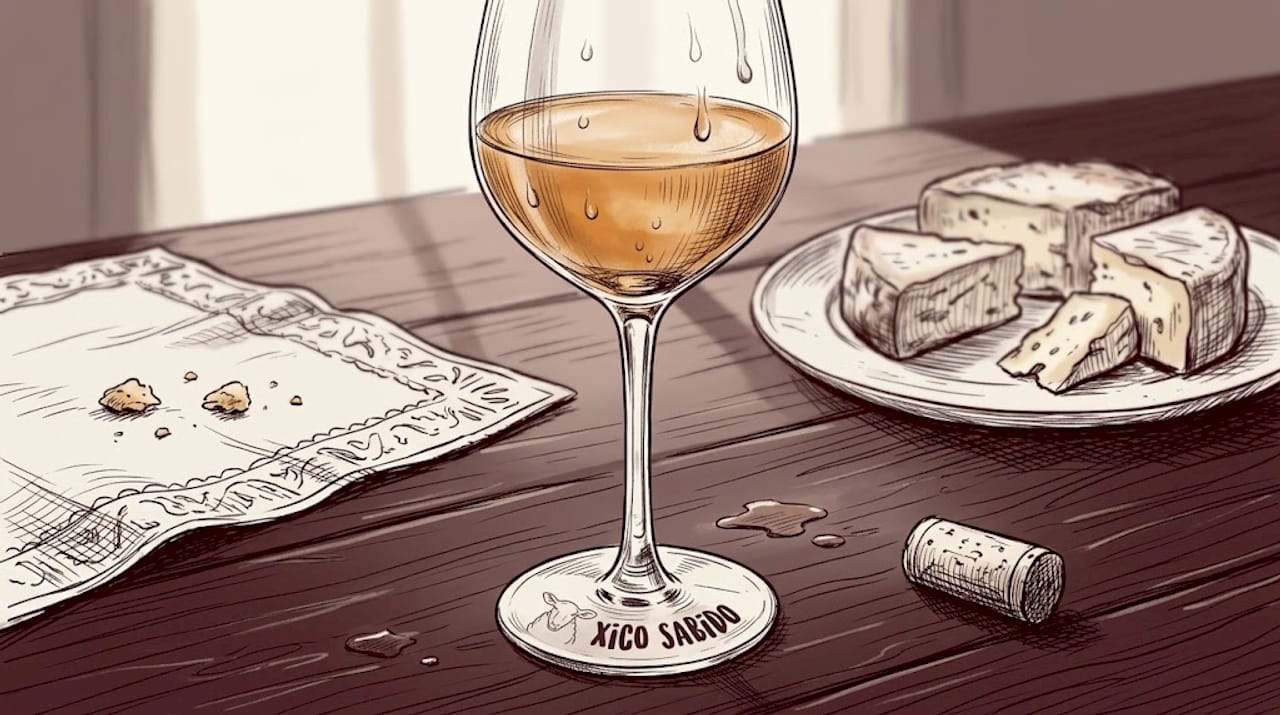
Professional Tip: In the glass, an authentic orange wine has a cloudy or slightly opaque color, with shades ranging from pale gold to deep amber, and a bouquet that blends toasted nuts with dried fruits and withered flowers. If the wine appears completely transparent and straw-colored, it probably didn't undergo enough maceration to be considered true orange wine. Tilt the glass against a white surface: if the color reminds you of honey or dark honey, you're on the right track.
To deepen your understanding of what you taste and how to evaluate the intensity of orange wine, it's well worth exploring the concept of intensity, which in this style takes on unique proportions.
Differences between orange, white, rosé, and red wine
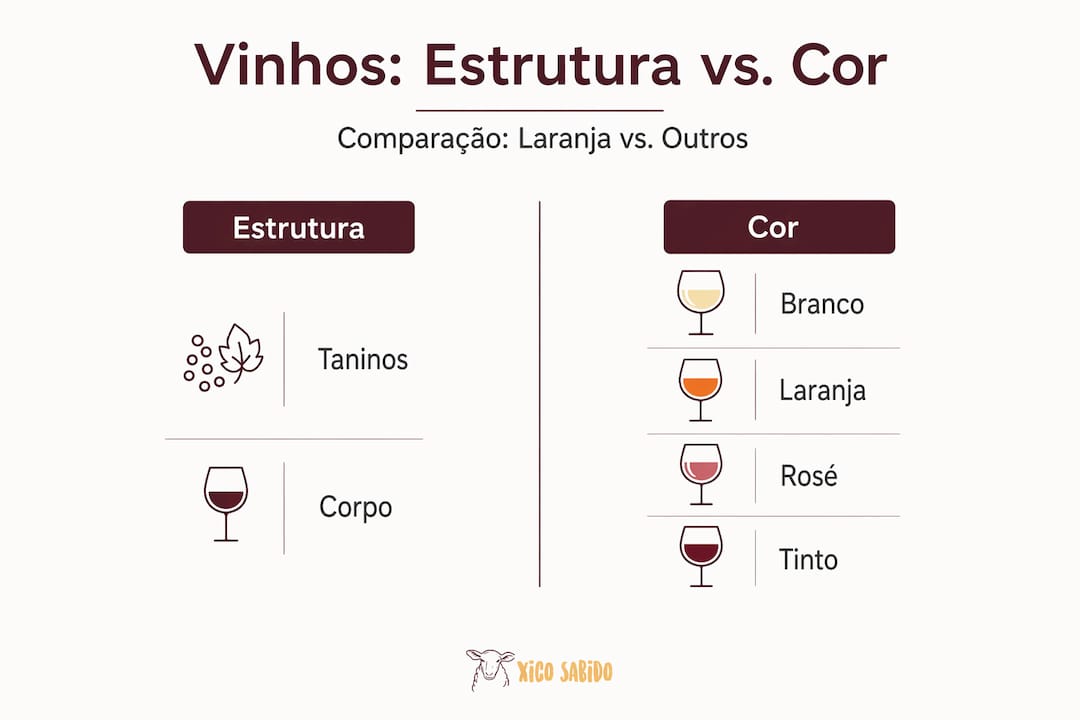
With a clear understanding of the technique, it's important to place orange wine alongside other popular styles. Many people are confused about where this wine fits in, and the answer lies in the comparative table below.
| Style | Grapes used | Skin maceration | Typical color | Tannins | Body |
|---|---|---|---|---|---|
| White | White | None or minimal | Pale yellow to golden | Absent | Light to medium |
| Orange | White | Prolonged (days to months) | Intense golden to amber | Present | Medium to full-bodied |
| Rosé | Red | Brief (hours) | Light pink to salmon | Minimal | Light |
| Red | Red | Prolonged | Ruby to garnet | Marked | Medium to full-bodied |
What this table reveals is fascinating: orange wine shares its grapes with white wine, but its structure with red wine. It's a hybrid of worlds, a bridge between styles, and that's exactly what makes it so versatile and unpredictable.
For those who want to explore more about wine styles and understand how each method shapes what's in the glass, the comparison above is just the beginning. And to master the associated vocabulary, the important wine terms that every enthusiast should know are very helpful in refining the palate and the conversation.
As the study on maceration time and sensory balance highlights, the intensity and character of each orange wine are directly shaped by the time the producer chooses to give to the skins. Two orange wines can be completely different from each other, just like two red wines from different regions or grape varieties.
When to choose an orange wine over other styles:
- When the dish has intense flavors that a common white cannot support
- When you want to explore something unusual without opting for a full-bodied red
- When the meal includes complex textures and flavors such as smoked, cured, or fermented foods
- When you are looking for a conversation wine, one that surprises guests and sparks curiosity at the table
How to pair orange wine with Portuguese dishes
After understanding how orange wine positions itself, we move on to the best part: tasting and pairing it with Portuguese cuisine. And this is where the soul of this wine truly shines, because Portuguese cuisine, with all its richness of flavors, is a perfect stage for its unique characteristics.
| Portuguese Dish | Why it works | Serving Suggestion |
|---|---|---|
| Bacalhau à Brás (Cod à Brás) | Creamy texture and intense flavor marry well with the tannins of orange wine | Serve at 14ºC |
| Queijo de ovelha curado (Cured sheep's cheese) | Fat and salt from the cheese balance the astringency | Serve at 12ºC |
| Polvo à lagareiro (Octopus Lagareiro-style) | Olive oil and fresh herbs harmonize with nutty aromas | Serve at 13ºC |
| Arroz de linguiça (Sausage rice) | Spices and smokiness call for a wine with body and character | Serve at 14ºC |
| Legumes assados no forno (Roasted vegetables) | Caramelized flavors enhance the wine's complexity | Serve at 12ºC |
| Açorda alentejana (Alentejo bread stew) | Coriander and garlic flavors demand a wine with regional character | Serve at 13ºC |
The pairing between orange wine and Portuguese dishes is almost intuitive once you understand the logic behind it. The soft tannins present in this style act as a "hug" for fatty and salty foods, balancing them without overpowering. The lingering acidity sharpens the appetite between bites, and the aromatic complexity complements traditional seasonings like coriander, garlic, bay leaf, and paprika.
Professional Tip: Try orange wine with Serra da Estrela cheese that is still almost creamy. The combination might seem daring, but the intense saltiness of the cheese and the slight astringency of the wine create a balance that will surprise any guest. It's one of the most unexpected and successful pairings available at the Portuguese table.
To discover even more perfect wine and food combinations, the exploration doesn't end here. There's a world of flavors waiting to be discovered.
Common pairing mistakes to avoid:
- Serving too cold: orange wine should be served between 12ºC and 15ºC, not the typical refrigerator cold of whites
- Pairing with very delicate dishes: subtly flavored fish like sole can be overpowered by the intensity of orange wine
- Ignoring the tannins: remember that this wine has structure; treat it with the respect of a light red
- Drinking without patience: orange wine opens up in the glass over time; give it fifteen minutes before judging
What most people forget about orange wine
There's a curious irony in this world. The most experienced oenophiles, those who have read all the books and visited all the wineries, are often the most resistant to orange wine. They prefer known categories, cataloged styles, the comfort of what they already know. And beginners, without prejudices or expectations, discover it with a genuine smile.
The confusion with the orange flavor is not just a linguistic misunderstanding. It reveals something deeper: the human tendency to name what we don't know with what we already know. And that, in the world of wine, can be a trap. Exploring the myths of orange wine is an exercise in humility and openness that every enthusiast should undertake.
What Xico Sabido learned, by living among the Alentejo vineyards and listening to producers who still preserve age-old methods, is that orange wine is the most honest style of all. It hides nothing. The maceration time is there, inscribed in the color. The quality of the grape is in the aromas. The producer's patience is in the structure. It is a wine that does not lie.
The real challenge isn't understanding what orange wine is. It's having the courage to taste it without preconceptions. To let the glass speak before the mind judges. It's in the simplest details, in a sausage rice on a Sunday or a cheese board on a quiet afternoon, that this wine finds its best moment. It doesn't need grand settings. It needs good company and those who know how to appreciate it.
The invitation is this: try it, compare it, and form your own opinion. Orange wine doesn't ask for adoration. It asks for attention.
Discover more about wines and pairings
The world of wine is vast, generous, and full of stories to tell. If orange wine has piqued your curiosity, there's much more to explore, from the benefits of wine consumed in moderation to the universe of techniques that allow you to improve wine and understand what's behind each bottle.

At Xico Sabido, we believe that wine is more than a drink. It's a way to celebrate the land, people, and memories. Our "Compinchas" know this better than anyone, and that's why we continue to share stories, knowledge, and bottles with all the passion of Alentejo. Visit our website, explore the content, and let yourself be surprised by what the world of wine still has to offer you.
Frequently asked questions about orange wine
Does orange wine really taste like orange?
No, orange wine does not taste like orange. As the color resulting from skin contact confirms, the name refers only to the hue acquired during the production process.
What grapes are used to make orange wine?
White grapes, typically traditional varieties like Malvasia, Alvarinho, or Antão Vaz, are used and fermented with their skins to achieve color and structure.
Can orange wine be aged for many years?
Yes, many orange wines can withstand moderate aging because, as indicated by the skin contact, this brings structure and compounds that protect the wine over time.
What Portuguese dishes pair best with orange wine?
It pairs very well with cured sheep's cheeses, codfish, "polvo à lagareiro" (octopus baked with olive oil and garlic), seasoned rice dishes, and Alentejan dishes such as "açorda" or "migas."
Is it a natural wine?
Many producers follow natural or biodynamic practices, but being considered orange wine only depends on the skin-maceration method, not the production philosophy.