

Madeira Wine: The Complete Guide for Aficionados
TL;DR:
- Madeira wine is an oxidative fortified wine produced on the island of Madeira, known for its longevity and diversity of styles.
- Its production uses traditional estufagem and canteiro aging methods, imparting unique flavors and greater resistance after opening.
Madeira wine is a fortified and oxidative wine produced exclusively in the Demarcated Region of Madeira, globally recognized for its extraordinary longevity, unique aromatic profile, and a range of styles from dry to intensely sweet. Made from noble grape varieties such as Sercial, Verdelho, Bual, and Malvasia, this wine from the island of Madeira is forged by historical methods that originated from the long sea voyages of the 17th and 18th centuries. It's not just a wine. It's a bottled story, with a spirit of adventure and the resilience of those who survived the ocean.
1. The main types of Madeira wine and their profiles
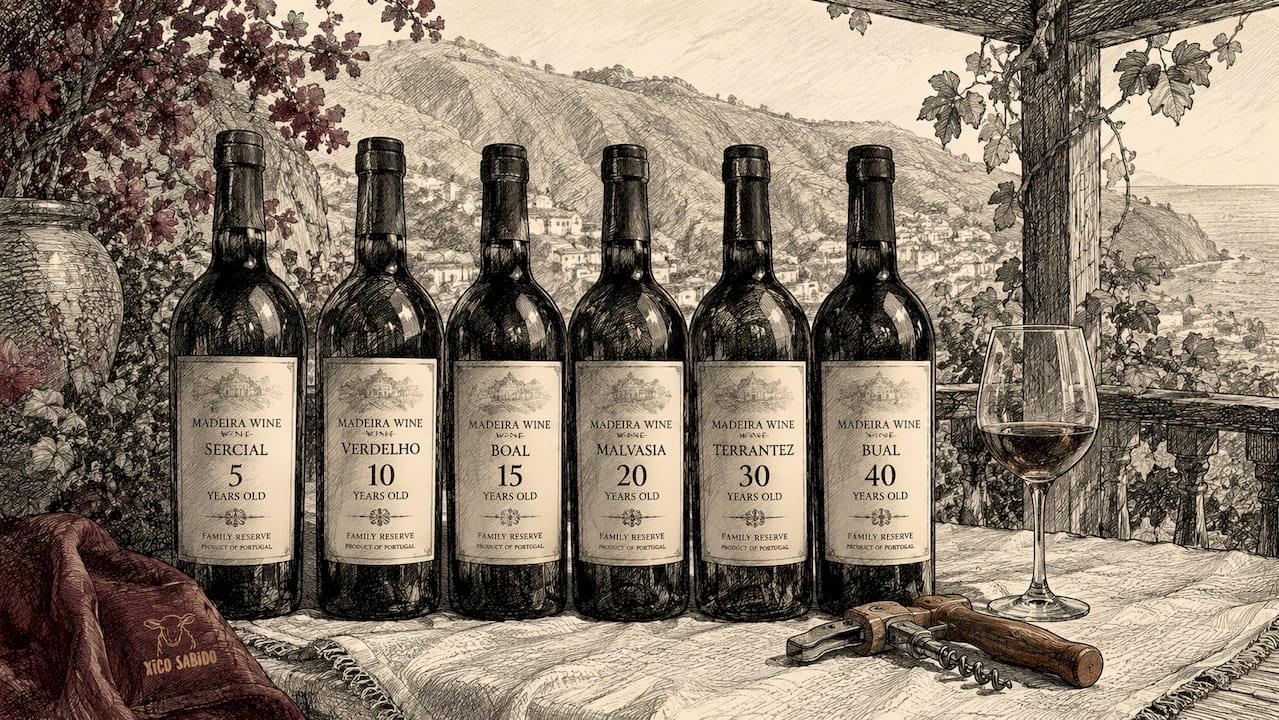
Madeira wines are divided into four main styles, each defined by the noble grape variety that gives it its name and by its characteristic sweetness level. The sweetness is directly linked to the grape variety: Sercial is the driest, Malmsey (Malvasia) is the sweetest, and Verdelho and Bual occupy the intermediate points. All have a minimum alcohol content of 17.5% ABV, resulting from fortification with wine brandy.
Here's what distinguishes each style:
- Sercial is the driest of the four, with up to 27 g/L of residual sugar. It has lively acidity, citrus and almond notes, and a freshness that surprises those expecting a sweet wine. It is served chilled as an aperitif.
- Verdelho is medium-dry, with notes of honey, smoke, and tropical fruits. It has more body than Sercial and a balanced acidity that makes it versatile with food.
- Bual enters the medium-sweet territory, with aromas of fig, caramel, and spices. It is rich without being heavy, with an acidity that prevents the sweetness from dominating.
- Malmsey (Malvasia) is the sweetest style, with over 64 g/L of residual sugar. It has notes of coffee, dark chocolate, and dried fruits. It is the Madeira that most seduces those who taste it for the first time.
Blandy’s 10-year-old is an essential reference for those who want to explore versatile pairings with different dishes depending on the chosen style. For those starting to explore sweetness levels in wine, understanding these four grape varieties is the first step.
2. Estufagem vs. canteiro: the two aging methods
The unmistakable character of Madeira wine comes from two distinct aging processes, each with a direct impact on the flavor, aroma, and complexity of the final wine. Understanding the difference between estufagem and canteiro is to understand the soul of this wine.
-
Estufagem is the most common method for entry and mid-range wines. The wine is artificially heated in stainless steel or concrete tanks at temperatures between 45 and 50°C for at least 3 months. This process accelerates oxidation and the development of caramelized and toasted flavors, replicating the conditions of old sea voyages in ship holds.
-
Canteiro is the noble method, reserved for the best wines. The wine ages naturally in wooden casks in the island's warehouses, exposed to ambient temperature variations over the years. There is no artificial heating. Time does the work.
-
Sensory differences between the two methods are clear to a trained palate. Estufagem produces wines with more direct and caramelized flavors. Canteiro results in wines with greater complexity and aromatic integration, where notes of dried fruits, spices, and wood blend more elegantly.
-
Colheita and Frasqueira are the top categories of the canteiro method. A Frasqueira is produced from a single grape variety and a single year, aging for a minimum of 20 years in cask. These are wines for collectors and for moments that deserve to be remembered.
-
The historical impact of these methods is not accidental. The tradition of heating and fortifying wine arose from the need to preserve it during long sea voyages. What started as a solution became an identity.
Professional Tip: If you're exploring canteiro for the first time, look for a Verdelho or Bual with at least 10 years of aging. The difference from an estufagem wine is immediate and revealing.
3. Classic pairings for each style of Madeira
Experienced sommeliers choose Madeira not only for its sweetness but for the combination of acidity and oxidative profile that supports long and rich dishes. This is the great gastronomic advantage of this wine: the lively acidity balances the richness of the food, making each sip a palate cleanser.
| Style | Ideal pairing | Serving temperature |
|---|---|---|
| Sercial | Grilled fish, seafood, fish soup | 10 to 12°C |
| Verdelho | Roast poultry, creamy soups, fresh cheeses | 12 to 14°C |
| Bual | Blue cheeses, caramelized desserts, foie gras | 14 to 16°C |
| Malmsey | Dark chocolate, aged cheeses, almond tart | 16 to 18°C |
The recommended classic pairings follow a simple logic: the drier the wine, the lighter and saltier the dish; the sweeter, the richer and more intense the accompaniment. To delve deeper into this logic, Xicosabido's guide to wine and food combinations offers practical insights beyond Madeira.
- Sercial works as an excellent aperitif, especially with toasted almonds or marinated olives.
- Verdelho is the ideal companion for caldo verde (Portuguese green soup) or roast chicken with herbs.
- Bual transforms a cheese board into a complete sensory experience.
- Malmsey is the perfect partner for a chocolate dessert or an egg pudding.
Professional Tip: Always serve Madeira slightly cooler than the temperature indicated in the table. The wine warms up quickly in the glass and gradually gains expression, which makes tasting more interesting.
4. Longevity and resistance: what makes Madeira unique
Madeira wine is the most resistant wine in the world after opening. This statement is not hyperbole. It is a direct consequence of its composition: stability after opening can last weeks or months, something impossible for the vast majority of wines. For restaurants and enthusiasts who enjoy wines by the glass over several days, this characteristic is invaluable.
“Madeira does not age. It evolves. And it does so with a grace that few wines in the world can match.”
The reason lies in the fortification with wine brandy, which raises the alcohol content to between 17% and 22%, combined with an oxidative profile that has already been “resolved” during aging. The wine has already undergone the oxidation process before reaching the bottle, so exposure to air after opening does not deteriorate it. On the contrary, it often opens up even more.
Historical examples are extraordinary. There are bottles of Madeira more than 100 years old in perfect condition, served at auctions and gala dinners with vibrant notes and intact complexity. For those who want to delve deeper into how wine improves with age, Madeira is the most fascinating case study available.
5. Wine tourism in Madeira: events and wineries you cannot miss
The island of Madeira offers one of the richest wine tourism experiences in Europe, where the terraced vineyard landscape meets wineries with centuries of history. The Madeira Wine Festival is the central event of the island's wine calendar, bringing together tourists and locals in tastings, themed dinners, workshops, and guided tours of vineyards and wineries. In 2026, the festival continues to be the best gateway for those who want to immerse themselves in the wine culture of the island of Madeira.
In addition to the festival, there are experiences worth booking in advance:
- Blandy’s Wine Lodge in Funchal is one of the most iconic wineries in the world, with guided tours that span centuries of history and wine tastings with different aging periods.
- Pereira d’Oliveira is a family winery with bottles dating back to the 19th century, where you can taste wines with decades of canteiro aging in an atmosphere of rare authenticity.
- Themed tastings by grape variety are organized by several wineries throughout the year, allowing you to compare verticals of Sercial or Malmsey from different years and understand how the wine evolves.
- Wine pairing dinners with local chefs who create menus based on the profiles of each Madeira style are a growing trend, especially during the festival.
Wine tourism in Madeira is not just a visit to a winery. It is an immersion in a culture that has survived oceans and centuries, and that continues to reinvent itself with pride.
Key points
Madeira wine is the only wine in the world that combines centuries-old longevity, gastronomic versatility, and resistance after opening, thanks to its fortification, oxidative profile, and unique aging methods.
| Point | Details |
|---|---|
| Four noble grape varieties | Sercial, Verdelho, Bual, and Malmsey define the sweetness profiles, from dry to intensely sweet. |
| Two aging methods | Estufagem accelerates the process with heat; canteiro ages the wine naturally in cask for years. |
| Longevity after opening | An opened bottle remains stable for weeks or months, unlike most wines. |
| Gastronomic versatility | Each style pairs with distinct dishes, from seafood to dark chocolate. |
| Active wine tourism | Blandy’s, Pereira d’Oliveira, and the Madeira Wine Festival are essential references for enthusiasts. |
The Madeira I didn't expect to find
I confess that for years I treated Madeira as a special occasion wine. I saved it for desserts or to offer to someone who "appreciated such things." It was a mistake that cost years of pleasure.
The reintroduction of Madeira as a versatile gastronomic wine is not a recent fad. It's a belated recognition of something the island's producers have always known: this wine was made for the table, not the cabinet. The acidity of Sercial alongside grilled fish is one of the most honest and satisfying combinations I've ever tasted. There's no artifice. There's balance.
What surprises me most is Madeira's inverted logic. While most wines fear heat and oxidation, Madeira was built on these two elements. Estufagem and canteiro are not compromises. They are deliberate choices that transform adversity into character. There is something profoundly Alentejan in this philosophy: taking what the land and climate give you, even when it's difficult, and making something extraordinary with it.
For 2026, my advice is simple: buy a 10-year-old Verdelho, open it on a Friday night with a caldo verde, and forget everything you thought you knew about fortified wines. Madeira will speak for itself.
— Pedro
Explore the world of wine with Xicosabido

At Xicosabido, we believe that knowledge is the best companion to a good glass of wine. If this article has piqued your curiosity about Madeira and other Portuguese wines, there's much more to discover. From guides on wine benefits to resources on oenological products that enhance your home experience, Xicosabido is the community of "Compinchas" who love wine with soul and without formalities. Explore, learn, and share. Wine is always better when there's a story to tell and friends to listen. Join us at xicosabido.pt and be part of this journey.
FAQ
What exactly is Madeira wine?
Madeira wine is a fortified and oxidative wine produced exclusively in the Demarcated Region of Madeira, Portugal. It is made from noble grape varieties such as Sercial, Verdelho, Bual, and Malvasia, with a minimum alcohol content of 17.5% ABV.
What is the difference between estufagem and canteiro?
Estufagem artificially heats the wine to 45 to 50°C for at least 3 months; canteiro naturally ages the wine in wooden casks for years, producing greater aromatic complexity.
How long does Madeira wine last after opening?
An opened Madeira wine remains stable for weeks or even months, thanks to its fortification and oxidative profile. This resistance is one of its most valued characteristics in restaurants and for domestic use.
How do I choose the right style of Madeira wine?
Choose Sercial for appetizers and fish, Verdelho for poultry and soups, Bual for cheeses and caramelized desserts, and Malmsey for chocolate and aged cheeses. The sweetness level corresponds to the intensity of the dish.
Is it worth visiting Madeira for wine tourism experiences?
Yes. Wineries like Blandy’s and Pereira d’Oliveira offer unique historical tours, and the Madeira Wine Festival annually brings together tastings, themed dinners, and workshops that deepen knowledge of the island's wine.