

Single-varietal wine: Discover the purity and identity of Alentejo
TL;DR:
- Single varietal wine is produced from a single grape variety, purely reflecting the terroir.
- In Alentejo, grape varieties like Alicante Bouschet, Aragonez, and Antão Vaz stand out in single varietals.
- Single varietals offer authenticity and deeply explore the characteristics of each grape variety.
There’s a deeply rooted idea among many wine lovers: that only blends, with their cleverly orchestrated mix of grape varieties, can truly translate the soul of a region. But what if the secret lies, after all, in a single grape? A single varietal wine expresses the pure characteristics of the grape variety and the terroir in a way no blend can replicate. In this article, we’ll explore what defines a single varietal wine, how it’s produced, how Alentejo celebrates it, and how you can start appreciating it with more confidence and pleasure.
Index
- What is single varietal wine?
- How are single varietal wines made?
- Single varietals in Alentejo: Identity and examples
- Single varietal or blend? Advantages, challenges, and food pairing
- Laws, certification, and trends of single varietals in Portugal
- What few tell you about choosing single varietal wine
- Discover and experience Alentejo single varietal wines
- Frequently asked questions about single varietal wine
Key Takeaways
| Point | Details |
|---|---|
| Grape variety identity | Single varietal wines allow you to know the profile of a grape without masks or blends. |
| Terroir expression | In Alentejo, soils and climate stand out in single varietals, showing regionality and nuances. |
| Production care | The production of a single varietal requires extra care, as there is no way to correct any imbalances with other grape varieties. |
| Food pairing | Single varietals facilitate pairing when you want to enhance the authentic flavor of the dish. |
| Trend in Portugal | Interest in single varietals is growing, reflecting the search for authenticity and tradition. |
What is single varietal wine?
The answer is simpler than it seems. A single varietal wine is produced using only a single grape variety, without blending other varieties. It can also be called monocaste or varietal wine, terms you will often find on labels and in conversations among enthusiasts. Unlike blends, where two or more varieties complement each other, here the entire expression of the wine depends on just one variety.
Understanding the difference between single varietal and blend is essential for those who want to explore types of wine in Portugal more deeply. In a blend, the winemaker has the freedom to balance aromas, tannins, and acidity by combining grape varieties. In a single varietal, that margin disappears. The wine is exposed, naked, faithful to what the grape and the land have to offer.
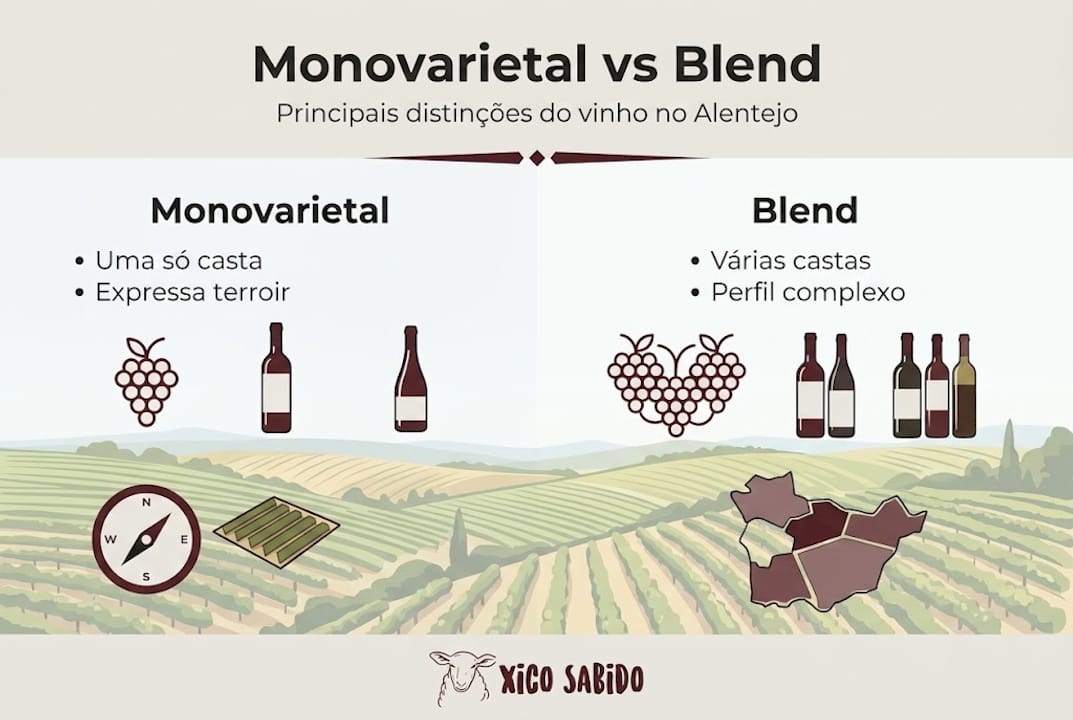
Why has consumer interest grown? Because we live in an era where authenticity is highly valued. People want to know where what they drink comes from; they want to feel the territory in the glass. And a single varietal offers exactly that: a direct window into the identity of a grape variety and the soil where it grew.
See the main differences between the two styles:
- Single Varietal: a single grape, pure expression, clear identity, more sensitive to yearly variations
- Blend: several grape varieties, greater complexity, more controlled balance, more consistent across vintages
- Single Varietal: ideal for understanding a grape variety in depth and exploring the terroir
- Blend: ideal for versatile pairings and more robust wines
“In a single varietal, the winemaker has nowhere to hide. The grape speaks for itself, and the terroir responds.”
Knowing the essential wine terms helps to interpret labels more confidently and choose the right wine for every occasion. The single varietal is, above all, an invitation to honest discovery.
How are single varietal wines made?
Now that we know what distinguishes a single varietal, let's see how it appears in the glass. The process begins long before the harvest. Choosing the right grape variety for the right terroir is the most important decision of all. A grape that thrives on a schist slope may not yield the same results in a clay soil. The winemaker and viticulturist work together to ensure that the chosen plot can express the best of the variety.
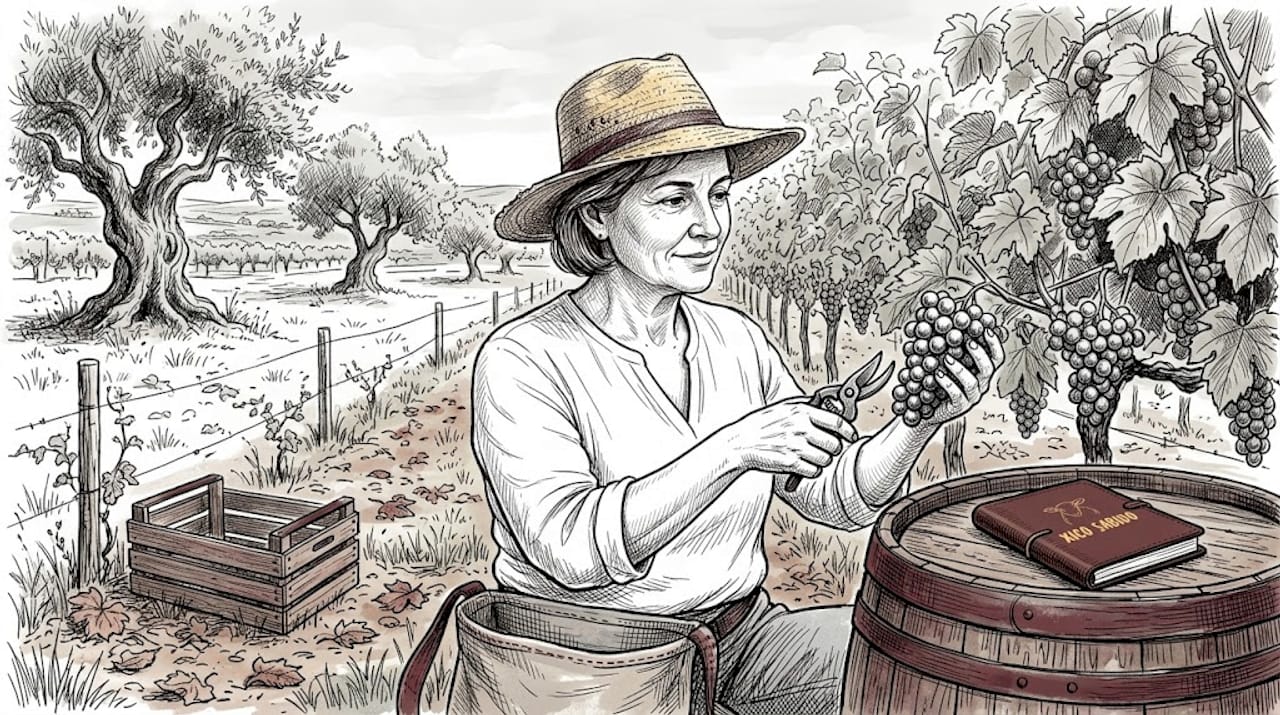
Its production requires winemaking with grapes from the same variety, without blends, which demands rigorous control from the vineyard to the cellar. Any imbalance in ripening, whether excess acidity or lack of structure, cannot be corrected later with another grape variety. Everything must be resolved in the vineyard or at the exact moment of harvest.
The production process of an Alentejo single varietal generally follows these steps:
- Plot selection: identifying the ideal soil and sun exposure for the chosen grape variety
- Ripening control: closely monitoring sugar levels, acidity, and polyphenols throughout the summer
- Harvest at the right moment: harvesting when the grape reaches its optimal point, with no room for delays
- Separate vinification: fermenting the grape in isolation, without contact with other varieties
- Aging and refinement: deciding whether the wine benefits from wood or stainless steel, depending on the grape's profile
- Bottling and final control: ensuring that the result in the glass faithfully reflects the identity of the grape
Professional Tip: If you want to better understand the impact of terroir on a single varietal, try comparing two wines of the same grape variety produced in different sub-regions of Alentejo. The difference can be surprising.
Alicante Bouschet is a perfect example. Learn more about the production of Alicante Bouschet and understand why this grape variety has become one of the great references of Alentejo wine. For those who want to deepen their knowledge of regional varieties, exploring the typical grape varieties of Alentejo is a natural and very rewarding step.
Single varietals in Alentejo: Identity and examples
Having understood the process, we now explore the prominence of single varietals in Alentejo. Alentejo is a region of contrasts: hot, dry summers, varied soils ranging from granite, schist, and clay, and a light that seems to gild everything it touches. These conditions create wines with strong personalities, and single varietals are the most direct way to experience this.
Alicante Bouschet represents 17.6% of the planted area in Alentejo, being one of the most awarded grape varieties in its single varietal version. It is a red grape both inside and out, which gives it an intense color and unmistakable structure. Alongside it, Aragonez (also known as Tempranillo) and Antão Vaz for whites are essential references.
| Grape Variety | Color | Aromatic Profile | Prominent Sub-region |
|---|---|---|---|
| Alicante Bouschet | Red | Black fruits, spices, full-bodied | Évora, Portalegre |
| Aragonez | Red | Red fruits, silky tannins, elegance | Reguengos, Borba |
| Antão Vaz | White | Tropical, floral, mineral freshness | Vidigueira, Cuba |
| Trincadeira | Red | Plum, pepper, lively acidity | Redondo, Moura |
The minerality and freshness of a single varietal vary greatly depending on the planting site. An Antão Vaz from Vidigueira, in an area with cooler soils and higher altitude, has a completely different profile from one produced in the warmer plains of Évora. This variation is precisely what makes the exploration of single varietals so fascinating.
- Alicante Bouschet: the red gem, with unique color and structure worldwide
- Aragonez: elegant and versatile, with tannins that caress the palate
- Antão Vaz: the white that surprises with its freshness in a warm climate
- Trincadeira: the most Alentejan grape of all, with its own soul and character
Wineries like Quinta do Quetzal have launched new single varietals that have attracted international attention. To experience this firsthand, a wine tour in Alentejo is the best way to feel the territory and its grape varieties with all your senses.
Single varietal or blend? Advantages, challenges, and food pairing
For those deciding between single varietal or blend, it’s essential to understand when each shines. Single varietals translate purity and terroir but are more sensitive to climatic variations, while blends ensure consistency and complexity over the years.
| Criterion | Single Varietal | Blend |
|---|---|---|
| Authenticity | High, direct expression of the grape variety | Depends on the composition |
| Complexity | Focused on a single grape variety | Multiple aromatic layers |
| Consistency between vintages | More variable | More stable |
| Food pairing | Predictable and direct | Versatile and adaptable |
| Risk of defects | Higher (no possible correction) | Lower (grape varieties complement each other) |
The advantages of single varietals are clear for those who want to learn: authenticity is total, food pairing is more predictable, and the experience of understanding a grape variety in depth is unmatched. To pair single varietal wines with Portuguese gastronomy, the rule is simple: wines with strong personalities call for dishes with defined flavors.
Practical pairing suggestions:
- Alicante Bouschet single varietal with oven-roasted lamb with garlic and herbs
- Aragonez single varietal with Alentejo pork or regional cured meats
- Antão Vaz single varietal with bacalhau à brás (shredded codfish with potatoes and eggs) or grilled fish with olive oil
- Trincadeira single varietal with game or intensely flavored and spiced dishes
Professional Tip: When choosing a single varietal for a meal, first consider the dominant flavor of the dish. The grape variety will directly interact with that flavor, without intermediaries.
Blends have their own beauty, especially in years where the climate was less generous. Biodiversity in viticulture is also an argument in favor of blends: working with several grape varieties preserves the genetic diversity of vineyards and reduces the risk of total losses in a poor harvest.
Laws, certification, and trends of single varietals in Portugal
When choosing a wine, the guarantee of authenticity and quality also depends on rules and transparency. In Portugal, the legal framework for single varietal wines has some particularities worth knowing.
How certification works in Portugal:
- Denomination of Origin (DOC): Alentejo DOC is managed by CVRA (Comissão Vitivinícola Regional Alentejana), which defines authorized grape varieties and quality parameters
- Geographical Indication (IG): for wines outside the DOC, IG Alentejano allows greater flexibility in the grape varieties used
- Labeling: producers can indicate the grape variety on the label if the wine is 100% of that variety, but there is no legal requirement for a minimum explicit percentage as in other countries
- Certification tests: all DOC wines undergo physico-chemical analysis and organoleptic tasting before being certified
“The DOC Alentejo certification is a guarantee that the wine was produced with respect for the territory and its rules.”
In Portugal, there is no minimum percentage requirement for labeling a wine as single varietal, unlike countries like Australia (85%) or the United States (75%). This gives the producer more freedom, but also requires more attention from the consumer when reading the label.
Trends point to consistent growth in demand for single varietals in Portugal and export markets. Consumers want authenticity; they want to know what they are drinking and where it comes from. To deepen the connection to the territory, knowing the tradition of Alentejo terroir is essential. Those who wish to explore examples of certified single varietals will find an increasingly rich and diverse selection.
What few tell you about choosing single varietal wine
After so many facts and comparisons, there’s a truth rarely spoken aloud: there is no objectively right choice between single varietal and blend. There is the right choice for the moment, for the palate, and for the experience you want to have.
Many consumers fall into the trap of overvaluing the complexity of blends as a sign of superior quality. Others, upon discovering single varietals, become almost dogmatic in defending purity. The truth is that both have soul and a place at the table.
Single varietals are extraordinary tools for learning. When you taste a Merlot in its pure version, you are hearing the grape speak without filters. That is valuable. But a well-constructed blend can tell a story of a territory that no single grape variety could narrate alone.
Our advice is simple: challenge yourself. Taste a single varietal and a blend from the same region side by side. Let the glass teach you what no article can fully explain. Wine is, above all, a living experience.
Discover and experience Alentejo single varietal wines
If this article has sparked a desire to explore single varietals more deeply, the next step is to savor that curiosity with real experiences. Alentejo has a lot to offer those who want to go beyond the label.

Start by getting to know the spotlighted Alicante Bouschet, one of the region's most emblematic grape varieties and a perfect example of what a monovarietal can express. If you prefer to experience it firsthand, our wine tasting itinerary will take you through the best spots in Alentejo. And to understand what's behind each bottle, delve into the history of terroir and tradition in Alentejo. At Xico Sabido, every bottle is an open door to this world.
Frequently asked questions about monovarietal wine
Is monovarietal wine better than a blend?
Not necessarily. Monovarietals highlight authenticity and terroir, while blends bring complexity and balance, with the final decision depending on personal taste and the occasion.
Which grape varieties are most used in monovarietal wines in Alentejo?
In Alentejo, the main grape varieties for monovarietals are Alicante Bouschet, Aragonez, Antão Vaz, and Trincadeira, each uniquely expressing the specificity of its terroir.
Is specific legislation required to certify monovarietal wines in Portugal?
No. In Portugal, there is no explicit minimum percentage requirement for a grape variety to label a wine as monovarietal, unlike in other producing countries.
How to pair monovarietal wines in Portugal?
Monovarietals offer predictability in pairing and adapt well to dishes with defined flavors such as roasted lamb, codfish, or Alentejo pork.