

Riesling wine: a complete guide for connoisseurs
TL;DR:
- Riesling wine is an aromatic German varietal cherished for its vibrant acidity and versatility, producing dry, off-dry, and sweet styles. It stands out with an aromatic profile of citrus, floral, mineral, and tropical notes, and develops petrol and beeswax aromas with age. This wine shows great aging potential and pairs well with dishes ranging from fish to desserts and blue cheeses.
Riesling wine is defined as an aromatic white produced from the Riesling grape, recognized worldwide for its vibrant acidity, persistent freshness, and unique ability to express the terroir where it grows. Originating from Germany's Rhine Valley, this grape has captivated palates for centuries with a rare versatility: it produces dry, off-dry, and sweet wines with equal elegance. If you haven't yet encountered a good Riesling, prepare to discover one of the most fascinating whites in the world of wine.
1. What are the main characteristics of Riesling wine?
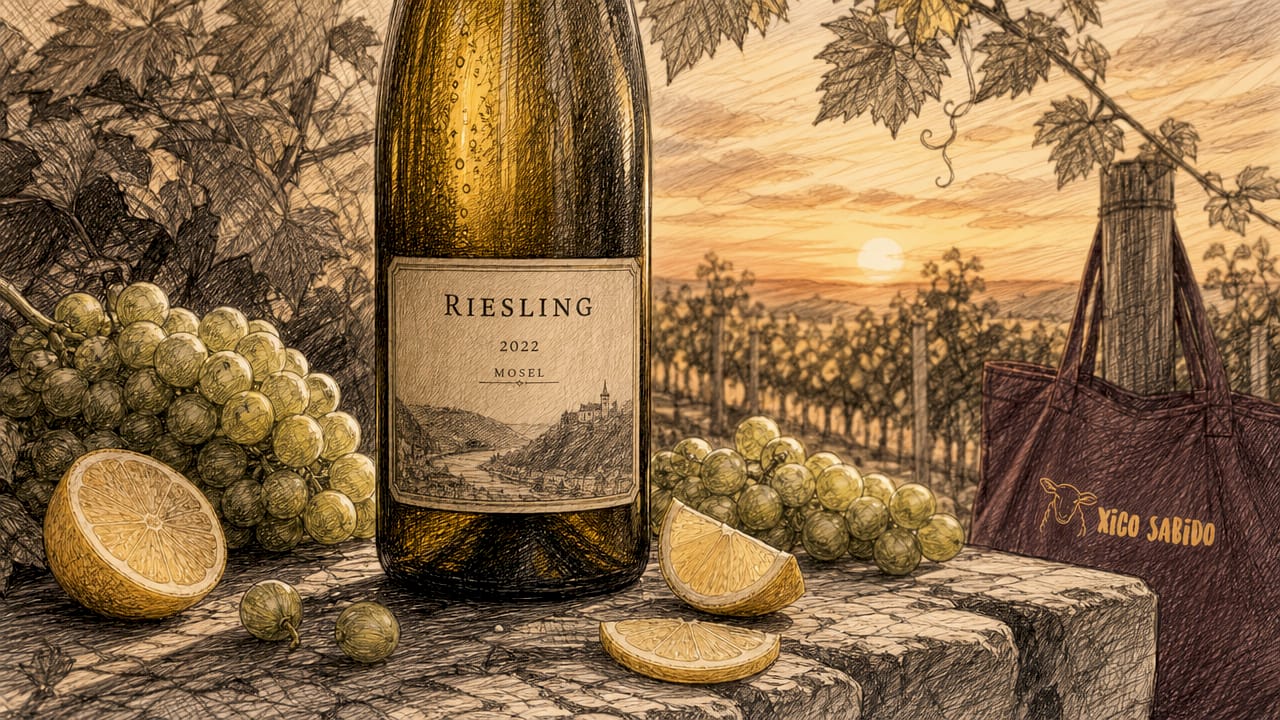
Riesling wine is distinguished by its high acidity and freshness, which make it vibrant and persistent on the palate, regardless of its sweetness level. This acidity is not aggressive; it's the engine that balances the wine and gives it unusual longevity among whites.
The aromatic profile varies depending on the style and region, but there are recognizable common threads:
- Citrus aromas: lemon, lime, grapefruit, especially in dry and young styles
- Floral aromas: jasmine, orange blossom, white rose, more present in German Rieslings
- Mineral aromas: flint, wet slate, typical of the Mosel Valley
- Tropical aromas: peach, apricot, mango, in warmer climates like Alsace
- Honeyed aromas: characteristic of sweet and late harvest styles
The body is light to medium, making Riesling a refreshing white even on the hottest days. With aging, petrol and beeswax notes emerge, which enthusiasts love and which make this wine truly unique among aromatic white wines.
Professional Tip: When tasting a Riesling for the first time, close your eyes and look for the balance between acidity and fruit. If you feel freshness without harshness, you have a good example.
2. How is Riesling sweetness measured?
Riesling sweetness is classified by the residual sugar present in the wine after fermentation. Residual sugar defines the style: dry below 4 g/L, off-dry between 4 and 12 g/L, and sweet above 45 g/L. This scale is crucial for reading labels and understanding what's in the bottle before opening it.
On German labels, the term Trocken indicates a dry wine style, while Halbtrocken indicates off-dry. Knowing these terms saves unpleasant surprises and helps choose the right Riesling for every occasion or meal.
What makes sweet Riesling truly special is that its acidity balances the sweetness, making wines with high sugar content surprisingly fresh and never cloying. This is one of the big differences compared to other sweet whites, where sugar dominates without counterbalance.
3. Which are the most recognized producing regions?
Germany leads the world in Riesling production. 40% of German production is of this varietal, which demonstrates how much the country has invested in it as a national wine identity. The cold climate favors the slow ripening of the grapes, preserving the natural acidity and mineral character that define the classic style.
| Region | Country | Predominant Style | Main Characteristic |
|---|---|---|---|
| Mosel | Germany | Light, dry to off-dry | Intense minerality, slate notes |
| Rheingau | Germany | Dry, full-bodied | Elegance, structure, and longevity |
| Pfalz | Germany | Dry to off-dry | Ripe fruit, more generous body |
| Alsace | France | Dry, aromatic | Aromatic richness, full body |
| Clare Valley | Australia | Dry, citrusy | Vibrant acidity, lime notes |
Mosel Valley Riesling is perhaps the most iconic of all. Produced on slate slopes above the Mosel River, it imparts a minerality that seems to whisper the history of the terroir in every sip. The slow maturation in cold regions preserves the mineral character and high acidity, fundamental to the classic style.
Alsace, on the French side of the border, produces dry Rieslings with a more generous body and more exuberant aromas. In Australia, Clare Valley surprises with citrusy and taut Rieslings that age very well. Portugal does not yet have significant production of this varietal, but the demand for Riesling wine in Portugal is growing among curious consumers.
4. How to pair Riesling wine with food?
Riesling pairing follows a simple logic: the wine's sweetness level should match the intensity and profile of the dish. Its high acidity facilitates pairing with fatty, spicy, and aromatic dishes, making Riesling one of the most versatile whites at the table.
For a dry Riesling, the best combinations are:
- Grilled fish, baked cod, roasted sea bass
- Seafood, oysters, garlic prawns
- Fresh salads with citrus
- Soft cheeses like Brie or Camembert
Off-dry Riesling shines with Asian cuisine. Thai, Vietnamese, or Indian dishes with spices and some heat find the perfect partner in off-dry. The wine's gentle sweetness counteracts the heat of the spices without overpowering the flavors. For a more in-depth food pairing, it's worth exploring combinations by texture and intensity.
Sweet Riesling is reserved for fruit desserts, apple pie, foie gras, or blue cheeses like Roquefort and Gorgonzola. The pairing by sweetness level ensures that the wine is never eclipsed by the dish nor dominates it excessively.
Professional Tip: With spicy dishes, always choose a Riesling with some residual sugar. The sweetness softens the heat and enhances the dish's aromas in a surprising way.
5. Where to buy Riesling wine in Portugal and what to look for?
The Portuguese market offers good options for imported Riesling, mainly from German and Alsatian origins. To choose wine well, start by reading the label carefully and identify the sweetness level using German terms or the indication of residual sugar in g/L.
The Gustav Riesling Trocken Rheinhessen is a benchmark example for those looking for the best dry Riesling: 100% Riesling, 12% alcohol, balanced acidity, and an ideal profile to accompany fish and seafood. The recommended serving temperature is between 6 and 8 °C, which enhances freshness and citrus aromas.
Where to find Riesling in Portugal:
- Specialized wine shops like independent wine stores in Lisbon and Porto
- Large supermarkets with imported wine sections (El Corte Inglés, Continente)
- Online platforms that allow filtering by varietal and region of origin
- Wine fairs such as Essência do Vinho or Lisboa Wine Week
Professional Tip: When buying online, filter by "Riesling Trocken" if you want a dry style. Avoid buying Riesling without a sweetness indication if you don't know the producer, as the style might surprise you.
Serving temperature is a detail many overlook. A Riesling served too cold loses aromas. Too warm, it loses freshness. Between 7 and 10 °C is the ideal range for most styles.
6. Why does Riesling age so well?
Riesling is one of the white wines with the greatest aging potential in the world. Its high acidity preserves the wine over time, acting as a natural preservative that maintains freshness and structure even after decades in the bottle.
The ideal drinking windows vary depending on the style:
- Fruity and young Rieslings: best in the first 2 to 3 years, when the fruit is at its peak
- Balanced Rieslings: reach their peak between 3 and 10 years, developing complexity without losing freshness
- Age-worthy Rieslings (reductive or late harvest): can evolve for 15 to 30 years or more
With aging, Riesling develops unique petrol aromas that divide opinions but are highly valued by experienced enthusiasts. This note, reminiscent of kerosene or wax, is considered a sign of quality and evolution in top examples.
To store Riesling at home, follow the basic principles of wine storage: constant temperature between 12 and 14 °C, absence of direct light, and horizontal position to keep the cork moist. A well-stored Riesling rewards patience with a sensory experience that few whites can offer.
Key Points
Riesling wine is the world's most versatile white, capable of ranging from dry to sweet with elegance, aging for decades, and pairing with almost any cuisine.
| Point | Details |
|---|---|
| Acidity as identity | High acidity is Riesling's central trait, ensuring freshness and longevity in all styles. |
| Variable and legible sweetness | Residual sugar defines the style: read the label to identify dry, off-dry, or sweet before buying. |
| Terroir expressed in the glass | Mosel, Rheingau, Alsace, and Clare Valley produce Rieslings with distinct and recognizable personalities. |
| Pairing by sweetness | Pair dry Riesling with fish, off-dry with Asian cuisine, and sweet with blue cheeses or desserts. |
| Real aging potential | Balanced Rieslings evolve between 3 and 10 years; top ones can last decades with unique aromas. |
My view on Riesling and what it taught me
I confess that it took me a while to surrender to Riesling. I grew up surrounded by Alentejo reds with soul, by whites that smelled of sun and dry earth. Riesling seemed distant to me, almost too cold, as if it came from another world. And it did, in fact: from the slate slopes of the Mosel, from vineyards that survive winters that the Alentejo never knew.
What converted me was a Rheingau Trocken Riesling drunk on a summer afternoon with a simple grilled sea bass dish. The acidity cut through the fish's fat with a precision no other white I knew could achieve. I realized at that moment that Riesling is not cold. It is precise. And there is a huge difference between the two things.
What fascinates me most about this varietal is the honesty with which it expresses the place where it grows. A Mosel Riesling smells of wet stone and white flower. An Alsatian one has more body, more fruit, more sun. The same grape, different worlds. It is exactly what I believe about wine in general: terroir is not a marketing concept. It is a reality felt in the glass.
For those starting to explore Riesling, my advice is simple: start with a dry German one with the indication Trocken on the label. Serve it cold, eat fish alongside, and let the wine speak. Then, if you want an adventure, try an off-dry with a Thai curry. You will understand why this white has such passionate fans around the world.
— Pedro
Discover the best white wines at Xicosabido

At Xicosabido, the passion for wine doesn't stop at Alentejo. The brand's curation extends to everything worth tasting, including the aromatic whites that make wine lovers sigh. If you don't know where to start, the guide on which wine to buy in Portugal helps you navigate styles, regions, and prices with confidence. Xicosabido was built to make wine accessible, memorable, and genuine, whether it's from Alentejo or the cold slopes of the Mosel. Join the Compinchas community and discover the pleasure of choosing well.
FAQ
What is Riesling wine?
Riesling wine is an aromatic white produced from the Riesling grape, originating from Germany, with high acidity, freshness, and a profile ranging from dry to sweet. It is considered one of the most versatile white wines with the greatest aging potential in the world.
Dry or sweet Riesling: which to choose?
Choose dry Riesling for meals with fish, seafood, or salads; opt for sweet for desserts, foie gras, or blue cheeses. The label indicates the style with terms like Trocken (dry) or with the indication of residual sugar in g/L.
What is the ideal temperature to serve Riesling?
Riesling should be served between 7 and 10 °C to preserve the balance between freshness and aromatic expression. Temperatures that are too low suppress aromas; too high eliminate the freshness that defines this varietal.
Does Riesling age well?
Yes. The high acidity of Riesling allows the best examples to evolve for 10 to 30 years, developing complex aromas of petrol, wax, and honey that are highly valued by experienced enthusiasts.
Where can I find Riesling wine in Portugal?
Riesling is available in specialized wine shops, large supermarkets with imported sections, and online wine platforms. Look for German or Alsatian Riesling to find the most representative styles of this varietal.