

Vegan wine: how to identify and choose ethical options
TL;DR:
- Many wines are not automatically vegan due to the use of animal-derived fining agents.
- Choosing a vegan wine requires checking certifications, labels, or directly contacting the producer to confirm fining methods.
Many wine lovers assume that since wine is made from grapes, any wine is automatically vegan. The truth, however, is surprising: the difference between vegan and non-vegan wines lies in the fining agents used in the production process, often invisible on the label. Animal proteins such as casein, albumin, or isinglass silently pass through the vats before the bottle reaches your table, with no legal obligation for disclosure. Knowing what's in the bottle is the first step to making a truly conscious choice.
Table of Contents
- What exactly is vegan wine?
- How to identify vegan wine: signs, labels, and certifications
- Vegan wine, sustainability, and trends in Portugal
- Practical tips: where to find vegan wines and how to pair them
- Is it worth choosing vegan wine?
- Discover and delve deeper: the best wines and resources for you
- Frequently asked questions about vegan wine
Key Takeaways
| Point | Details |
|---|---|
| Not all wine is vegan | Most wines use animal-derived fining agents, which rarely appear on the label. |
| Look for vegan certification | Seals are the most reliable way to ensure you are consuming truly vegan wine. |
| Sustainability is central | Choosing vegan wine aligns with more eco-friendly and ethical practices. |
| Portugal has more and more options | Consumers can now find quality vegan wines in the Portuguese market. |
What exactly is vegan wine?
After debunking the myth that wine is automatically vegan, it's necessary to understand the determining elements in the production process. A vegan wine is, in essence, one that uses no animal-derived by-products at any stage of its manufacture, from fermentation to bottling.
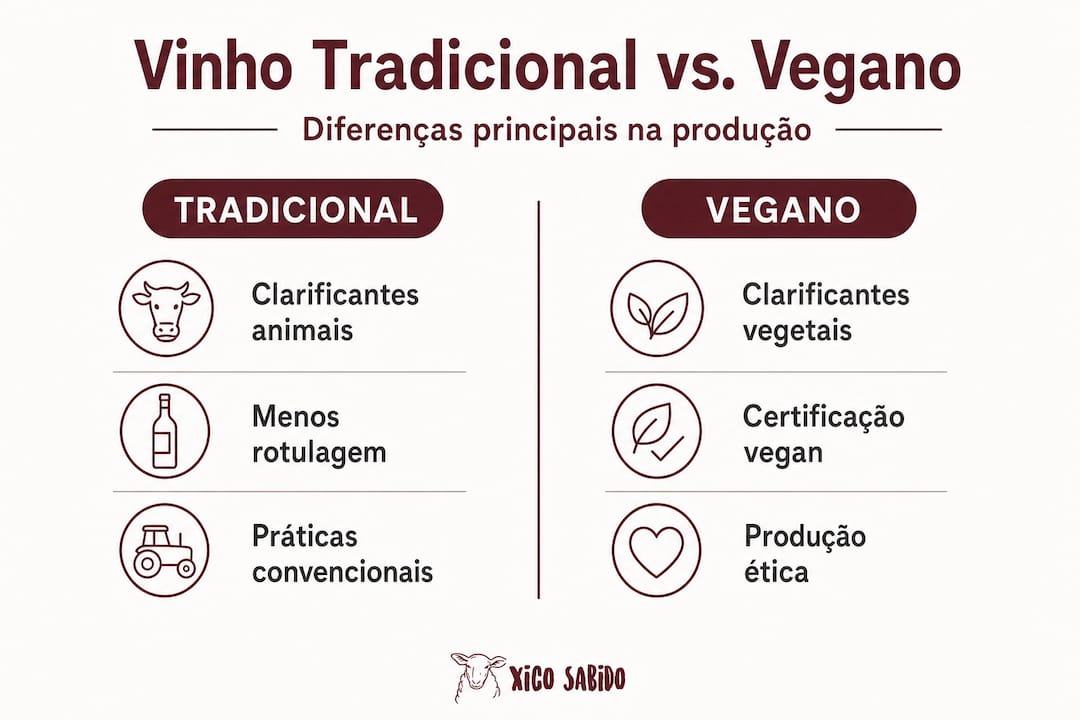
The critical point is called fining. After fermentation, wine becomes cloudy, with suspended particles that affect its appearance and, sometimes, stability. To solve this problem, producers add fining agents that bind to the particles and drag them to the bottom of the vat before filtering the liquid. In conventional production, these agents include:
- Casein: milk-derived protein
- Albumin: protein extracted from egg whites
- Gelatin: obtained from animal collagen (bones and skins)
- Isinglass: fish glue extracted from sturgeon swim bladders
These components rarely appear on labels because European legislation only requires their declaration when residues exceed certain detection limits. In practice, residual amounts fall below the legal threshold, and consumers are left without clear information. To better understand the components used in wine production, it's worth exploring the technical details that differentiate one bottle from another.
The most common vegan alternative is bentonite, a mineral clay that performs the same fining work without resorting to animal products. Other plant-based fining agents include pea, potato, or wheat proteins. The result in the glass is practically identical, making the choice of vegan fining agents an option without sacrificing quality.
“The surest way to guarantee a wine is vegan is to look for certifications or technical confirmation from the producer.”
| Fining Agent | Origin | Vegan? |
|---|---|---|
| Casein | Milk | No |
| Albumin | Egg | No |
| Gelatin | Animal bones/skin | No |
| Isinglass | Fish | No |
| Bentonite | Mineral clay | Yes |
| Pea protein | Legume | Yes |
| Potato protein | Tuber | Yes |
For those who want to delve deeper into curiosities about vegan wine and understand how these choices shape the wine universe, there's much more to discover than what labels reveal at first glance.
Pro Tip: If you have doubts about a specific wine, consult platforms like Barnivore, a collaborative database that gathers information on the fining methods of thousands of producers worldwide. It's a simple and effective tool for a quick check before buying.
Understanding essential wine terms helps navigate these choices with much more confidence, because technical vocabulary ceases to be an obstacle and becomes a compass.
How to identify vegan wine: signs, labels, and certifications
After understanding the theory of what distinguishes vegan wine, it is essential to know how to identify it in everyday life. Fortunately, there are concrete signs that make this task simpler than it seems, provided you know what to look for.
The presence or absence of certification seals is the most reliable method to ensure that the wine is vegan. The main seals you should recognize include:
- The Vegan Society Sunflower: one of the oldest and most recognized seals in the world, with rigorous auditing criteria.
- EVA (European Vegetarian Union): European seal that certifies vegetarian and vegan products, with a growing presence in Portugal.
- European vegan symbol (V-Label): "V"-shaped logo widely used in food and beverage products in the European area.
- Producer's declaration on the label: some producers choose to directly state "clarified without animal products" or "suitable for vegans."
| Sign on the label | What it means | Reliability |
|---|---|---|
| Vegan Society Seal | Audited by an independent entity | Very high |
| V-Label EVA | Certified by a European association | High |
| “Suitable for vegans” | Producer's declaration | Medium to high |
| “Organic” or “biological” | Refers to cultivation, not fining | Low (by itself) |
| Absence of information | Unconfirmed production | Uncertain |
For those who buy online or in stores not specialized in vegan products, the approach is different. These are the most practical steps:
- Search for the producer's name and the wine in a specialized database before buying.
- Check the producer's official website, where many brands committed to transparency publish technical information about fining.
- Send a short email to the producer asking directly about the fining agents used. Most are happy to respond.
- Prefer wines with any type of vegan certification visible on the label or in the online product description.
- Choose producers with an explicit declaration of sustainable and ethical practices, as these often go hand in hand with vegan production.
Learning to identify profiles and labels with a trained eye makes all the difference when choosing with confidence. A bottle says much more than the wine's name: it tells the story of how it was made.
Pro Tip: When buying wine in a physical store, don't hesitate to ask a staff member for help. More and more specialized stores are training their teams to answer precisely these types of questions. If the store cannot answer, it might be a sign that it's worth looking for another option.
Vegan wine, sustainability, and trends in Portugal
Now that the reader knows how to identify a vegan wine, it's important to understand the context in which this trend fits into the Portuguese and global markets. Vegan wine does not exist in an isolated bubble. It is part of a broader change in consumption habits, where environmental awareness and ethics go hand in hand with pleasure and quality.
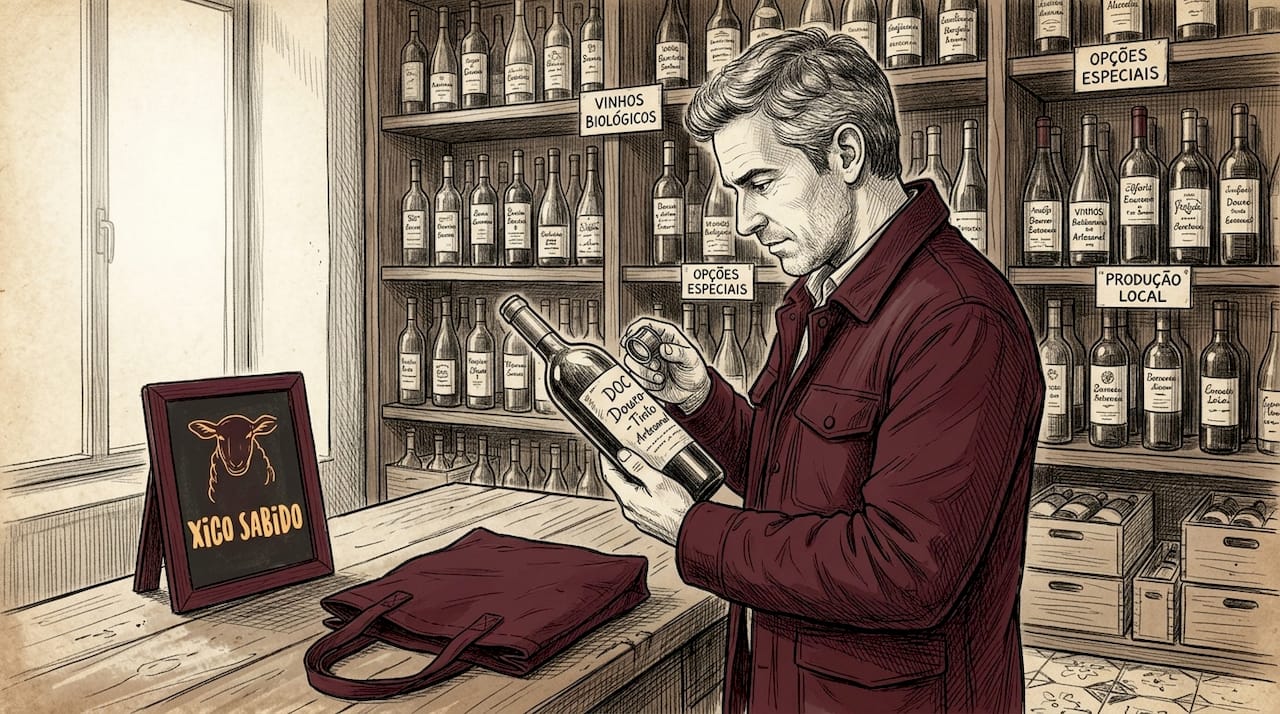
Interest in vegan wine and ecological practices is growing in Portugal, following a global trend that has intensified over the last decade. Portuguese consumers, historically linked to wine tradition, are now more curious and demanding than ever.
The relationship between vegan wine and sustainability is genuine and profound:
- Reduced use of animal by-products in the production chain lessens the pressure on the livestock and fishing industries.
- Mineral fining agents like bentonite are obtained without intensive industrial processes and have a smaller environmental footprint.
- Producers committed to vegan production tend, for the most part, to also adopt sustainable viticulture practices, such as organic soil management or pesticide reduction.
- Transparency in the production chain is a growing value, and producers who openly communicate their process build lasting trust relationships with consumers.
“Choosing a vegan wine is not just a dietary decision. It's a vote of confidence in a way of producing that respects the land, animals, and people.”
Portugal, with its mosaic of indigenous grape varieties and unique wine regions, has all the conditions to become a reference in the production of quality vegan wines. Alentejo, with its vines whispering stories under the scorching sun, is a living example of how tradition and innovation can harmoniously coexist.
Natural alternatives in wine, such as the elimination of sulfites or the use of plant-based fining agents, are part of this silent revolution transforming the sector. Those who want to discover recommended wines in Portugal with these characteristics now have many more options than just five years ago.
The growth of this trend is not fleeting. It is a reflection of a generation of consumers who want to know where what they drink comes from, how it was made, and what impact it leaves on the world.
Practical tips: where to find vegan wines and how to pair them
Having assessed the sustainable importance, it is necessary to clarify what to try in practice and how to take advantage of this choice in everyday life. The world of Portuguese vegan wine offers remarkable quality and accessible products, ready to elevate any meal.
In Portugal, the main regions with producers offering communicated vegan options include:
- Alentejo: a great diversity of producers, many with organic practices and some with explicit vegan certification. Indigenous grape varieties such as Aragonez, Alicante Bouschet, and Trincadeira produce wines with a genuine soul.
- Douro: a prestigious region with progressive producers who explore alternative fining methods.
- Vinho Verde: several producers in the Minho region already work with plant-based fining agents and promote their production to the end consumer.
- Bairrada: a region with a vocation for sparkling wine, where some producers already adopt animal-product-free practices.
- Lisbon and Tejo: regions with a good quality-price ratio and a growing number of natural and vegan wine projects.
To pair vegan wines with a plant-based meal, the logic is the same as with conventional wine, focusing on structure and flavors:
- Fresh and mineral white wine with vegetable salads, vegetable seafood ceviche, or tofu dishes.
- Dry and fruity rosé with vegetarian pizzas, pasta with tomato and aromatic herbs.
- Light red with low tannins with chickpea or lentil burgers or mushroom dishes.
- Full-bodied Alentejo red with black bean dishes, roasted eggplant, or Mediterranean-inspired recipes.
- Natural or vegan-certified sparkling wine as an aperitif or with fresh fruit-based desserts.
The producer's technical confirmation is always the safest way to guarantee that the wine you chose for your table is genuinely vegan. This contact also brings the consumer closer to the producer, creating a cycle of trust and mutual responsibility that values the entire chain.
For those who prefer digital convenience, buying Portuguese vegan wine online is now a simple and secure reality. Many platforms allow filtering by characteristics such as "vegan" or "organic," and the technical descriptions of the wines are increasingly detailed.
Pairings with vegetable dishes are a discovery that surprises with the richness of possible combinations. And for those who want to discover producers and new labels live, wine festivals in Portugal are places where this conversation happens naturally and passionately.
Is it worth choosing vegan wine?
There's a question many consumers ask in a whisper, almost fearing to seem naive: "But is there actually any difference in taste?" The honest answer is that the vast majority of people won't notice any difference. And this, in our view, is liberating.
It means that choosing vegan wine is not a sacrifice. It's an addition. By opting for a bottle with plant-based fining agents or vegan certification, you don't give up pleasure or quality. You gain something harder to quantify: the peace of mind that that glass didn't involve unnecessary animal suffering in its process.
The lack of full regulation remains a real challenge. Not all countries require the declaration of fining agents, and the market is still far from ideal transparency. Therefore, insisting on verified seals or direct technical confirmation is not excessive demand, it is responsible consumption. Consulting the opinions of other enthusiasts about vegan wine helps to build a broader and more informed perspective.
What we discover, by delving into this topic, is that paying attention to the wine production process ultimately inspires a more general attention to what we choose to consume. The wine bottle becomes a symbol of something greater: the desire to align our pleasures with our values. And that, regardless of the preferred wine style, is a choice worth celebrating.
Discover and delve deeper: the best wines and resources for you
Now that you master the essentials of vegan and sustainable wine in Portugal, continue to discover more with the right resources. The universe of Portuguese wines, especially those from Alentejo, has much to offer those seeking quality with conscience.

At Xico Sabido, we believe that every bottle tells a story rooted in the land and its people. Our wines are born from vines that grow under the generous Alentejo sun, with respect for nature and a passion for authenticity. If you want to explore Portuguese wines from Alentejo with a genuine identity, or simply learn more with wine curiosities and tips that deepen your knowledge, you are in the right place. Take the next step and buy our wines online, directly from the producer to your table.
Frequently asked questions about vegan wine
Can white and red wine be vegan?
Yes, both can be vegan, as long as no fining agents of animal origin are used in production. The difference between vegan and non-vegan wines lies precisely in the fining agents and not in the color or style of the wine.
What are the main certification labels for vegan wine?
The most common labels are “Vegan Society”, “V-Label EVA” and the official European vegan symbol. Labels and certifications are the safest and most immediate way to confidently identify a vegan wine on the shelf.
Does vegan wine taste different?
Most experts believe there is no discernible taste difference between vegan and conventional wines. Fining with bentonite or vegetable proteins produces visually and organoleptically similar results to animal fining agents.
Is organic wine always vegan?
Not all organic wine is vegan, as it may use animal fining agents even if produced without pesticides. The fining method, and not just the cultivation of the grapes, is what determines if the wine is truly vegan.
Is it easy to find Portuguese vegan wines?
Yes, more and more Portuguese producers offer vegan options and communicate this attribute transparently. The interest in vegan wines is growing in Portugal, and the offer keeps pace with this demand with increasing quality.